

Sustainable Cocoa: Understand, Act, Support
Sustainable Cocoa: A Sector to Protect
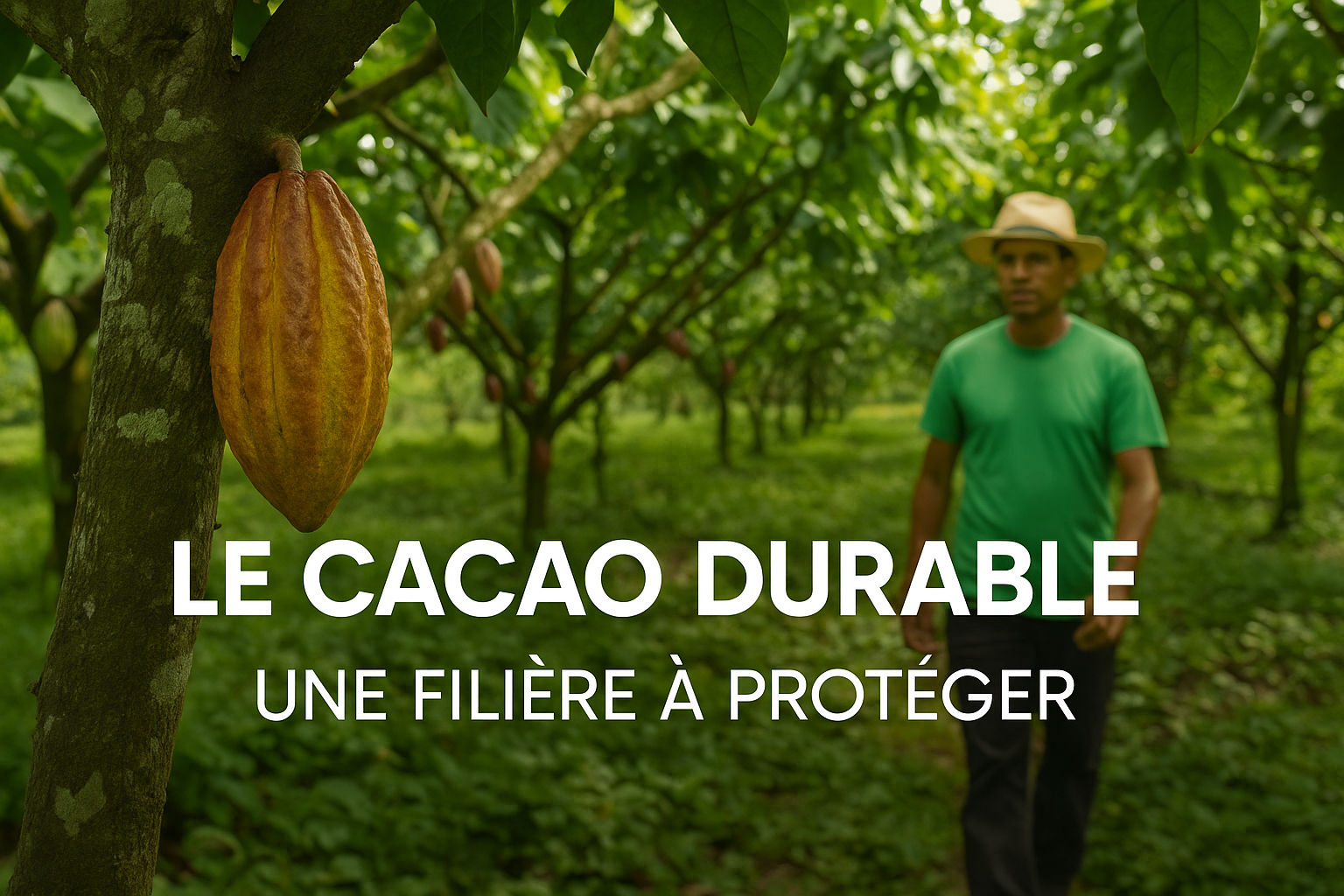
What is sustainable cocoa?
Sustainable cocoa is produced under conditions that respect people and the environment and are economically viable. It fights poverty, child labour and deforestation, and promotes a fair supply chain.
The pillars of sustainable cocoa
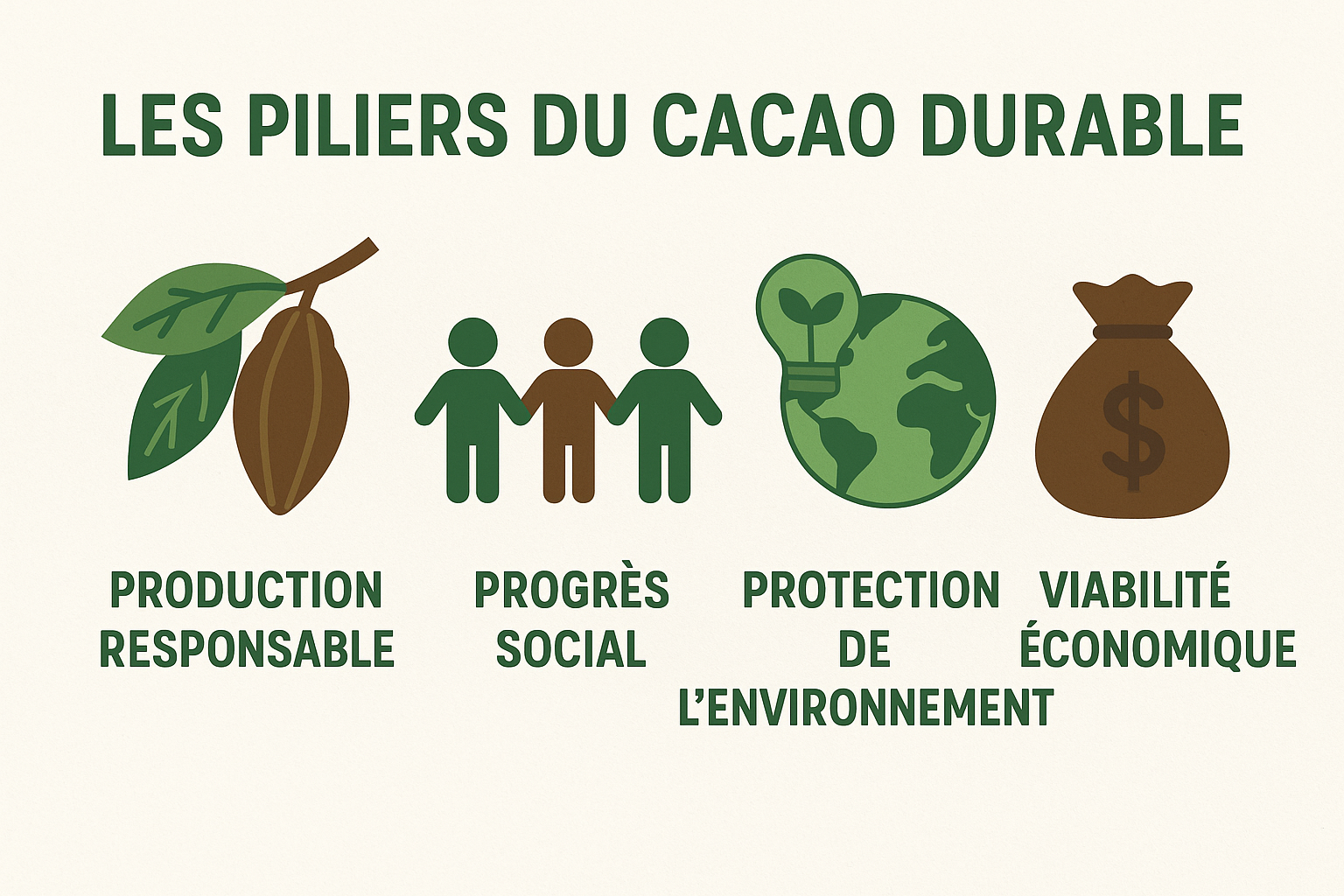
- Responsible production: agroforestry, reduced pesticide use, respect for soils.
- Social progress: access to education, training, fight against child labour.
- Environmental protection: fight against deforestation, reforestation, climate adaptation.
- Economic viability: guaranteed minimum price, premiums, access to the world market.
Implementation in producing countries
Côte d'Ivoire: the world's leading producer, certified cooperatives, commitment to the Cocoa & Forests Initiative.
Ghana: training, traceability, state programmes through the Ghana Cocoa Board.
Ecuador & Peru: fine cocoa, fair trade, organic farming.
Nigeria & Cameroon: support for women, fighting post-harvest losses, local projects.
Recognised certifications
- Fairtrade / Max Havelaar
- Rainforest Alliance
- UTZ Certified
- ISO 34101
International initiatives
Cocoa & Forests Initiative: forest protection in Côte d'Ivoire and Ghana with multinational companies.
Cocoa Life: Mondelēz's programme to empower producers.
European initiative: driven by the EU to establish a decent income.
Key figures
- 70% of the world's cocoa comes from West Africa.
- 2 million African producers.
- 450,000 Fairtrade-certified.
- 100% sustainable cocoa used by certain brands such as Ferrero.
Choosing sustainable chocolate
Choose certified products to support an ethical, environmentally friendly sector.
Conclusion
Sustainable cocoa is crucial to securing a viable future for the cocoa sector. Côte d'Ivoire, as the world leader, has a central role to play in promoting responsible, fair and sustainable cocoa farming.