
The Cocoa Pod: The Precious Fruit of the Cocoa Tree
Cocoa, the raw material of chocolate, comes from a singular and fascinating fruit: the cocoa pod. This fruit, from the cacao tree (Theobroma cacao), is at the heart of a global agricultural and agri-food sector, particularly vital…

Cocoa, the raw material of chocolate, comes from a singular and fascinating fruit: the cocoa pod. This fruit, borne by the cocoa tree (Theobroma cacao), is at the heart of a global agricultural and food-processing sector, particularly vital for countries such as Côte d'Ivoire, the world's leading producer. Understanding the pod means understanding the very origin of chocolate, but also the agricultural, economic and biological issues associated with its cultivation.
Morphology of the pod
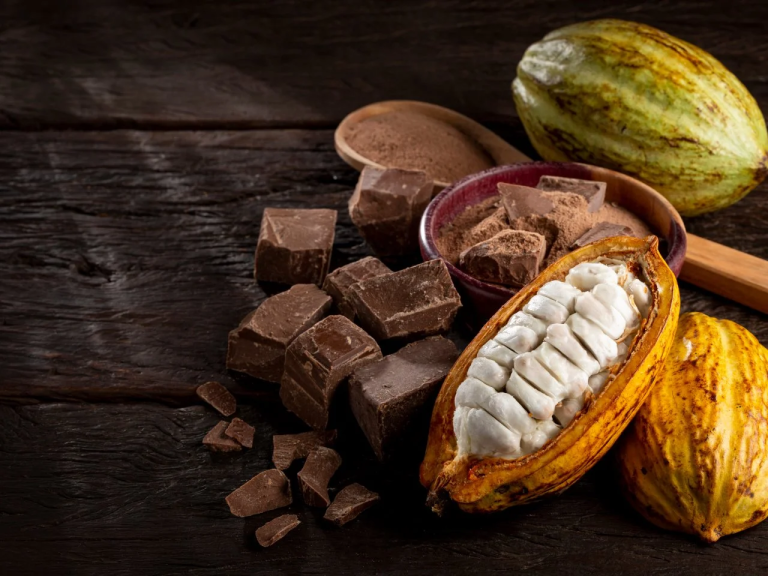
The pod is a fruit of ovoid or elongated shape, which grows directly on the trunk or large branches of the cocoa tree – a botanical phenomenon known as cauliflory.
Size: 15 to 30 cm long
Weight: between 300 g and 1 kg
Colour: green, yellow, orange, red or purple depending on variety and degree of ripeness
Surface: rough or smooth, with pronounced longitudinal ridges
Each pod generally contains 20 to 50 beans (seeds), wrapped in a white, sweet, mucilaginous pulp called mucilage.
Reference: Wood, G. A. R., & Lass, R. A. (1985). Cocoa (4th ed.). Longman.

Composition and development
The development of the pod follows several important stages after pollination:
Fruit set: formation of the young fruit
Cell growth: cells multiply rapidly
Maturation: the beans develop, sugar accumulates in the mucilage
Physiological maturity: the pod is ready to be harvested, generally 5 to 6 months after flowering
Biochemical studies have revealed that the mucilage contains fermentable sugars (glucose, fructose, sucrose) essential to the post-harvest fermentation of the beans (Schwan & Wheals, 2004).
Reference: Schwan, R. F., & Wheals, A. E. (2004). The microbiology of cocoa fermentation and its role in chocolate quality. Critical Reviews in Food Science and Nutrition, 44(4), 205–221.
Agricultural and economic role
Each cocoa tree produces between 20 and 40 pods per year, depending on variety, climate, fertilisation and farming practices. To produce 1 kg of chocolate, about 500 beans are needed, or 8 to 10 pods.
In Côte d'Ivoire, the pod is the object of meticulous care:
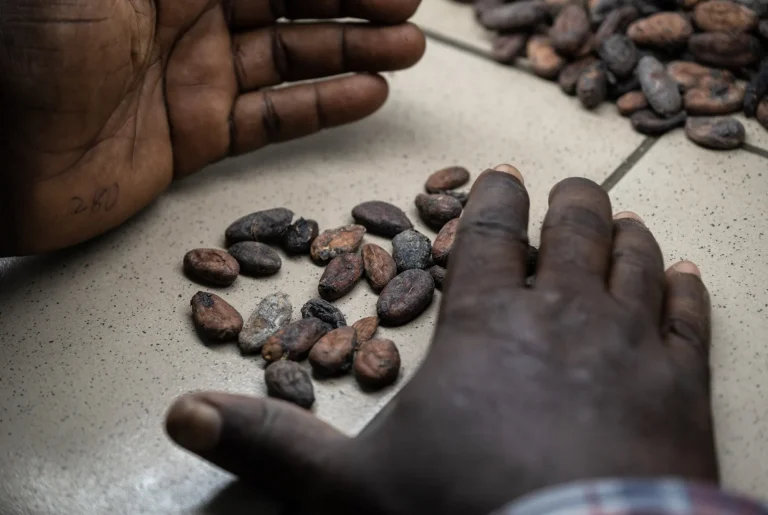
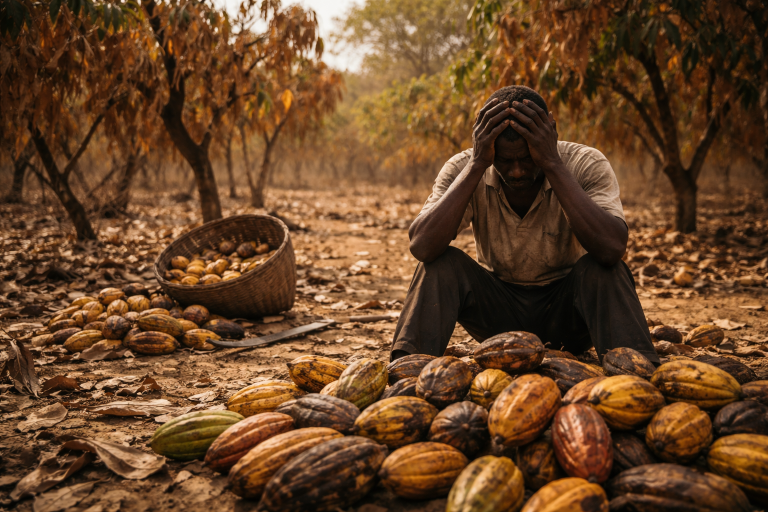
Harvested by hand with a machete or a hook
Opened manually to extract the beans
Empty pods are often used as compost
Cocoa accounts for more than 15% of Ivorian agricultural GDP and supports about 5 million people directly or indirectly.
Reference: ICCO – International Cocoa Organization, 2024. www.icco.org

Genetic diversity and its influence on the pod
The main varieties of cocoa trees influence the shape and colour of the pods:
Forastero: smooth, elongated pod, green or yellow – the most common in West Africa
Criollo: wrinkled, reddish pod – rarer, very aromatic
Trinitario: hybrid of the two above – variable colour
Researchers are now working on disease-resistant and more productive varieties without altering the aromatic quality of the cocoa.
Reference: Motamayor, J. C., et al. (2008). Geographic and Genetic Population Differentiation of the Amazonian Chocolate Tree (Theobroma cacao L). PLoS ONE, 3(10), e3311.
Uses and valorisation
Beyond chocolate, the pod can be fully valorised:
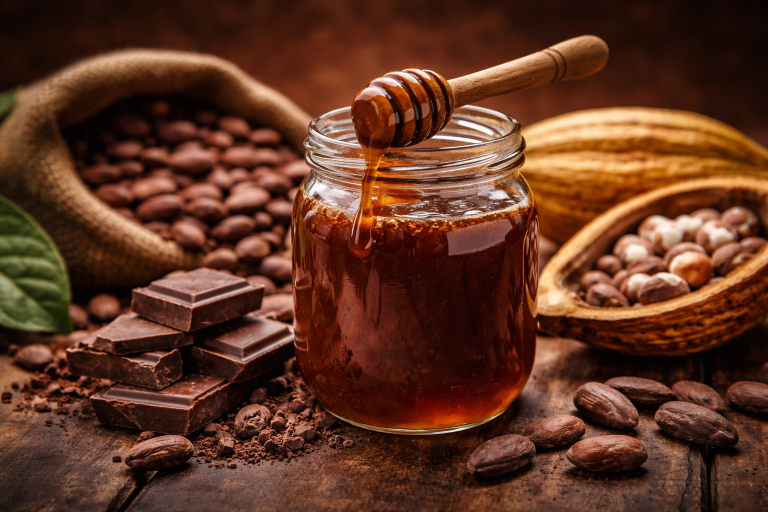
Beans: fermentation, drying, roasting → cocoa mass, butter, powder
Mucilage: production of juice, syrup, alcohol (bioethanol, craft spirits)
Husk: compost, biomaterials, animal feed
Recent innovations in agro-industry are looking at pod by-products, for a zero-waste sector.
Reference: Afoakwa, E. O. (2014). Chocolate Science and Technology. Wiley-Blackwell.
The cocoa pod is much more than a simple fruit: it is a symbol of agricultural wealth, a vector of innovation, and above all, the origin of one of the world's best-loved products: chocolate. In Côte d'Ivoire as elsewhere, knowing and valuing each pod better means honouring the work of the planters and building a more sustainable sector.