
Silent Crisis in Côte d'Ivoire's Cocoa Sector: What Has Been Happening for the Past Few Months?
Since the end of 2025, the cocoa sector in Côte d'Ivoire has been going through one of its most severe crises in a decade, despite the country's status as the world's largest producer. The sharp fall in international prices…
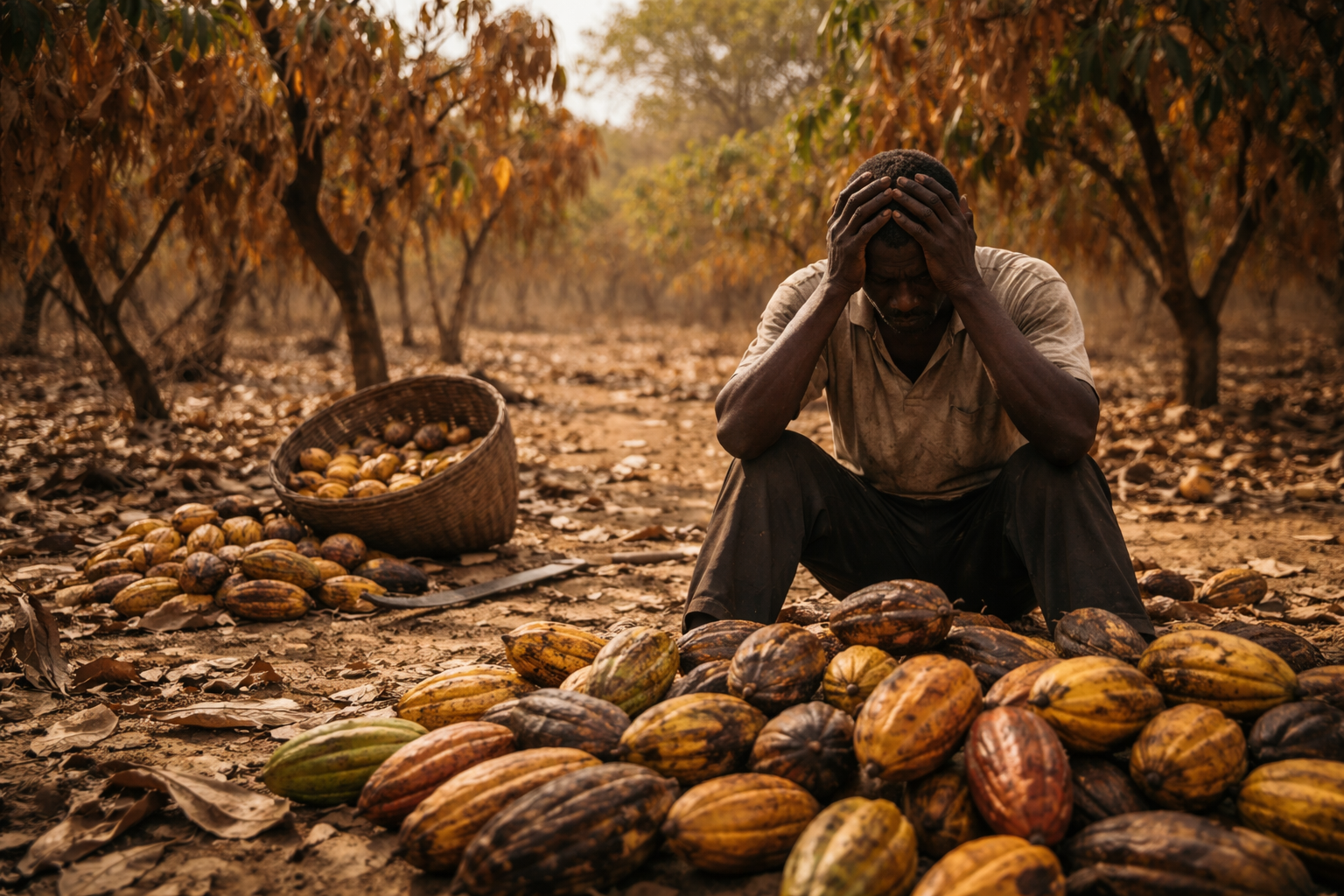
Since the end of 2025, the cocoa sector in Côte d'Ivoire has been going through one of its most severe crises in a decade, despite the country's status as the world's leading producer. The sharp fall in international prices, combined with very high domestic prices and logistical dysfunction, is weakening producers, exporters and the State alike.
Record prices… then a collapse
In 2024, world cocoa prices reached historic levels, fuelled by a production deficit and climate concerns in West Africa. In October 2025, the Coffee-Cocoa Council (CCC) set a guaranteed price of about US$5,000 a tonne (about 2,800 CFA francs/kg) for the 2025/2026 season, a record presented as a victory for producers.
But since autumn 2025, the international market has turned: prices have fallen to around US$4,630 a tonne, breaking the economic balance of contracts already signed at higher levels. As a result, large buyers are refusing to lift part of the Ivorian volumes, leaving a "remainder to be sold" estimated at about 15% of the harvest.
Unsold stocks, trucks stuck and social tension
This situation has caused a massive build-up of unsold volumes in the production areas. The main planters' union, Synapci, speaks of up to 700,000 tonnes of cocoa unsold and therefore unpaid, a figure that illustrates the scale of the blockage in domestic marketing.
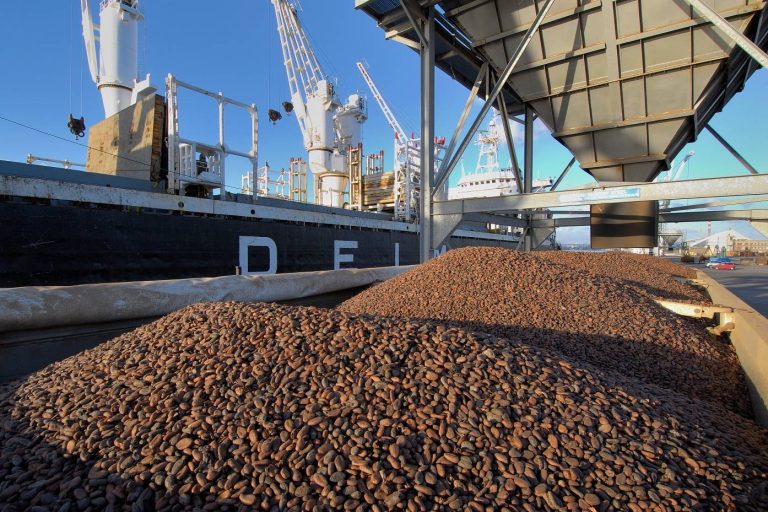
In practice, trucks loaded with cocoa have been left stranded for several weeks near the ports of Abidjan and San Pedro, for lack of buyers or of documents deemed compliant by the CCC. Some producers, deprived of income for almost two months, have been forced to sell their cocoa at rock-bottom prices to middlemen or to let lots rot, worsening their precarity.
Producer organisations speak of a crisis "unprecedented in ten years" and are calling for changes at the head of the CCC, accused of mismanaging market risks.
Exporters squeezed and quality in question
Raising the guaranteed price to an exceptional level also disrupted the export link. From the start of the 2025/2026 season, several exporters found themselves unable to finance purchases at the new price, with banks more reluctant to extend credit in a context of high volatility.
At the same time, stocks accumulated by some buyers ahead of the season – in the hope of profiting from the rise – turned out to be of poor quality: beans too small, low fat content, high acidity. Grinding plants and some exporters refused these lots, further accentuating the paralysis of flows.
In this context, international traders began in early 2026 to suspend their purchases of the next small harvest (mid-crop) while waiting for the regulator to lower its proposed prices. This attitude reinforces uncertainty for planters, who no longer know at what level the price will stand from April 2026.
Emergency State intervention: a costly gamble
Faced with rising tensions, the Ivorian government announced in January 2026 a rescue plan to buy 123,000 tonnes of unsold cocoa directly in the production areas, at the season's guaranteed price. The goal is twofold: to relieve congestion in village stores and to ensure a minimum income for the hardest-hit planters.
This scheme, initially estimated at around 280 billion CFA francs, could in reality cost more than 340 billion CFA francs if all volumes are bought at the official price, which raises the question of its budgetary sustainability. Some union leaders are sceptical, considering that the announcements settle neither the fate of producers who have already lost their cocoa, nor the root causes of the blockage.
Deeper structural causes
Beyond the price situation, several structural factors weaken the Ivorian sector.
- Ageing orchards: a significant share of cocoa farms are more than 25 years old, with falling yields and increased sensitivity to climate and disease.
- Climate hazards: the succession of prolonged dry seasons and irregular rainfall episodes reduces yields and complicates harvest planning.
- Dependence on a few large buyers: the concentration of purchasing power in a few multinationals limits the bargaining capacity of producers and the State.
- Low local processing: most of the value added is captured abroad, which makes the Ivorian cocoa economy very vulnerable to shocks in raw material prices.
The ICCO also anticipates a shift from a historic deficit in 2023/2024 to a slight global surplus in 2024/2025, driven by a recovery in production (notably outside West Africa) and still cautious demand. This shift contributes to the downward trend in prices observed since the end of 2025.
What are the ways out of the crisis?
The current situation highlights the need for fundamental reforms in the Ivorian cocoa sector:
- Rethinking price policy: finding a balance between protecting producers' income and export competitiveness, with more sophisticated risk-management mechanisms (hedging, strengthened stabilisation funds, more flexible contracting).
- Accelerating orchard renewal: replanting programmes, distribution of more productive and resilient seedlings, technical support for smallholders.
- Investing in quality: better post-harvest management, stricter control of fermentation and drying, incentives to produce premium cocoa that is better valued.
- Promoting local processing: support for grinding units and for the industrialisation of chocolate in Côte d'Ivoire to capture more value added and reduce dependence on the raw bean market.
- Strengthening governance and dialogue: more transparency on price formation, contract and stock management, and better inclusion of producer organisations in strategic decisions.
Open conclusion: a sector at a crossroads
The current crisis acts as a revealer: without structural reform, the world's leading cocoa economy will remain exposed to sudden market reversals and the recurring distress of planters. Conversely, a strategy combining modern risk management, orchard renewal, upgraded quality and industrialisation could turn this period of turbulence into a historic opportunity for Côte d'Ivoire.