
Cocoa Prices Soar as Port Arrivals Slow in Côte d'Ivoire
International cocoa markets are seeing a marked price rise, driven by growing concerns over world supply, notably in Côte d'Ivoire, the world's largest cocoa producer.
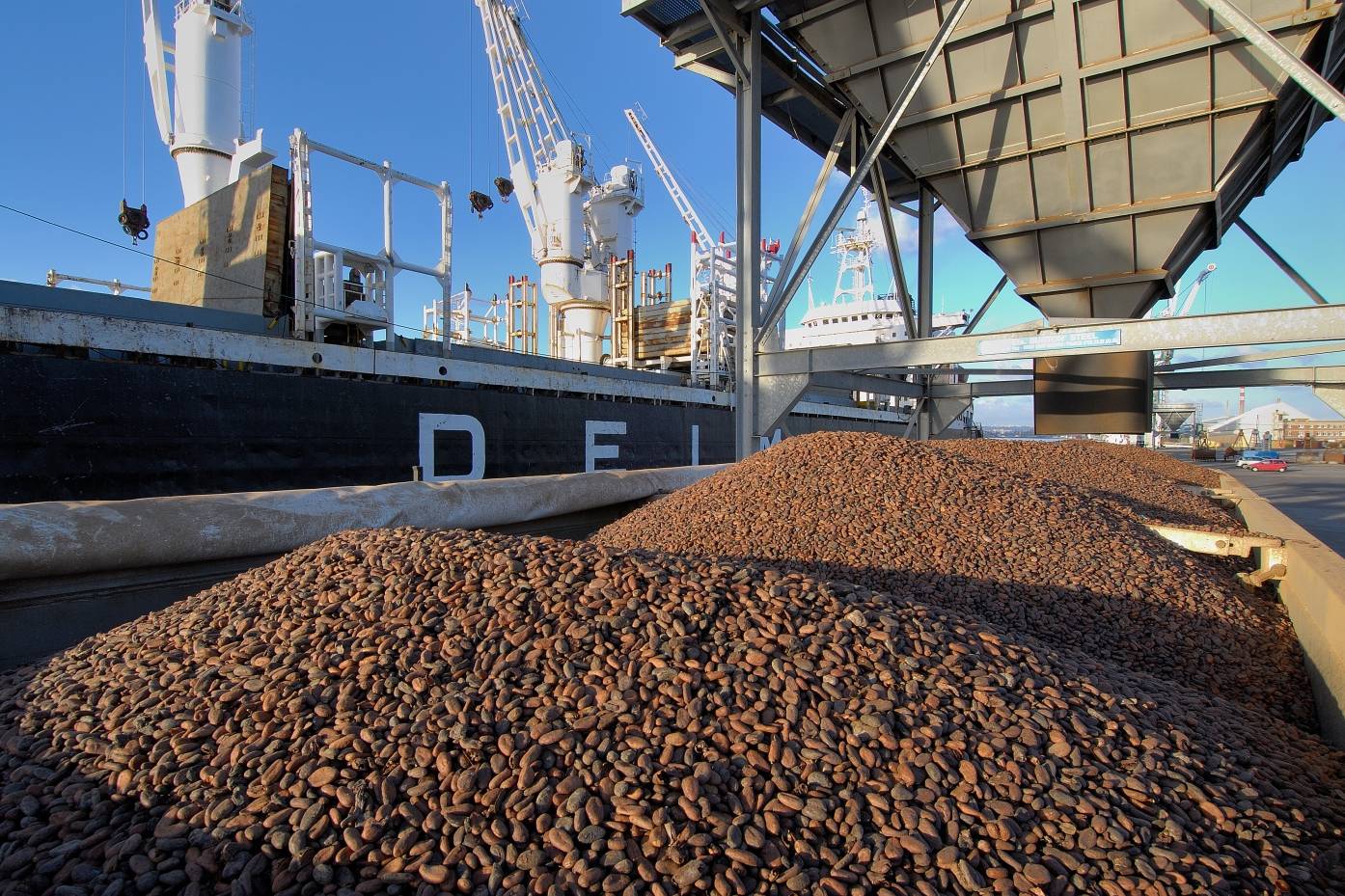
International cocoa markets are seeing a marked rise in prices, driven by growing concerns about world supply, notably in Côte d'Ivoire, the world's leading cocoa producer.
On Monday, the March ICE New York contract (CCH26) rose $295 (+4.96%), while March ICE London cocoa (CAH26) jumped £275 (+6.52%). These levels are two-week highs, illustrating the markets' persistent nervousness.
Port arrivals sharply down in Côte d'Ivoire
The main factor behind this surge remains the significant slowdown in cocoa deliveries to Ivorian ports.
According to available data, Ivorian producers delivered 59,708 metric tonnes of cocoa to the ports during the week ended 28 December, a 27% drop from the same period last year.
Over the whole of the new marketing season (from 1 October to 28 December), cumulative shipments reach 1.029 million tonnes, against 1.050 million tonnes over the same period in 2023, a 2% decline.
This development fuels fears of a short-term tightening of supply, even as Côte d'Ivoire remains the central pillar of world supply.
Additional support expected from financial markets
Cocoa prices also benefit from structural support linked to financial markets. The upcoming inclusion of cocoa futures in the Bloomberg Commodity Index (BCOM) from January should boost investment flows.
According to Citigroup, this inclusion could generate up to $2 billion in purchases of New York cocoa futures, reinforcing upward pressure on prices.
US stocks at their lowest in almost 10 months
Another supporting factor: ICE-monitored cocoa stocks in the United States fell to 1,626,105 bags, their lowest level in 9.5 months. This contraction in reserves reinforces the perception of a less plentiful market in the short term.
Mixed signals from West Africa
Despite these tensions, some agricultural indicators remain favourable. In both Côte d'Ivoire and Ghana, producers report a beneficial alternation of rain and sunshine, conducive to the flowering of cocoa trees and the development of pods, as the harmattan season approaches.
The chocolate group Mondelez recently indicated that the latest pod count in West Africa is 7% above the five-year average and well above the level of the previous season. The main crop in Côte d'Ivoire has begun, with cautious optimism about quality.
World supply tighter than anticipated
Globally, the picture remains fragile. The International Cocoa Organization (ICCO) has revised its projections downwards:
- The 2024/25 world surplus is now estimated at 49,000 tonnes, against 142,000 tonnes previously.
- 2024/25 world production was lowered to 4.69 million tonnes, from 4.84 million originally forecast.
For its part, Rabobank cut its forecast for the world surplus for 2025/26 to 250,000 tonnes, against 328,000 tonnes estimated in November.
Weakened world demand and European regulatory impact
Conversely, weak world demand still weighs on the outlook. Cocoa grindings fell sharply in Asia (-17% year on year in Q3) and in Europe (-4.8%), reaching their lowest levels in almost a decade.
In addition, the European Parliament's decision to postpone the application of the EUDR deforestation regulation by a year has temporarily lifted certain constraints on European supply, maintaining a relatively smooth supply from producing regions in Africa, Asia and South America.
Nigeria heightens tensions over African supply
Finally, the situation of Nigeria, the world's fifth-largest producer, is another supporting factor. Nigerian production for 2025/26 is expected to fall 11% to 305,000 tonnes, according to the Cocoa Association of Nigeria, confirming a structural downward trend.
Outlook: a market still under high tension
After a historic deficit of 494,000 tonnes in 2023/24, the largest in more than 60 years, the cocoa market is entering a phase of fragile balance. Although the ICCO anticipates a slight surplus in 2024/25, logistical disruptions, production adjustments and financial flows continue to fuel strong volatility.
For Côte d'Ivoire, these developments confirm one thing: cocoa remains at the heart of the global economic balance, and every variation in its flows is immediately reflected on international markets.