
From Cocoa to Chocolate: The Evolution of an Ancestral Craft
Chocolate, today synonymous with pleasure and indulgence around the world, is the result of a long process of transforming cocoa. Although the raw material, the cocoa bean, has remained the same for centuries, the methods of…
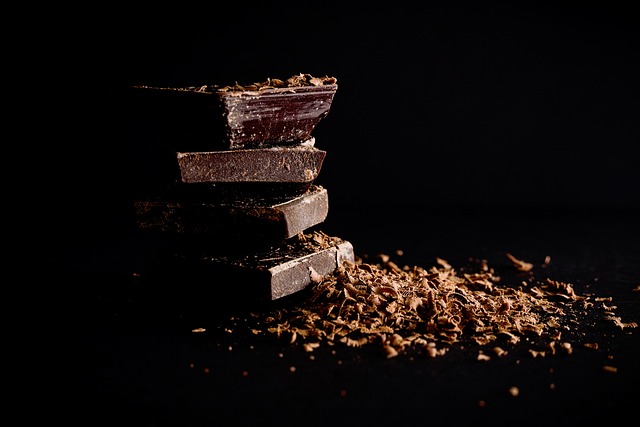
Chocolate, today synonymous with pleasure and indulgence around the world, is the result of a long process of transforming cocoa. While the raw material, the cocoa bean, has remained the same for centuries, manufacturing methods have evolved profoundly, moving from ancestral craft know-how to a technologically advanced industry.
1. Chocolate making in the past
Pre-Columbian origins
Long before the Europeans arrived, Mesoamerican civilisations such as the Maya and the Aztecs were already processing cocoa beans. Cocoa was not consumed in solid form, but as a bitter, spiced drink called xocolatl, often mixed with chilli, maize or honey. The beans were roasted on stone plates, then ground by hand with flat stones (metates).
The colonial and craft era
With colonisation, cocoa reached Europe in the 16th century. The first processing remained rudimentary: the beans were roasted, ground by hand and then mixed with sugar, milk or vanilla to create a sweeter paste. Chocolate was still reserved for the elite. At the time, chocolate making was essentially manual and craft-based, and the final product was a paste or a drink, rarely a solid.
The great innovations of the 19th century
It was in the 19th century that modern chocolate was born:
- 1828: the Dutchman Coenraad Van Houten invented the hydraulic cocoa press, separating cocoa butter from the powder.
- 1847: the first solid chocolate bar was created by Fry & Sons in England.
- 1879: the Swiss engineer Rodolphe Lindt invented conching, a process that refines the texture of chocolate and makes it melt in the mouth.
These discoveries mark the shift from craft production to the first industrialisation of chocolate.
2. The modern manufacturing process

Today, the chocolate-making process relies on rigorously controlled, industrialised steps, while retaining certain traditions:
1. Harvesting
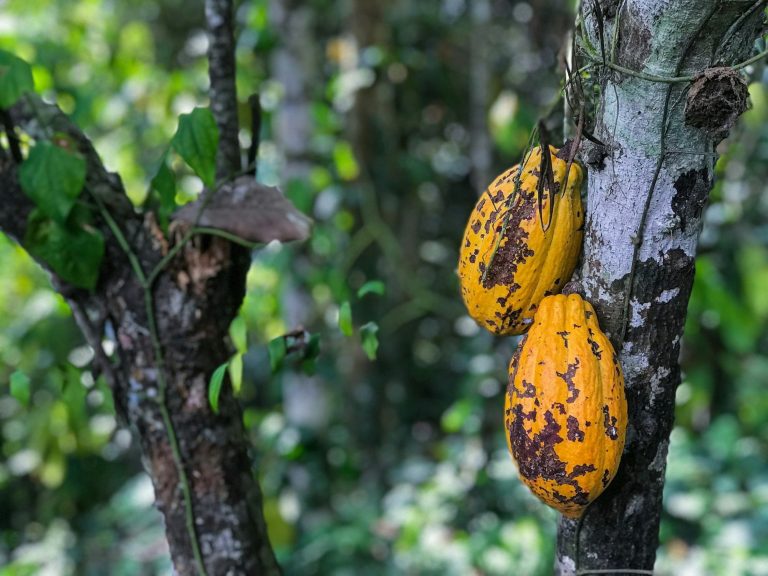
Ripe pods are harvested by hand, mainly in West Africa (Côte d'Ivoire, Ghana…), Latin America and Asia.
2. Pod opening and fermentation
The beans are extracted from the pod, then fermented for 5 to 7 days under banana leaves or in wooden boxes. This step is crucial for developing chocolate's aromas.
3. Drying
The fermented beans are then sun-dried for about a week.
4. Roasting
The beans are roasted at a controlled temperature (110 to 160°C) in industrial machines, revealing cocoa's typical aromas.
5. Cracking and grinding
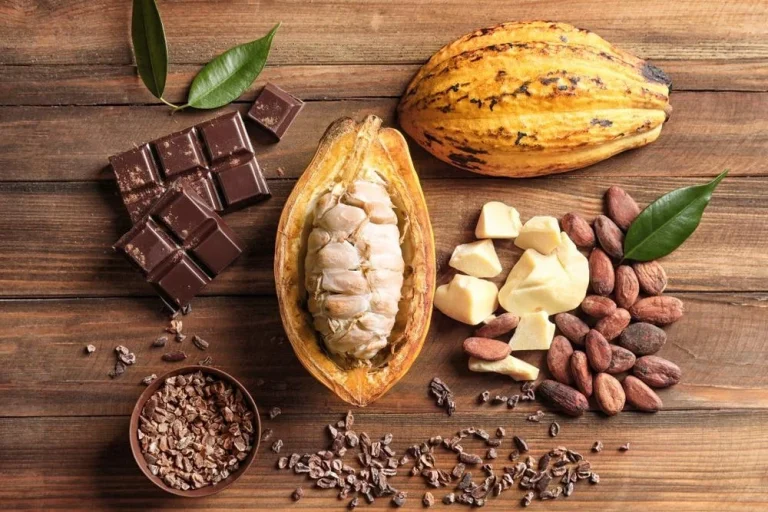
The beans are cracked to remove the shells, revealing the cocoa nibs. These fragments are then ground to obtain cocoa paste, or cocoa mass.
6. Pressing
Part of this paste is pressed to separate the cocoa butter from the cocoa powder.
7. Blending
To make chocolate, the following are blended:
- cocoa paste,
- cocoa butter,
- sugar,
- milk powder (for milk chocolate),
- possibly vanilla or other flavourings.
8. Conching
This mixture is stirred and heated for several hours, even several days, to obtain a smooth, melting texture.
9. Tempering
The chocolate is then cooled and reheated to precise temperatures to ensure a good shine and a perfect snap when tasted.
10. Moulding and packaging
The chocolate is finally poured into moulds (bars, sweets, figurines...), then cooled, demoulded and packaged.
Chocolate making is a complex alchemy between tradition and innovation. While ancient civilisations discovered the virtues of cocoa, the following centuries allowed this product to be refined, democratised and elevated. Even today, each bar carries within it a thousand-year-old heritage, enriched by modern technology and the know-how of chocolatiers around the world.