
Strategic Overview of the Cocoa and Chocolate Market: Key Data and Trends for Côte d'Ivoire and the World
Cocoa is of paramount importance to Côte d'Ivoire, which stands out as the undisputed world leader in its production and export. The country contributes significantly to world supply…
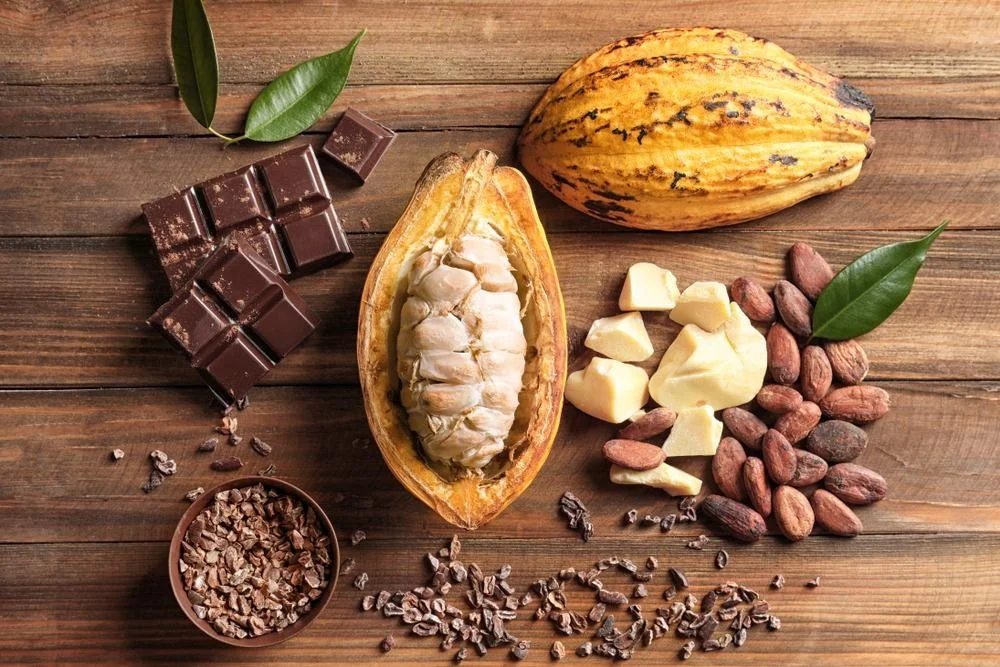
Cocoa is of paramount importance to Côte d'Ivoire, which stands out as the undisputed world leader in its production and export. The country contributes significantly to world supply, accounting for about 40% to 45% of total cocoa production. This pre-eminence underlines its essential role in the global cocoa supply chain. The cocoa sector is a fundamental pillar of the Ivorian economy, generating more than 15% of national Gross Domestic Product (GDP) and contributing 40% of the country's export earnings. Beyond its direct economic contribution, the sector is a major employer, providing livelihoods for about 600,000 planters and supporting more than 6 million people across the nation.
Côte d'Ivoire's deep dependence on cocoa, shown by its substantial contribution to GDP, export earnings and employment, inherently exposes its national economy to world cocoa market volatility. Any fluctuation in international prices, change in demand or shift in regulatory frameworks can have immediate and profound repercussions on the country's economic stability and the wellbeing of millions of its citizens. Conversely, Côte d'Ivoire's dominant share of world cocoa production (40-44%) gives it considerable influence and responsibility in shaping international market dynamics. Its domestic policies, the stability of its production and its sustainability efforts are therefore not just national concerns but critical determinants for the entire global cocoa industry.
This comprehensive report aims to provide cacao.ci with a robust, data-driven analysis of the cocoa and chocolate industry. It will explore key statistics and market dynamics, with particular emphasis on Côte d'Ivoire's pivotal position within these global trends. By covering aspects such as production volumes, export patterns, economic contributions, local processing capacity and crucial sustainability initiatives, the report seeks to strengthen the website's authority, offer valuable insights to its audience and consolidate its position as the main reference for the cocoa sector.
I. Côte d'Ivoire: World Cocoa Leader
A. Production and Economic Impact
Côte d'Ivoire consistently maintains high annual cocoa production volumes, generally between 2.1 and 2.2 million tonnes. Between 2019 and 2022, the country's production ranged from 2.10 to 2.15 million tonnes, reaching a significant peak of 2.25 million tonnes in 2021, according to ICCO data. Côte d'Ivoire's share of world cocoa production is substantial, hovering between about 40% and 44%. Historically, Côte d'Ivoire's rise to this leading position is remarkable; in 1961 it accounted for only 7.2% of world production, while Ghana was the dominant force with 35%. By 2022, Côte d'Ivoire had firmly established itself as the leading producer, holding a 38% share. Although 2021 recorded a 2.56% increase in production, recent forecasts for the 2024/25 season point to a potential fall to about 1.75 million metric tonnes, mainly because of unfavourable weather, ageing cocoa plantations and the spread of disease.
The historical trajectory, from Ghana's dominance in 1961 to Côte d'Ivoire's present leadership, underlines the fluid nature of agricultural powers. The production decline forecast for Côte d'Ivoire in 2024/25 is not just a statistical setback; it represents a critical vulnerability. Given Côte d'Ivoire's immense global market share, even a modest cut in its output can lead to large global supply deficits and substantial price rises. This highlights the inherent fragility of the global cocoa supply chain, demonstrating its susceptibility to localised conditions and underlining the urgent need for proactive measures to mitigate production challenges such as climate change and the spread of disease in West Africa.
The cocoa sector in Côte d'Ivoire is supported by about 1 million producers who farm an estimated area of 3 million hectares. However, another source indicates that cocoa farms cover more than 12 million hectares. Yields per hectare vary considerably, from a minimum of 150 kg/ha/year to a maximum of 2,500 kg/ha/year. This vast farming network collectively supports the livelihoods of more than 6 million people across the country.
Cocoa's economic importance for Côte d'Ivoire is profound, contributing more than 15% of national Gross Domestic Product (GDP) and accounting for 40% of the country's export earnings. The sector directly employs about 600,000 planters. The Ivorian government has set the ambitious goal of further increasing cocoa's contribution to national GDP, aiming for an increase to 25%.
Cocoa's substantial contribution to Côte d'Ivoire's national economy (GDP, exports) contrasts sharply with the precarious living conditions often experienced by cocoa farmers. This fundamental disparity creates a paradoxical situation in which an industry of vital importance to the nation rests on the hardship of its primary players. This economic imbalance is a root cause of critical social problems, such as younger generations' growing lack of interest in cocoa farming and the perpetuation of unsustainable farming practices, including deforestation to acquire new land. Consequently, the government's ambition to increase cocoa's contribution to GDP must be critically reassessed in light of the urgent need to ensure fair returns for farmers, because their economic stability is intrinsically linked to the sustainability and long-term viability of the whole sector.
The following table presents key data on cocoa production in Côte d'Ivoire, incorporating the most recent estimates available.
| Indicator | Estimated Value (Reference Year) |
| Annual production | ~2.1 to 2.2 million tonnes (2019-2022); peak of 2.25 million tonnes (2021); ~1.75 million tonnes (2024/25 estimate) |
| Share of world market | ~40-45% (general); 38% (2022) |
| Annual exports | ~US$6.5 billion (annual); US$5.06 billion (2021 peak); US$4.47 billion (2022) |
| Number of producers | ~1 million; ~600,000 planters (directly) |
| Area under cultivation | ~3 million hectares; >12 million hectares (cocoa farms) |
| Main regions | Nawa, Gôh, Indénié-Djuablin, La Mé |
| Certified share (RA/FT) | 30–35% |
| Contribution to GDP | 15-20%; ambition 25% |
B. Exports and Processing Strategies
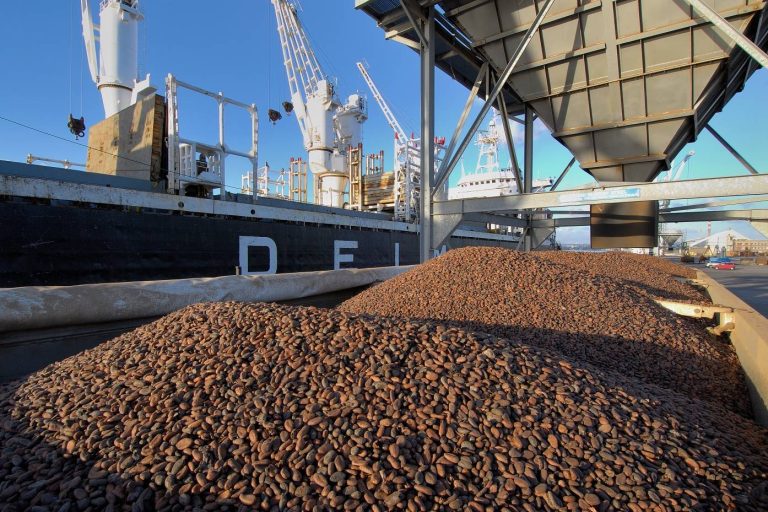
Between 2019 and 2022, Côte d'Ivoire's annual cocoa bean production fluctuated between 2.10 and 2.15 million tonnes, with a peak of 2.25 million tonnes in 2021. In 2021 the country exported a substantial 1.606 million tonnes of cocoa. The monetary value of these exports reached a peak of US$5.06 billion in 2021 before falling to US$4.47 billion in 2022, the lowest value for the 2019-2022 period. On an annual basis, total cocoa exports are estimated at US$6.5 billion. A significant share of this production, about 70%, is exported as raw cocoa beans, while 12% is processed into cocoa paste and 7% into cocoa butter. Historically, from 2012 to 2017, total exports ranged from 1.5 to 1.79 million tonnes, with raw beans consistently accounting for about 75% and processed products 25%.
The notable difference in the reported annual export values — specifically US$6.5 billion versus a peak of US$5.06 billion in 2021 and a figure of US$4.47 billion in 2022 — is a critical point for the report. This divergence probably stems from differences in reporting periods, from the inclusion or exclusion of different forms of cocoa products (raw beans versus processed products), or from the use of various data sources (for example national government statistics versus international organisations like the ICCO or Trase). For cacao.ci, it is imperative to acknowledge this data complexity and, if possible, to clarify the methodologies or specific timeframes of the sources cited. This transparency not only improves the report's credibility but also informs the public about the inherent challenges of obtaining perfectly consistent economic figures in a dynamic commodity market.
The European Union (EU) is the main market for Ivorian cocoa, absorbing 68% of total exports between 2012 and 2017. In 2021, the EU and Switzerland together imported 1.1 million tonnes of cocoa products from Côte d'Ivoire, with a substantial volume entering the EU via the Netherlands. North America, particularly the United States, is also an important destination, accounting for 24% of Ivorian exports in 2012-2017 and importing more than 300,000 tonnes in 2021. Malaysia is another notable importer, receiving more than 190,000 tonnes in 2021.
The European Union's position is multifaceted: it is not only the dominant market for Ivorian cocoa but also the main architect of strict regulations, notably the EU Deforestation Regulation (EUDR). This dual capacity means Côte d'Ivoire's export strategy is increasingly dictated by the need to meet EU sustainability and traceability requirements, driving a fundamental transformation of its entire cocoa supply chain. Although these regulatory pressures pose considerable challenges, they also act as a powerful catalyst for positive change in the Ivorian cocoa sector, encouraging the adoption of more sustainable and responsible practices that are crucial for long-term market access and the sector's viability.
Côte d'Ivoire is actively pursuing strategies to increase its local cocoa-processing capacity. In the 2016-2017 season, the country processed 419,359 tonnes of cocoa beans, equal to 25% of its exports for that period. The Ivorian government has set the ambitious goal of raising the local processing rate from 42% (750,000 tonnes a year) to 50% of national production over the next two years. Total installed grinding capacity already stands at 1.06 million tonnes, which is more than 50% of the country's current production. At the heart of this industrialisation drive are new facilities such as the Transcao PK24 plant, the result of a Côte d'Ivoire-China collaboration, which has an initial grinding capacity of 50,000 tonnes, with expansion plans to 100,000 tonnes. To encourage local value addition further, the government has introduced a system of single exit duties (DUS) differentiated according to the degree of cocoa processing.
The strategic drive to significantly increase local cocoa processing, with a target of 50% of national production, represents a crucial economic imperative for Côte d'Ivoire. By turning raw cocoa beans into semi-finished products (such as liquor, butter and powder) or even finished chocolate products, the country can capture a much larger share of the value generated along the global supply chain. This shift from raw-material exporter to a more integrated player translates directly into substantial benefits: it boosts local incomes, creates significant job opportunities (for example 1,400 new jobs for the Transcao PK24 plant alone), and strengthens the nation's overall economic resilience by reducing its vulnerability to volatile commodity prices. This industrialisation is a vital step towards sustainable economic development and greater autonomy in the world cocoa market.
The following table gives an overview of Ivorian cocoa exports by destination and product type.
| Indicator | Value (Reference Year) |
| Total volume exported | 1.606 million tonnes (2021); 1.677 million tonnes (2016-2017) |
| Total value exported | US$5.06 billion (2021 peak); US$4.47 billion (2022); US$6.5 billion (estimated annual) |
| Export composition | |
| Raw beans | ~70% (recent); 75% (2016-2017) |
| Cocoa paste | ~12% (recent) |
| Cocoa butter | ~7% (recent) |
| Processed products (total) | 25% (2016-2017) |
| Main destinations | |
| European Union | 68% (2012-2017); 1.1 million tonnes (2021, EU + Switzerland) |
| North America (USA) | 24% (2012-2017); >300,000 tonnes (2021) |
| Asia (Malaysia) | >190,000 tonnes (2021) |
| Others (Asia, Australia, Africa) | 8% (2012-2017) |
C. Challenges and Issues Facing the Ivorian Sector
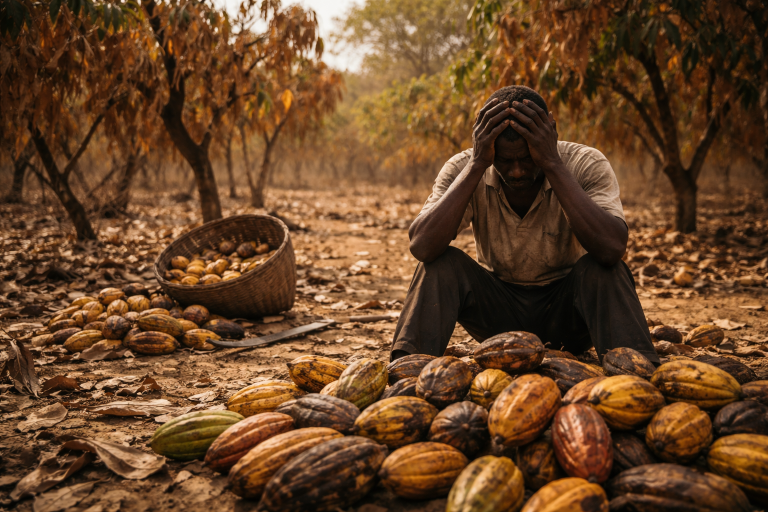
The Ivorian cocoa sector is grappling with a confluence of significant challenges, notably the pervasive effects of climate change, shown in unpredictable weather patterns such as droughts and floods, the widespread spread of diseases like Cacao Swollen Shoot Virus Disease (CSSVD), and the inherent problem of ageing cocoa plantations. These interdependent factors collectively contribute to falling yields and pose a substantial threat to the long-term sustainability and volume of the country's future cocoa production.
Climate change goes beyond a mere challenge; it represents an existential threat to the very foundations of cocoa production in West Africa. Cocoa's inherent sensitivity to specific climate conditions — needing consistent warmth, humidity and environmental stability — means that escalating climate volatility directly compromises the quantity and quality of yields. This dire situation demands the urgent implementation of robust adaptation strategies, such as the widespread adoption of climate-resilient farming practices and agroforestry. In addition, the European Union Deforestation Regulation (EUDR) implicitly supports this shift by discouraging monoculture and encouraging more sustainable land-use practices, thus underlining the critical need for these changes to ensure the sector's long-term viability.
A persistent and critical issue in the Ivorian cocoa sector is the economic precarity facing cocoa farmers. Their incomes are often insufficient to cover production costs or to ensure a decent wage. This economic hardship directly contributes to younger generations' lack of interest in cocoa farming as a livelihood and tragically perpetuates problems such as child labour. Studies estimate that a "living income price" for producers should be around US$3,000 to 3,500 per tonne, a figure that may need to reach US$4,000 to 4,500 per tonne to guarantee a truly sustainable income.
The label "brown gold" eloquently captures the immense wealth generated by the cocoa industry, but it contrasts sharply with the persistent impoverishment of its primary producers. This profound paradox signifies a fundamental breakdown of the social contract within the cocoa value chain. Farmers' low incomes are a direct cause of pervasive problems such as child labour and rampant deforestation, because desperate farmers resort to expanding cultivation into forest areas or cutting labour costs just to survive. Tackling this systemic injustice takes more than simple price adjustments; it requires comprehensive structural changes. These include implementing truly fair pricing mechanisms, robust farmer-support programmes and diversifying income sources for farming communities, all aimed at fostering a fairer and more sustainable future for the industry.
Historically, cocoa growing has been a primary driver of deforestation in Côte d'Ivoire. Over the past three decades, an alarming 90% of the country's rainforest has been cleared, with 2.4 million hectares specifically converted into cocoa plantations between 2000 and 2019. In response, the European Union has introduced the Deforestation Regulation (EUDR), due to come into force on 30 December 2025. The regulation requires companies importing cocoa into the EU to provide rigorous proof that their products do not come from recently deforested land. This poses a significant challenge for Côte d'Ivoire's highly fragmented supply chain.
The EU Deforestation Regulation (EUDR) should not be seen merely as a trade barrier; rather, it is a powerful external force compelling a fundamental and long-expected transformation of the Ivorian cocoa supply chain. By imposing rigorous traceability and sustainable practices, the regulation actively pushes the industry away from its historical reliance on deforestation-linked expansion. Although the fragmented nature of Ivorian agriculture presents considerable implementation challenges, the EUDR effectively encourages crucial investment in robust traceability systems, comprehensive farmer training and the adoption of agroforestry. These initiatives are not mere compliance measures but vital components for ensuring the long-term environmental and economic sustainability of Côte d'Ivoire's cocoa sector.
II. Global Cocoa Market Dynamics
A. Producing Countries and Distribution of Supply
In 2022, Africa maintained its dominant position in world cocoa bean production, accounting for 69.2% of total output. Within this production, Côte d'Ivoire emerged as the largest single producer with a 38% share, followed by Ghana at 18.9%, Indonesia at 11.36%, Ecuador at 5.74%, Cameroon at 5.11% and Nigeria at 4.77%. For the 2024/25 season, estimated production figures underline this concentration: Côte d'Ivoire is expected to produce about 1.75 million tonnes, Ghana about 617,500 tonnes, Ecuador about 430,000 tonnes, Nigeria 280,000 tonnes and Indonesia about 160,000 tonnes.
The overwhelming concentration of world cocoa production in West Africa, particularly in Côte d'Ivoire and Ghana (which together account for more than 60% of world production), creates a significant and inherent geopolitical risk for the entire global supply chain. Political instability, severe climate disruption and disease outbreaks in these two nations can trigger immediate and severe knock-on effects on global supply volumes and international prices, as recent significant deficits have shown. This strong geographic concentration also means the success and effectiveness of sustainability efforts in these regions are absolutely paramount for the stability and future of the entire cocoa industry worldwide.
Globally, cocoa production has risen remarkably, having almost quadrupled since 1961. That year, Africa was already a major player, contributing 69.5% of world cocoa, with Ghana alone responsible for 35% and Côte d'Ivoire holding a modest 7.2% share. In 2022, Africa's overall share remained broadly stable at 69.2%, but a significant change of leadership took place, with Côte d'Ivoire becoming the dominant producer (38%) and Ghana securing second place at 18.9%.
The impressive fourfold increase in world cocoa production since 1961 points to a robust long-term growth trajectory for the cocoa industry, driven by expanding global demand. However, this growth has not been uniform; it has been accompanied by profound regional shifts in dominance, notably the rise of Côte d'Ivoire. This historical context is crucial to understanding the market's current vulnerabilities: while overall production has risen considerably, the geographic concentration of supply has intensified. This increased concentration makes the world market more sensitive to localised disruptions — whether due to climate, disease or socio-political factors — in the main producing regions, creating new challenges for supply stability.
The table below details the breakdown of world cocoa production by country, based on the most recent data and estimates.
| Country | Estimated Production (Metric Tonnes) | Global Share (%) | Reference Year |
| Côte d'Ivoire | ~1.75 million | ~40% | 2024/25 (est.) / 2022 |
| Ghana | ~617,500 | 10.3% - 13.4% | 2024/25 (est.) / 2022 |
| Indonesia | ~160,000 | ~3.65% / 11.36% | 2023/24 (est.) / 2022 |
| Ecuador | ~430,000 | ~10% / 5.74% | 2023/24 (est.) / 2022 |
| Nigeria | 280,000 | 4.77% | Annual / 2022 |
| Cameroon | N/A | 5.11% | 2022 |
| Other African countries | N/A | Variable | 2022 |
| Other countries in the Americas | N/A | Variable | 2022 |
| Other countries in Asia | N/A | Variable | 2022 |
B. Price Trends and Volatility
International cocoa prices have seen dramatic, unprecedented increases in recent periods, reaching an all-time high of US$12,906.00 per metric tonne in December 2024. On 18 March 2024, prices closed at US$8,300 a tonne, a significant rise from an average of US$6,000 a tonne in February 2024. As of 18 July 2025, cocoa was trading at US$7,696.71 per metric tonne. Historically, prices showed substantial growth between 2012 and 2016, rising from 725 CFA francs/kg to 1,100 CFA francs/kg, before falling sharply to 750 CFA francs/kg in mid-2016/17.
The "spectacular rise" in international cocoa prices is explicitly noted as being "largely decoupled from the physical reality of the product" and, critically, often does not translate into direct benefits for producers. This is a profound observation: high world commodity prices do not automatically equate to better livelihoods for farmers at the base of the supply chain. This disconnect highlights underlying market inefficiencies, significant power imbalances within the value chain and the amplifying effect of speculative activity. It therefore underlines the urgent need for interventions such as guaranteed minimum prices and the implementation of fair-trade premiums to ensure that producers receive a truly living income, thus addressing systemic inequalities.
Cocoa price rises are frequently triggered by short-term supply concerns, particularly those resulting from low arrival volumes in Côte d'Ivoire. Conversely, favourable rainfall patterns can reverse these rises by strengthening confidence in the outlook for future harvests. A significant factor contributing to price spikes is the decline in international cocoa stocks and persistent global deficits, such as the -494,000 metric tonne deficit recorded in 2023/24, which was the largest in more than 60 years. Climate change, along with the spread of diseases and pests in West Africa, is identified as a major contributor to these supply challenges. In addition, political instability in the main producing regions can severely disrupt supply chains, worsening market volatility. Although they are not the root cause, speculative funds are noted to amplify price extremes once real market pressures appear.
The pronounced volatility of cocoa prices is a direct consequence of a complex, intricate interplay of various factors: environmental degradation (climate change, epidemics), persistent social inequalities (low farmer incomes leading to disinterest in farming, child labour and deforestation), and broader market dynamics (supply-demand imbalances, speculation and geopolitical risks). This multifaceted causality indicates that the "crisis" affecting the cocoa market is systemic rather than merely episodic. Effective solutions must therefore be holistic, tackling the underlying root causes rather than just treating the symptoms. For example, a real improvement in farmers' livelihoods can naturally reduce deforestation and encourage sustainable farming practices, which in turn can stabilise supply in the long term and ease price volatility, demonstrating the deep interconnection of these challenges.
The following table illustrates the evolution of cocoa prices on international markets in recent years.
| Date / Period | Price (USD/Metric Tonne) | Market / Context |
| Early 2023 | ~2,400 | Cocoa price |
| February 2024 (average) | ~6,000 | Cocoa price |
| 18 March 2024 (close) | 8,300 | Cocoa price |
| December 2024 | 12,906.00 (all-time high) | Cocoa price |
| 18 July 2025 | 7,696.71 | Cocoa price |
| 12-month forecast | 6,171.99 | Cocoa price |
| 17 July 2025 | 6,908.67 | New York futures |
| 17 July 2025 | 4,788.00 (pounds sterling) | London futures |
C. Supply-Demand Balance and Forecasts
The global cocoa market has seen major supply challenges in recent seasons, with both 2022/23 and 2023/24 ending in notable deficits. These shortages are mainly attributable to unfavourable weather, widespread disease and pest infestations affecting the main West African producing countries. The International Cocoa Organization (ICCO) notably revised its estimate of the 2023/24 global cocoa deficit to -494,000 metric tonnes, making it the largest deficit recorded in more than 60 years. World production for the 2023/24 season was estimated at 4.382 million tonnes.
The persistent and substantial global cocoa deficit is not a mere temporary anomaly but an indication of a structural supply problem. It suggests that current production levels are fundamentally insufficient to meet ever-growing world demand, a situation that inevitably leads to sustained high prices and widespread market instability. This long-term imbalance underlines the urgent, critical need for significant investment in sustainable farming practices, combined with concerted efforts to improve yields in cocoa-producing countries, to ensure future market balance.
Forecasts for the world cocoa market present a mixed picture. The ICCO, for example, has projected a global cocoa surplus of 142,000 metric tonnes for the 2024/25 season, which would be the first surplus in four years, with world production expected to rise 7.8% year on year to 4.84 million metric tonnes. However, other analyses project a contrasting scenario, estimating a 10% fall in West African cocoa production for 2024/25, attributing this to continued climate disruption, ageing plantations and geopolitical risks. On the demand side, world cocoa consumption is expected to rise by 20% between 2020 and 2025. The overall global cocoa market is expected to grow from US$2.00 billion in 2024 to US$4.26 billion by 2031, at a compound annual growth rate (CAGR) of 11.40%. Another estimate puts the market size at US$13.67 billion in 2024, forecasting an increase to US$23.33 billion by 2032 at a CAGR of 6.90%.
The notable divergence between the various market forecasts — with the ICCO forecasting a surplus for 2024/25 while other sources anticipate a deficit — underlines the exceptionally high degree of uncertainty currently prevailing in the cocoa market. The disparity suggests that different analytical models and experts attribute varying weights to a multitude of influencing factors, such as the potential for climate recovery versus persistent structural problems, and the full impact of new regulations like the EUDR. For cacao.ci, this implies the need to present a nuanced, balanced perspective, acknowledging the inherent volatility and the range of expert opinion rather than committing to a single definitive prediction. This widespread uncertainty further underlines the critical importance of continuous, real-time market monitoring and the adoption of highly adaptive strategies by all stakeholders operating within the cocoa value chain.
III. The Global Chocolate Market: Consumption and Outlook
A. Consumption and Consumer Preferences
World chocolate consumption is substantial, exceeding 7 million tonnes a year. European countries are the main per-capita consumers. Switzerland consistently ranks first, with average consumption of about 11 kg per person per year, or even up to 19.4 pounds (about 8.8 kg) per person in 2024. Germany follows closely with 8.1 kg or 17.8 pounds (about 8.1 kg), and the United Kingdom with 6.6 kg or 16.8 pounds (about 7.6 kg). France also shows significant consumption, averaging 7.31 kg per person per year, ranking 7th among consumers worldwide.
The striking contrast between the geographic concentration of cocoa production (mainly West Africa) and high per-capita chocolate consumption (mainly in Europe and North America) eloquently illustrates a fundamental imbalance in the global cocoa-chocolate value chain. European nations, despite negligible cocoa growing, are the largest consumers, which testifies to their deep influence in the downstream segments of chocolate manufacturing and retail. This reinforces existing power dynamics in which the lion's share of value added and value capture takes place in consuming regions rather than producing countries, underlining the need for strategic shifts towards local processing in countries of origin.
Contemporary consumers increasingly seek hands-on, personalised experiences, a trend fuelling the growth of e-commerce and direct-to-consumer sales channels for chocolate products. The emphasis is on quality, innovation and social responsibility in consumer choices. A growing segment of consumers actively favours ethically and sustainably sourced chocolate. Demand for organic, vegan, sugar-free and gluten-free chocolates is rising markedly. Dark chocolate consumption is also seeing a notable increase, driven by perceived health benefits. In addition, the premium and specialty chocolate market is growing significantly, particularly in mature markets such as the United States, France, Belgium and Germany. Emerging categories such as functional chocolates, which offer immunity or mood benefits, are also gaining ground.
The evolution of consumer preferences, marked by a strong inclination towards ethical, sustainable, premium and health-conscious chocolate options, represents a powerful, transformative force across the whole cocoa-chocolate value chain. This demand directly pushes chocolate companies to invest in robust traceability systems, implement fair labour practices and ensure deforestation-free sourcing. This market pull for certified cocoa puts significant pressure on producers to adopt more sustainable farming methods. Crucially, the trend can potentially translate into better prices and improved livelihoods for farmers who successfully meet these strict standards. Ultimately, this consumer-driven change is indispensable for ensuring the long-term viability and ethical integrity of cocoa growing in major producing nations like Côte d'Ivoire.
The following table shows annual per-capita chocolate consumption in the main consuming countries.
| Country | Annual Per-Capita Consumption | Reference Year |
| Switzerland | 11 kg / 19.4 lbs (~8.8 kg) | General / 2024 |
| Germany | 8.1 kg / 17.8 lbs (~8.1 kg) | General / 2024 |
| United Kingdom | 6.6 kg / 16.8 lbs (~7.6 kg) | General / 2024 |
| France | 7.31 kg | 2021 |
| Estonia | 9 kg | 2016 |
| Sweden | 7.3 kg | 2016 |
| Bulgaria | 7.2 kg | 2016 |
| Ireland | 7 kg / 17.4 lbs (~7.9 kg) | General / 2024 |
| Austria | 6.2 kg / 17.8 lbs (~8.1 kg) | General / 2024 |
| Finland | 6 kg | 2016 |
| Poland | 5.7 kg / 12.5 lbs (~5.7 kg) | General / 2024 |
B. Market Size and Growth Forecasts
The global chocolate market was valued at US$130.72 billion in 2024 and is expected to reach US$172.89 billion by 2030, with a compound annual growth rate (CAGR) of about 4.17% over 2025-2030. Another analysis puts the market size at US$145.11 billion in 2023, projected to grow to US$205.55 billion by 2030, at a CAGR of 5.1% over 2024-2030. The cocoa and chocolate market is also expected to grow quickly at a CAGR of 4.5%. The cocoa market alone is expected to grow from US$2.00 billion in 2024 to US$4.26 billion by 2031, at a CAGR of 11.40%.
The variability of market-size projections — for example estimates of US$130.72 billion to US$145.11 billion for 2024, and forecasts of US$172.89 billion to higher figures for 2030 — highlights the crucial importance of scope definition and methodology in market reports. These differences can come from the inclusion or exclusion of certain product segments (confectionery chocolate, industrial chocolate, semi-finished cocoa products), from taking different geographic areas into account, or from the use of distinct forecasting models. For any strategic analysis, it is essential to understand the exact scope of each reported figure to avoid misinterpretation and ensure effective planning.
The main drivers of this growth include rising disposable incomes, changing consumer preferences and the growing popularity of premium chocolate products. Growing demand for organic, vegan, sugar-free and gluten-free chocolates is also a key factor. Wider distribution through various channels, including e-commerce, makes chocolate more accessible. The popularity of dark chocolate, together with its health benefits, also contributes to market growth.
The diverse growth drivers, such as rising disposable incomes, the preference for premium chocolates and booming e-commerce channels, point to robust, diversified market dynamics. Growing demand for specific products like dark chocolate, driven by health considerations, along with interest in ethical and sustainable options, reflects growing consumer sophistication. These trends not only support overall market expansion but also steer product innovation and marketing strategies towards higher-value segments, fostering a premium for quality and responsibility throughout the value chain.
However, the market faces several challenges. Commodity price volatility, particularly for cocoa, and supply instability can hinder growth. Ethical and environmental pressures, such as child labour and deforestation, call for urgent action. Intense competition in a crowded market also creates challenges for new entrants.
The interplay between supply volatility and demand innovation is a defining feature of the global chocolate market. While cocoa prices show marked instability and supply challenges persist, the consumer market continues to evolve, driven by increasingly sophisticated preferences for premium, ethical and healthy products. This coexistence of challenges and opportunities requires industry players to adopt agile, resilient strategies. Companies that invest in sustainable supply chains, traceability and product innovation are better placed to navigate this complex landscape and capitalise on growing consumer demand for higher-quality, responsibly produced chocolate.
C. The Cocoa and Chocolate Value Chain: Value Distribution and Sustainability
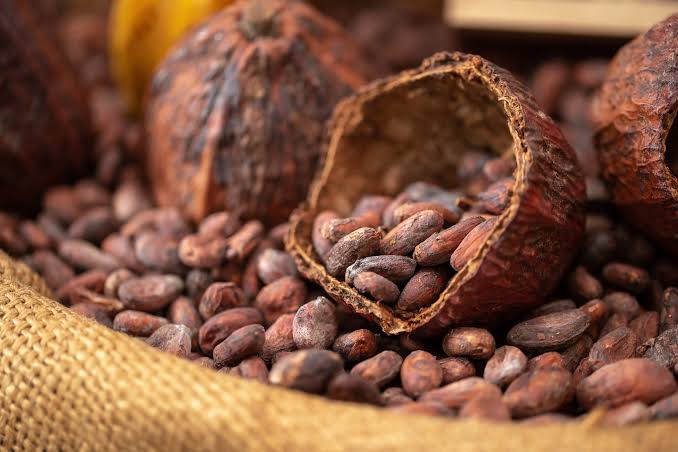
The cocoa value chain begins with the fruit of the tropical cacao tree. Farmers harvest the pods, whose beans are then fermented and dried, crucial steps for developing chocolate flavour. These dried beans are then sold to aggregators, then to exporters. Next comes the processing stage, where the beans are roasted, shelled (to obtain cocoa nibs), ground into cocoa liquor, which can then be pressed to separate cocoa butter from cocoa cake (used for powder). Finally, the liquor, butter and sugar (with other ingredients) are used to make couverture chocolate and finished chocolate products, which are then distributed to retailers and consumers.
The distribution of value along this chain is highly inequitable. Production activities in cocoa-producing countries account for only a tiny share of total value, estimated at 6.6%. Transport and marketing account for 6.3% and processing for 7.6%, while manufacturing (35.2%) and retail (44.2%) capture most of the value.
This disproportionate distribution of value, in which cocoa-producing countries receive only a tiny fraction of the final price of chocolate, has deep systemic implications. It perpetuates farmer poverty, makes them vulnerable to economic shocks and pushes them towards unsustainable practices, such as expanding crops into forest areas to offset low yields per hectare. This unbalanced value dynamic is a fundamental cause of the social and environmental problems afflicting the cocoa sector, notably child labour and deforestation. To break this cycle, it is imperative to implement fair pricing mechanisms that guarantee producers a living income, recognising their essential role and allowing them to invest in sustainable farming practices.
In response to these issues, many sustainability initiatives have been launched. The Cocoa & Forests Initiative (CFI), a public-private partnership, has made notable progress in traceability systems, forest protection and adaptation to climate change. Côte d'Ivoire has launched a traceability programme for its main export product to ensure sustainable cocoa farming and satisfy international environmental requirements. The European Union also supports a "Sustainable Cocoa Programme" in Côte d'Ivoire. These efforts aim to eliminate deforestation from the cocoa industry, secure a prosperous future for producers and preserve forests.
Collaborative sustainability efforts involving governments, the private sector and international organisations are a strategic imperative for the long-term resilience of the cocoa industry. These initiatives, focused on traceability, forest protection and farmer support, are crucial not only for regulatory compliance (such as the EUDR) but also for ensuring continued access to key markets and meeting growing consumer expectations for ethical products. By promoting sustainable farming practices and improving farmers' livelihoods, these collaborations can transform the sector from an extractive model to a more regenerative one, ensuring economic and environmental viability for future generations.
Certifications such as Rainforest Alliance and Fairtrade play an important role in promoting sustainability. Around 30 to 35% of Ivorian cocoa is certified. Côte d'Ivoire dominates sales of Rainforest Alliance-certified cocoa (62% of producer sales in 2023) and Fairtrade (70% of total sales in 2021). The UTZ programme merged with Rainforest Alliance in 2018, and its label is gradually being replaced by the Rainforest Alliance seal. These certifications aim to ensure good farming practices, safe and healthy working conditions, the fight against child labour and environmental protection. They also aim to ensure decent incomes for farmers through guaranteed minimum prices and development premiums.
The role of certifications is evolving from simple compliance to a more holistic commitment to sustainability. While studies have shown mixed results on certifications' direct impact on shade cover or on-farm biodiversity, they are increasingly recognised for their socio-economic benefits to farmers and their role in promoting good farming practices. Moreover, with regulations like the EUDR, certifications are becoming an essential tool for companies to demonstrate compliance and access markets. This pushes the industry to go beyond simple "box-ticking" and engage in deeper supply-chain transformations, integrating traceability, farmer support and agroforestry practices for broader environmental and social benefits.
Conclusion
The global cocoa and chocolate market is a complex, dynamic ecosystem, with Côte d'Ivoire at its heart. The country maintains its position as world leader in cocoa production and export, a sector vital to its economy and the livelihoods of millions of its citizens. However, this dependence exposes the nation to world price volatility and structural challenges.
The data analysed reveal a constant tension between growing global demand for chocolate and supply constraints, worsened by climate change, plantation diseases and ageing orchards in West Africa. This situation has led to a surge in cocoa prices on international markets, reaching all-time highs. However, it is crucial to note that this price rise does not always translate into a significant improvement in producers' incomes, underlining persistent imbalances in how value is distributed along the supply chain.
Faced with these challenges, Côte d'Ivoire is actively pursuing transformation strategies, notably by increasing its local processing capacity to capture a larger share of the value added. International regulations, such as the EU Deforestation Regulation (EUDR), act as powerful catalysts, pushing the industry towards greater traceability and more sustainable practices. Sustainability initiatives and certifications play an essential role in these efforts, although their impact must be continually assessed to ensure real benefits for farmers and the environment.
For cacao.ci, these data and analyses offer a solid basis for enriching its web content, providing accurate and nuanced information on the realities of the sector. It is essential to communicate not only production and market statistics but also the underlying issues and the ongoing efforts to build a fairer, more sustainable sector. By highlighting the complexity of the value chain and the interdependence of economic, social and environmental factors, cacao.ci can strengthen its position as a reference resource for everyone interested in the future of cocoa and chocolate.