
Côte d'Ivoire: Chocolate Giants Join Forces to Make Cocoa Production More Sustainable
Côte d'Ivoire is the world's largest cocoa producer, but its farming has led to massive deforestation. To avoid losing all its forest cover by 2034, the country is exploring new ways of tracking the…

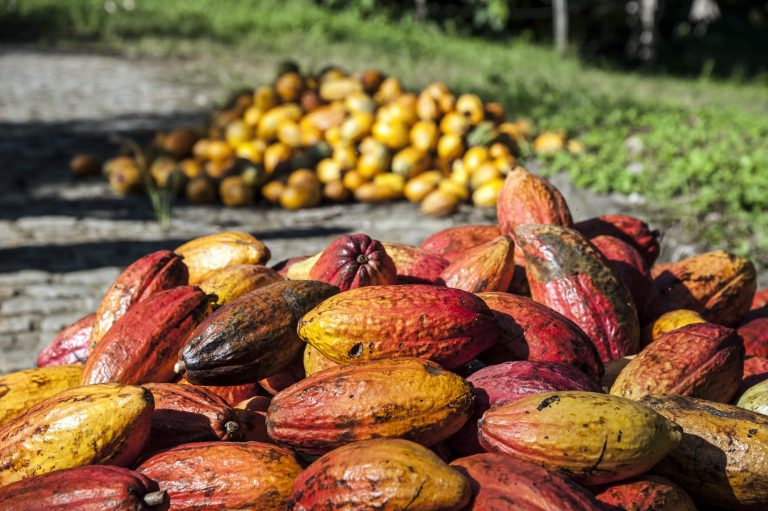
Côte d'Ivoire is the world's largest cocoa producer, but its farming has caused massive deforestation. To avoid losing all of its forest cover by 2034, the country is exploring new ways of tracking cocoa production and developing agroforests.
Faced with the prospect of losing all its forests, Côte d'Ivoire has teamed up with chocolate makers in an attempt to put a stop to the spread of cocoa plantations in protected national parks and reserves.
Côte d'Ivoire, the world's largest cocoa producer, and major chocolate companies from Mars to Hershey, by way of Barry Callebaut, committed last year to eliminating cocoa production and sourcing from protected forests.
Eradicating deforestation from the cocoa supply chain is only one of the commitments made by chocolate makers around the world to make the industry more sustainable, while also finding ways to end child labour and raise farmers' incomes.
If deforestation continues unchecked, Côte d'Ivoire risks losing all of its forest cover by 2034, environmental campaigners say. Western chimpanzees, classified as critically endangered since 2016, forest elephants and the rare pygmy hippopotamus all live in the country's forests, which are disappearing fast.
However, plans to end deforestation, a major threat to the long-term sustainability of the cocoa industry, are running into major obstacles.
Côte d'Ivoire estimates that 40% of its cocoa comes from protected areas, providing livelihoods for hundreds of thousands of farmers and their families.
Ethical certification schemes and Ivorian laws have so far failed to prevent forests from being replaced by plantations, while alternatives to environmentally friendly farming are generally difficult and costly to implement at scale.
What is the problem?
Ivorian forests have been cut down to make way for agricultural products such as cocoa, palm oil and rubber since the country's independence from France in 1960.
The decimation of its national parks and forests since the turn of the century has, however, shocked researchers and led to the agreement on ending deforestation signed at the United Nations Climate Change Conference (COP23) in November.
A study published in the journal Tropical Conservation Science in 2015 concluded that three-quarters of the land in five national parks and 18 forest reserves in Côte d'Ivoire had been converted to cocoa production.
As part of a 2017 investigation by Mighty Earth, the head of the Ivorian forest reserve protection agency (Sodefor) estimated that 40% of the country's cocoa came from protected areas.
Almost half of the 34,000 hectares of Mont Péko National Park had been converted to cocoa by 2015, according to data from the environmental campaign group seen by Reuters. Marahoué National Park had lost 40% of its forest in the same year.
How did it happen?
The outbreak of civil war in Côte d'Ivoire in 2002 was a determining factor. The country was divided between a rebel-held north and a government-held south, with the western forest regions home to several armed groups.
Many forest rangers and forestry officials abandoned their posts, allowing warlords to settle in fertile forest land ideal for cocoa production, for both the local population and immigrants, thus accelerating deforestation.
Despite the end of the war in 2011, many lucrative strongholds created by former rebels are still in place.
Attractive world cocoa prices also encouraged farmers to push deeper into protected forests, helping Côte d'Ivoire consolidate its position as the world's leading cocoa producer, ahead of neighbouring Ghana.
How will the agreement work?
The deforestation agreement was signed by Côte d'Ivoire and Ghana, as well as by 24 trading companies and chocolate makers, including Ferrero, Nestlé, Lindt, Mondelez, Ritter Sport, Olam and Cargill.
A number of chocolate makers have separately committed to ensuring that none of the beans they buy come from deforested areas by 2030.
The details of the plan have not yet been worked out, but cocoa exporters are pinning their hopes on GPS mapping and their relationships with cooperatives producing beans under certified schemes such as Rainforest Alliance.
The idea is to trace all cocoa back to the farm where it was produced, to prevent beans grown illegally in national parks and protected forests from entering the chocolate supply chain.
"We think cooperatives are the best driver," said Lionel Soulard, Africa director for Cargill, the region's top exporter.
"It starts with … GPS mapping of farmers, then we make sure we can trace the origin of the cocoa and how we can prove it," he told Reuters in an interview in February in Abidjan, Côte d'Ivoire.
The Ivorian government is due to publish by the end of the year updated maps of forest cover and land use for different forests, as well as data on cocoa farmers and forest-dependent communities.
The government has committed to strengthening monitoring of its forest reserves and imposing penalties for any new infringement by mid-year at the latest.
Côte d'Ivoire is also drawing up a plan to restore its national forests and develop sustainable agroforestry models, a model aimed at restoring forest cover while allowing cocoa production to continue in protected areas.
"It's a lot of work," said Jean Claude Koya, a sustainable development specialist for the Ivorian government. "Some of these forests are so degraded that we can't do anything … but some can still be saved."
What are the problems?
To end deforestation, Côte d'Ivoire could be forced to remove hundreds of thousands of farmers from the forests and find other livelihoods for them. To prove the provenance of all cocoa, every smallholder farm would have to be mapped and every cocoa bean tracked from farm to farm.
However, it is difficult to trace the origin of cocoa and the supply chain is open to manipulation. Reports by Mighty Earth and others have shown that cooperatives were still selling cocoa from national parks to major cocoa traders.
Certification schemes such as Rainforest Alliance aim to guarantee that cocoa sold under their label does not come from illegal farming in protected forests, but sustainability experts acknowledge that these schemes are not foolproof.
In Duékoué, a town in western Côte d'Ivoire surrounded by cocoa farms and thick scrub, members of three cooperatives told Reuters it was common for beans grown in protected forests to be mixed with cocoa from farms considered sustainable.
"There are weaknesses in the system. Companies may think they are buying certified cocoa, but there are wild cards in the deck," Edward Millard, Rainforest Alliance's director for Africa and South Asia, told Reuters. "You do your best, but any verification system carries risks."
The government's attempts to combat illegal cocoa growing since the second civil war of 2011, which defused the country's political crisis, have also failed, partly because of inertia and corruption.
In the past, Ivorian authorities tended to react to encroachments on protected areas by sending agents to forcibly remove farmers and destroy their crops.
Park authorities evicted thousands of illegal cocoa producers from Mont Péko in 2016, destroying cocoa trees and settlements. But no alternative livelihoods were offered and many cocoa producers returned afterwards.
Farmers interviewed by Reuters in the Scio reserve said Sodefor agents often came to get them out of the forest, but always ended up accepting bribes instead of letting them stay.
Côte d'Ivoire's minister of water and forests, Alain-Richard Donwahi, declined a Reuters interview. A ministry spokeswoman did not respond to questions sent by email.
Alternatives?
Taco Terheijden, head of sustainable cocoa management at Cargill, thinks it is undesirable to remove farmers from forests unless other livelihoods are found.
"If hundreds of thousands of farmers were to be evicted, I would not want to be responsible for a … social disaster," he said. "If we evict them from their own source of cocoa, we have to make sure there is an alternative."
Last year, the Ivorian government began drawing up plans to legalise cocoa plantations in some forests and reserves, creating protected agroforests where new trees are planted while farmers continue to grow cocoa.
Under this model, trees run through the crops, shading the cocoa plants while reducing damage to biodiversity and preserving soil fertility for longer.
This strategy could help Côte d'Ivoire curb deforestation without evicting farmers or reducing cocoa production, which provides more than half of the country's export revenue.
But Côte d'Ivoire's goal of rolling out agroforestry across 2 million hectares of protected reserves risks being expensive, and neither the government nor the cocoa industry has committed to paying the bill.
"Rolling out agroforestry across 6 million hectares is expensive," said Etelle Higonnet of the conservation watchdog Mighty Earth, referring to the amount of land devoted to cocoa in West Africa as a whole. "You can't ask farmers to foot the bill. Companies have to figure it out."
This story was reported by the Thomson Reuters Foundation.