
The Supreme Twins: Catalysts of Transformation and Sustainable Development in Côte d'Ivoire's Cocoa Industry
The Supreme Twins, Diakité Alahassane and Diakité Fousseni, have established themselves as unavoidable figures in the Ivorian cocoa industry. Their role is all the more significant as they are cocoa processors of…
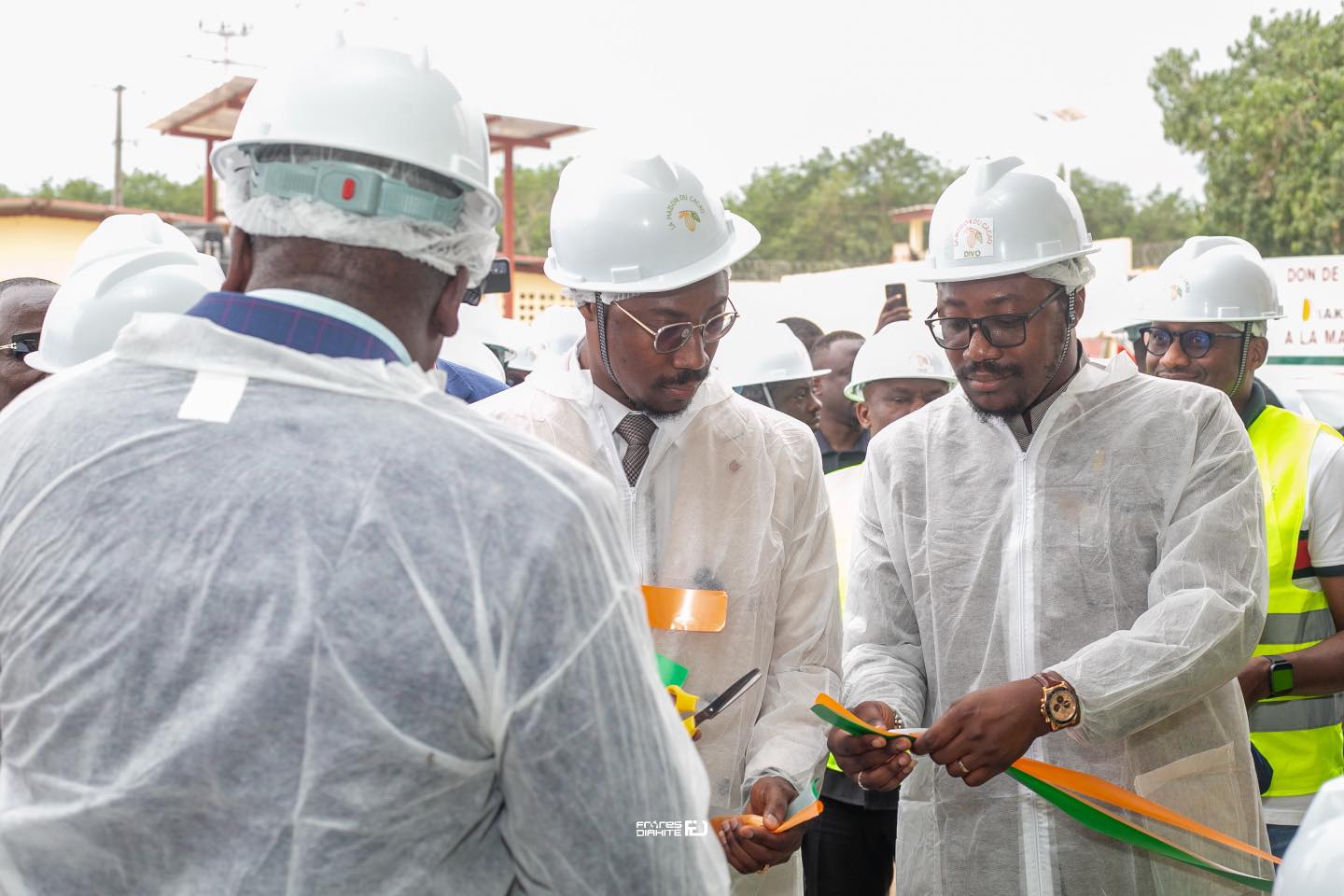
The "Supreme Twins", Diakité Alahassane and Diakité Fousseni, have established themselves as unavoidable figures in the Ivorian cocoa industry. Their role is all the more significant because they are leading cocoa processors, marking an essential turning point for Côte d'Ivoire, the world's largest cocoa producer. Their innovative approach aims to shift the national paradigm from simply exporting raw beans to high-value-added local processing.
Their contributions are many and strategic. Through the Société de Transformation de Café Cacao de Côte d'Ivoire (ST2C-CI) and Diakité Cocoa Products, they have implemented an innovative business model focused on valorising cocoa "sub-grades". Their unwavering commitment to 100% organic and sustainable practices positions them uniquely in a global market that is increasingly demanding on ethical sourcing. Beyond their business activities, their social and community development initiatives, notably in the Divo and Gan regions, are extensive and impactful, reflecting a holistic approach to development.
Although the Ivorian cocoa industry faces persistent challenges such as the severe impacts of climate change, inadequate farmer pay and the complex problem of child labour, the Supreme Twins' integrated model offers a promising path towards greater resilience, increased sustainability and fairer growth for the whole sector. Their emergence as key local players represents a major strategic shift. Côte d'Ivoire, despite its position as world leader in cocoa production, has historically captured only a disproportionately small share of the profits generated by the cocoa value chain. The Ivorian government has in fact set an ambitious goal of significantly increasing local cocoa processing to 50% by 2030. The rise of national players like the Supreme Twins, who invest heavily in processing rather than simple export, responds directly to this national strategic imperative. Their operational success provides a concrete, replicable model for Côte d'Ivoire to retain and generate substantially more economic value inside its borders, moving beyond its traditional role as a raw-material supplier. This trend marks a crucial maturing of the Ivorian cocoa sector, signalling a strategic turn towards industrialisation and value-added production that could inspire a new wave of local entrepreneurship, create more skilled jobs and reduce the country's economic vulnerability to global commodity price volatility. Ultimately, it heralds a potential rebalancing of power dynamics in the global cocoa industry, with producing nations asserting greater control over their resources and value creation.
2. Introduction: The Ivorian Cocoa Landscape and the Rise of New Players
Côte d'Ivoire holds a dominant position in the world cocoa market, as the leading producer with more than 2 million tonnes produced annually, about 42% of world supply. This production is a pillar of the national economy, placing the country as Africa's 9th-largest economy in 2024, with GDP estimated at US$87 billion, and 8th in 2029, with US$128 billion.
In this context, the Ivorian government has set out an ambitious strategic vision: to process at least 50% of its cocoa production by 2030. This target is a significant increase on the current local processing rate of about 33%. The rationale for the policy is clear: to capture a larger share of the world cocoa market, estimated at US$130 billion, of which Côte d'Ivoire currently receives only between 5% and 7% of the profits. The initiative underlines a national desire for economic diversification and greater value retention.
It is in this dynamic landscape that Diakité Alahassane and Diakité Fousseni, known as the "Supreme Twins", emerge as central players. They are not mere participants but "unavoidable figures" in the Ivorian cocoa industry. Their rise is both a direct response to, and a driver of, the national effort towards greater local processing and industrialisation of the cocoa sector.
The glaring disparity between Côte d'Ivoire's massive volume of raw cocoa production and its tiny share of global industry profits creates an undeniable economic imperative for local value addition. The government's 2030 processing target is not merely a policy directive; it embodies a fundamental shift in national economic strategy, designed to correct this imbalance. Companies such as the Supreme Twins' are therefore not simply private entities; they are integral components of a larger national effort to achieve economic self-determination and sustainable development. Their growth contributes directly to the country's ability to capture a larger share of the value chain. This strategic reorientation, led by local players, could bring greater economic stability to Côte d'Ivoire, a more robust and skilled labour market, and a significant reduction in the country's vulnerability to the price volatility inherent in international commodity markets. It also sets a precedent for other resource-rich developing nations, encouraging them to pursue similar value-addition strategies.
3. The Visionaries: Diakité Alahassane and Diakité Fousseni
The personal journey of Diakité Alahassane and Diakité Fousseni is deeply rooted in the cocoa sector. Their passion for cocoa farming goes back to their childhood. A decisive moment in their path was their decision to return to farming after earning their Technician's Certificate (BT), driven by the conviction that "the land never betrays". This intimate connection to the land offers a unique perspective on their business philosophy.
They are consistently described as embodying "success in cocoa processing", underlining their achievement in this critical field. Their vision is described as "innovative for the development of the sector", which reflects a forward-looking approach. Beyond their business activities, they actively champion youth involvement in cocoa farming, highlighting its potential for creating wealth and sustainable livelihoods.
Their recognition as key players is attested by their prominent role as sponsors and exhibitors at major industry events, such as the 2024 National Coffee and Cocoa Days (JNCC). These platforms give them opportunities to share their innovative vision and experiences. Crucially, they lead the Inter-Regional Union of Coffee-Cocoa Cooperatives of Côte d'Ivoire (U.INTER.CC.CI), which testifies to their influence and their commitment to collective action in the sector.
The path of the Diakité twins, who have gone from individuals deeply tied to cocoa farming to leaders in industrial processing and cooperative management, represents a powerful, integrated approach to the cocoa value chain. This approach contrasts sharply with traditional models in which farmers often remain marginalised at the bottom of the ladder, capturing minimal value. By consolidating their influence and value capture across several stages – from growing practices (agroforestry) to processing and marketing – the Diakités demonstrate a model of holistic leadership. Their personal experience as farmers gives them an intrinsic understanding of the challenges facing producers, enabling more effective and empathetic interventions. This integrated model offers a compelling blueprint for other local entrepreneurs and cooperatives in Côte d'Ivoire and beyond. It suggests a path towards a fairer distribution of profits within the cocoa sector, promoting greater autonomy and potentially leading to more resilient, locally controlled supply chains. It challenges the established structure of the global cocoa industry by letting local players move up the value chain.
The twins' highly publicised presence at industry events and their extensive involvement in community development initiatives indicate that they are more than successful entrepreneurs; they are influential leaders in the community and the industry. This grounded local leadership is essential for building trust among farmers and for encouraging the adoption of innovative practices, such as agroforestry, that might otherwise meet resistance. Their ability to mobilise and inspire local communities is a critical factor in driving widespread sector change. Their influence extends well beyond their direct business operations. By acting as catalysts for change, they contribute to broader socio-economic development in cocoa-producing regions, potentially influencing national policy discussions and speeding up the widespread adoption of sustainable, value-added practices across the Ivorian cocoa landscape. This demonstrates the power of local champions in achieving national development goals.
4. ST2C-CI: Pioneer of Local Cocoa Processing
The Société de Transformation de Café Cacao de Côte d'Ivoire (ST2C-CI) is the Supreme Twins' main business entity. Diakité Cocoa Products, launched in 2016, is ST2C-CI's specialised arm, focusing on processing cocoa sub-grades into semi-finished products. This strategic specialisation is a key element of their business model.
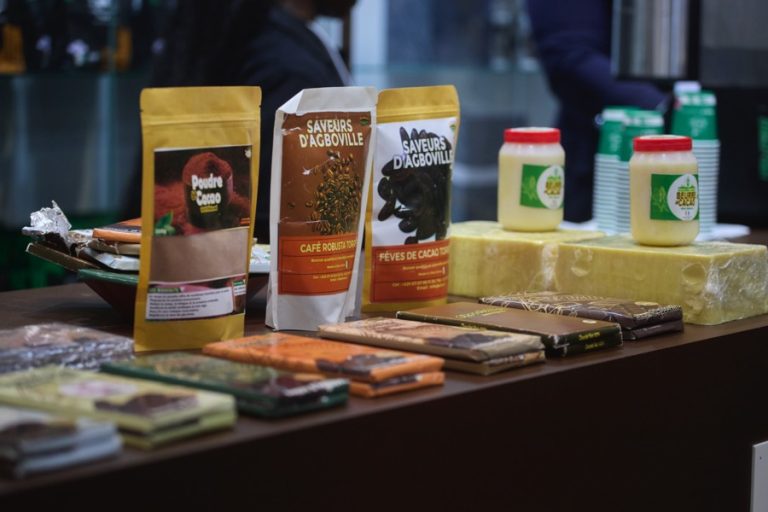
The heart of their business lies in valorising cocoa classed as "sub-grade" or of "not good" quality. This innovative approach follows in the line of historic Ivorian policies aimed at bringing lower-quality cocoa back onto the world market and minimising post-harvest losses. The specific products from this processing include cocoa butter, cocoa mass and cocoa cake. These products find varied applications in industries such as cosmetics, pharmaceuticals and veterinary medicine.
The deliberate focus on processing "sub-grades" represents a sophisticated business strategy that goes beyond simply processing top-quality beans. Historically, these lower-quality beans might have been thrown away or sold at heavily reduced prices, contributing to waste and lost income. By actively investing in the technology and processes needed to industrialise these beans, the Diakités are implementing a circular-economy approach within the cocoa sector. This not only creates valuable new revenue streams from a previously undervalued segment of cocoa production but also inherently reduces agricultural waste, demonstrating both economic ingenuity and responsible environmental stewardship. This innovative approach could set a new benchmark for resource efficiency and profitability in the cocoa industry. By maximising the value of the whole harvest, rather than limiting itself to top-quality beans, it contributes to the overall economic viability of cocoa farming. It also positions ST2C-CI uniquely in the market, attracting buyers interested in sustainable sourcing and waste reduction.
ST2C-CI has significant operating capacity. Its Abidjan plant has a stated capacity of 15,000 tonnes a year, with an initial production target of 5,000 tonnes a year. Diakité Cocoa Products currently processes 12,000 tonnes annually. The company has ambitious plans to double this production capacity through the construction of new facilities. The inauguration of a large cocoa-processing plant in Divo, described as one of the largest in Côte d'Ivoire, is a key element of this expansion.
A pillar of ST2C-CI's operations is its unwavering commitment to quality. Its products are certified 100% organic, processed to strict standards and entirely free of additives, guaranteeing exceptional purity and traceability. The company rigorously selects its cocoa beans from producers who follow organic farming standards, and its quality department ensures that every batch meets international environmental and health standards. Customer testimonials from people such as Anika van Dijk (R&D Manager) and Jean-Marc Lemoine (Sourcing Director) attest to the perceived quality and reliability of its products.
In a global market where consumer awareness of and demand for certified, sustainable products are growing rapidly, ST2C-CI's 100% organic certification is a powerful competitive advantage, not a mere compliance badge. This commitment goes beyond basic regulatory requirements, reflecting a core business principle that aligns with global consumer trends and strict ethical-sourcing requirements. In addition, adhering to organic practices implies a direct positive impact on local ecosystems and farmers' health by eliminating the use of pesticides, herbicides and fungicides. This strong emphasis on organic quality positions ST2C-CI favourably in lucrative premium markets, potentially allowing it to achieve higher profit margins than conventional cocoa processors. It also improves the overall reputation of Ivorian cocoa as a source of high-quality, sustainably produced ingredients, which can attract a wider range of demanding international buyers and foster long-term partnerships.
The report also highlights concrete environmental commitments built into their operations. The new Divo plant, for example, incorporates modern green technologies such as solar panels and a biomass boiler, demonstrating a proactive approach to reducing their carbon footprint and promoting renewable energy. Customer testimonials also praise their "environmentally friendly processing", indicating that their environmental efforts are recognised and appreciated by their partners.
The strategic investment in advanced green technologies such as solar panels and biomass boilers for their new plant reflects a forward-looking, proactive approach to industrial operations. The move is not just about environmental compliance; it is a shrewd business decision that reduces their dependence on volatile fossil-fuel prices, lowers long-term operating costs and significantly reduces their environmental impact. It represents a practical, large-scale application of sustainability principles directly within their industrial footprint, going beyond mere rhetoric. Such substantial investment in environmentally friendly infrastructure considerably enhances their brand image and corporate reputation, making them an attractive partner for environmentally conscious companies and potentially opening the door to green-finance opportunities. Moreover, by setting a precedent for sustainable industrial practices, they contribute directly to Côte d'Ivoire's broader climate goals and show other industrial players a viable path to more responsible production methods, thus fostering a more sustainable national economy.
Table 1: ST2C-CI Product Portfolio and Certifications
| Product Name | Main Use Cases | Key Certifications/Quality Attributes | Production Capacity (Annual) |
| Cocoa Butter | Cosmetics, Pharmaceuticals, Veterinary, Food & Beverage | 100% Organic, Strict Standards, Additive-Free, Purity, Traceability, Environmental Respect | Abidjan plant: 15,000 tonnes (capacity), 5,000 tonnes (initial target) |
| Cocoa Cake | Food & Beverage | 100% Organic, Strict Standards, Additive-Free, Purity, Traceability, Environmental Respect | Diakité Cocoa Products: 12,000 tonnes |
| Cocoa Mass | Food & Beverage | 100% Organic, Strict Standards, Additive-Free, Purity, Traceability, Environmental Respect | Plans to double production |
| Cocoa Liquor | Food & Beverage | 100% Organic, Strict Standards, Additive-Free, Purity, Traceability, Environmental Respect | New plant in Divo (one of the largest) |
5. Strategic Impact and Value Creation in the Cocoa Value Chain
The Supreme Twins' operations contribute directly to the Ivorian government's ambitious goals for local cocoa processing. By turning raw cocoa beans into semi-finished products, they play an essential role in enabling the country to retain a larger share of the value generated by its main agricultural export. This tackles the historic problem that Côte d'Ivoire captures only a tiny percentage (5-7%) of the substantial profits of the global cocoa industry.
Their unique, innovative business model is centred on processing cocoa "sub-grades". This approach not only creates new product lines and revenue sources but also significantly improves the overall efficiency and sustainability of the cocoa supply chain by minimising waste and maximising resource use.
The Diakité twins' deliberate and successful industrialisation of "sub-grades" fundamentally challenges the traditional perception of lower-quality agricultural by-products or output as mere waste. Instead, they demonstrate a tangible application of circular-economy principles in the cocoa sector, turning what could have been a burden into a valuable asset. This strategy is not driven by profit alone; it embodies resource optimisation and a reduced environmental footprint, setting a precedent for sustainable industrial practices. This innovative model could set a new industry standard for maximising the value of the whole cocoa harvest, leading to higher economic returns for producers and processors. It also inspires other industry players to explore similar waste-valorisation initiatives, fostering a more resilient and ecologically responsible cocoa economy. This redefinition of "waste" as a resource is a crucial step towards a truly sustainable agricultural sector.
Their commitment to 100% organic certification and rigorous traceability positions them strongly to capitalise on growing global demand for ethical, sustainable, high-quality cocoa products. Their proven ability to ship products outside Europe indicates a proactive reach into the international market, letting them tap into diverse consumer bases.
Their prominent role as sponsors and exhibitors at major industry events such as the JNCC 2024 is a clear indicator of their recognised standing and growing influence in the Ivorian cocoa industry. These platforms are used strategically not only for business networking but also to share their "innovative vision" and demonstrate their leadership in shaping the sector's future.
The twins' active role as sponsors and exhibitors at major industry gatherings like the JNCC shows a strategic intent to influence and shape the future direction of the Ivorian cocoa industry, rather than simply take part in it. By publicly sharing their "journey and experiences" and their "innovative vision", they engage in a form of knowledge transfer and advocacy. This positions them as thought leaders, demonstrating a commitment to the advancement and collective development of the whole sector. This proactive engagement strengthens their reputation and credibility, which can attract new partnerships, facilitate access to critical resources and speed up the adoption of sustainable, value-added practices across the Ivorian cocoa landscape. Their influence extends beyond their direct business activities, contributing to a more robust and forward-looking national cocoa strategy.
6. Empowering Communities: Social Responsibility and Farmer Engagement
The Supreme Twins play a significant role as leaders of the Inter-Regional Union of Coffee-Cocoa Cooperatives of Côte d'Ivoire (U.INTER.CC.CI). This influential organisation brings together an impressive network of 2,500 producers and more than 40 cooperatives across the country. This leadership position gives them a direct, extensive link with a broad base of cocoa farmers, enabling large-scale impact and farmer empowerment.
The report highlights their active integration of agroforestry into their farm-management practices. This method is crucial not only for its positive environmental impact – promoting biodiversity and soil health – but also for its direct contribution to improving the quality of cocoa products, notably through the beneficial action of microbiota that help fermentation. The practice is recognised as a success model to be extended across the whole of Côte d'Ivoire.
The specific emphasis on improving cocoa quality through agroforestry thanks to the action of microbiota goes beyond a generic claim of environmental sustainability. It demonstrates a sophisticated understanding of the biological interaction between farming practices and product attributes. This scientific basis is crucial for a company committed to high-quality organic products. Moreover, agroforestry directly addresses the critical environmental challenges facing Ivorian cocoa, such as deforestation and the impacts of climate change, by improving ecosystem resilience. This detailed and impactful approach to agroforestry reinforces their commitment to genuine sustainability, which is vital for maintaining their organic certification and ensuring access to high-end international markets. It also offers a proven, climate-resilient path for other farmers to improve both yields and quality, fostering a more sustainable and more profitable cocoa sector across the country.
Their social initiatives in Divo are detailed. For the 2024-2025 school year, the Supreme Twins mobilised a total of 10 million CFA francs. This substantial sum covered school kits, teaching materials, direct financial aid and general support for deserving pupils, particularly those from vulnerable families. More specifically, they provided 5 million CFA francs to support nearly 700 pupils enrolled in private secondary schools. In addition, they publicly recognised and rewarded the top-performing pupils who passed their BAC and BEPC exams, thus encouraging academic excellence. Thirteen women, recognised for their active involvement alongside the Diakité brothers in various social, awareness-raising and mobilisation activities, received financial support totalling 1.5 million CFA francs. This aid was specifically intended to help them with their children's schooling, recognising their crucial role in the community and their support for the "Agir pour Divo" movement. In a significant move to fight youth unemployment, the twins gave 500 driving licences to young people in Divo. This initiative was explicitly presented as opening paths to employment, including potential opportunities in the taxi sector. The programme is directly linked to the "Agir pour Divo" movement, which is notably led by Diakité Alahassane.
The scale and strategic nature of their social initiatives – including substantial financial contributions, support for hundreds of students and the provision of 500 driving licences – go beyond typical corporate social responsibility. The explicit link with the "Agir pour Divo" movement, led by Alahassane Diakité, suggests a deliberate integration of social impact with local political and community influence. The driving-licence initiative, in particular, directly tackles a critical socio-economic problem (youth unemployment) by offering tangible skills and immediate job opportunities. This deep, multifaceted community engagement not only cultivates a strong social licence to operate but also fosters deep loyalty and goodwill among local populations. This, in turn, creates a more stable and favourable operating environment for their businesses. It also positions the "Supreme Twins" as major players in local development, potentially able to influence regional policy and resource allocation, thus consolidating their long-term impact and relevance in the region.
The report also highlights their active and tangible commitment to the global fight against child labour, a persistent problem in the cocoa sector. A key initiative is the construction of a six-classroom primary school in Gan, a major cocoa-producing village in the Zou/Bangolo department, which previously lacked adequate educational infrastructure. The school is designed to provide decent learning conditions for more than 500 children, offering a vital alternative to children's involvement in farm work. They are also identified as promoters of the "National Young Cocoa Farmer Forum", an organisation dedicated to promoting the sustainability of Ivorian cocoa and creating training centres for cocoa trades.
The decision to build a school in a cocoa-producing village like Gan is a highly impactful and direct intervention against child labour, which remains a significant and persistent challenge in the Ivorian cocoa industry. By providing accessible, quality education, the twins offer a concrete and lasting alternative to children's involvement in farm work. This initiative aligns directly with broader international efforts and ethical-sourcing requirements to eradicate child labour from supply chains. Moreover, their promotion of cocoa-trade training centres indicates a long-term vision for youth empowerment and for developing a skilled workforce in the sector. The initiative not only addresses a critical human-rights problem but also contributes significantly to the long-term human-capital development of cocoa-producing regions. By fostering a more educated and skilled future workforce, it improves the sustainability and overall professionalism of the cocoa industry, potentially leading to higher productivity and better long-term livelihoods. It also strengthens Côte d'Ivoire's position in global markets that prioritise ethical production.
Their leadership of U.INTER.CC.CI, combined with their promotion of agroforestry and their extensive social programmes, demonstrates a comprehensive, holistic approach to improving farmers' conditions and fostering broader rural development.
Table 2: Social and Community Initiatives of the "Supreme Twins" (2024-2025)
| Initiative Name | Location | Beneficiaries | Type of Support | Reported Contribution/Scale | Associated Movement/Organisation |
| Educational Support for Students | Divo | Vulnerable pupils | School kits, financial aid, school fees | 10 million CFA francs in total; 5 million CFA francs for ~700 pupils | Agir pour Divo |
| Financial Aid for Mothers | Divo | Mothers involved in social activities | Financial aid for children's schooling | 1.5 million CFA francs for 13 women | Agir pour Divo |
| Driving Licences for Young People | Divo | Young people | Driving licences | 500 driving licences | Agir pour Divo |
| School Construction | Gan | Children (500+) | 6-classroom primary school | School for more than 500 children | National Young Cocoa Farmer Forum |
| Rewards for Top Pupils | Divo | Top pupils (BAC, BEPC) | Financial support, sponsorship | Rewards and financial support | Agir pour Divo |
7. Navigating Industry Challenges and Future Opportunities
Challenges Facing the Ivorian Cocoa Sector
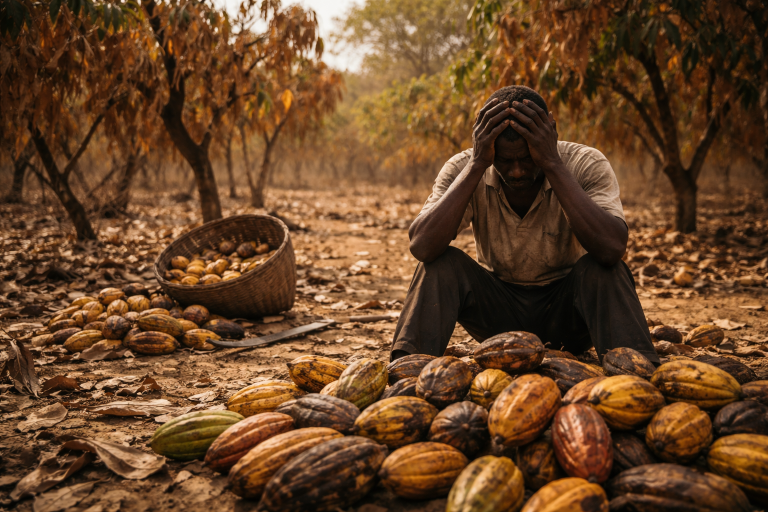
The Ivorian cocoa sector is deeply affected by climate change, suffering severe consequences such as drastically reduced yields, prolonged and intense dry seasons, devastating floods and the emergence of new diseases like swollen shoot. These environmental stresses make cocoa farming less and less profitable, pushing many farmers to abandon cocoa in favour of more resilient or lucrative crops such as rubber or oil palm.
Despite Côte d'Ivoire's status as the world's leading producer, small cocoa farmers receive only a disproportionately small share of the final price of a chocolate bar, about 7%. This systemic problem perpetuates poor living conditions and poverty among the roughly 600,000 planters and 6 million people who depend on the sector, despite efforts by bodies like the Coffee-Cocoa Council (CCC) to set producer prices.
Child labour remains a persistent and complex problem in the Ivorian cocoa industry, attracting considerable international attention. Likewise, environmental degradation, particularly deforestation caused by cocoa expansion, is a major concern. Although various certification initiatives have been implemented to address these problems, their effectiveness and reach are often debated.
There is a growing and undeniable demand from global consumers and regulators (for example the EU) for certified, traceable cocoa. Certifications such as Rainforest Alliance, UTZ and Fair Trade are becoming increasingly important for market access and brand reputation.
The "Supreme Twins" in Context
The Supreme Twins' model addresses or mitigates these broader industry challenges in several ways. Their proactive adoption and promotion of agroforestry practices serve as a direct and effective mitigation strategy against the negative impacts of climate change, improving the resilience of cocoa plantations and the quality of beans. By leading a large cooperative union (U.INTER.CC.CI) of 2,500 producers and focusing on local processing, they contribute directly to increasing the value captured by producers and by the country as a whole, thus addressing the issue of low profit retention. Their model implicitly aims to improve farmers' incomes through better practices, higher-quality production and potentially better market access for their processed products. Their direct and substantial investment in educational infrastructure, notably the construction of a primary school in Gan, and their broader educational support programmes are tangible efforts to fight child labour by offering children viable alternatives. Their commitment to agroforestry and their 100% organic certification contribute directly to environmental protection by promoting biodiversity, preventing deforestation and eliminating the use of harmful chemicals. The integration of solar panels and biomass boilers in their new plant further underlines their dedication to sustainable industrial practices. Finally, their explicit emphasis on "purity, traceability" and the rigorous selection of organic beans from certified producers aligns perfectly with growing global demand for supply-chain transparency and ethical sourcing.
Market Dynamics and Growth Prospects
The global cocoa and chocolate market is growing steadily, with projections reaching US$67.88 billion by 2029, at a compound annual growth rate (CAGR) of 4.98%. Key emerging trends include rising consumer demand for low-sugar and sugar-free products, a growing preference for certified cocoa (for example UTZ, Rainforest Alliance, Fair Trade) and a growing appreciation for premium chocolates. In addition, while Europe remains a dominant consumer and producer, Asia is emerging as a significant growth market for chocolate consumption.
The Supreme Twins' business model, characterised by 100% organic certification and an unwavering focus on quality and traceability, positions them exceptionally well to capitalise on these global market trends. Their established ability to export products beyond Europe is a crucial advantage, letting them tap into lucrative global opportunities, particularly in fast-growing Asian markets. This strategic alignment with market demand provides a solid foundation for their future growth.
Table 3: Key Challenges for Ivorian Cocoa and the "Supreme Twins'" Contributions
| Ivorian Cocoa Industry Challenge | Description of the Challenge | "Supreme Twins'" Contribution/Mitigation Strategy |
| Climate Change Impacts | Reduced yields, floods, prolonged droughts, diseases (e.g. swollen shoot) | Agroforestry practices |
| Low Farmer Pay | Only 7% of the chocolate price goes to farmers, perpetuating poverty | Cooperative leadership (U.INTER.CC.CI), local processing of "sub-grades" |
| Child Labour | Persistent, complex problem under international scrutiny | School construction (Gan), educational support |
| Environmental Degradation | Deforestation, monoculture, use of chemicals | 100% organic certification, green technologies in the plant (solar panels, biomass boiler) |
| Lack of Traceability | Growing consumer and regulator demand for certified, traceable cocoa | Emphasis on product purity and traceability |
8. Conclusion and Recommendations
The Supreme Twins, Diakité Alahassane and Diakité Fousseni, have established themselves as pioneers in Côte d'Ivoire's cocoa industry. Their innovative approach to value-added cocoa processing, their deep commitment to sustainability (organic certification, agroforestry, green technologies) and their extensive and impactful social and community initiatives are remarkable. Their integrated model, which runs from farmer engagement to advanced processing, is a blueprint for the sector's future.
Given their ambitious plans to expand production, the inauguration of their significant new plant in Divo, their strong cooperative network and their deep ties within local communities, the Supreme Twins are exceptionally well placed for substantial continued growth and increasing influence in the Ivorian and global cocoa sectors. Their alignment with national industrialisation goals and global sustainability trends suggests a promising future.
Recommendations
For the "Supreme Twins":
- Scale up operations and commercial reach: It is advisable to adopt strategic approaches to expand their international distribution network further, particularly exploring emerging but fast-growing markets in Asia beyond their current European reach. Forging strategic partnerships with major global chocolate manufacturers and other industrial buyers, who increasingly seek certified, traceable and ethically sourced cocoa products, is recommended.
- Deepen social impact and farmer empowerment: Continued investment in and expansion of their highly effective agroforestry programmes and educational initiatives is encouraged. It would be worth exploring innovative mechanisms to link farmers' income directly to the increased value generated by their processing operations, perhaps through improved profit-sharing models or premium payments within their U.INTER.CC.CI cooperative network, to better address the persistent problem of low farmer pay.
- Brand development and transparency: It is recommended to leverage their unique selling points — 100% organic certification, strong traceability and social impact — to build a powerful, globally recognised brand identity. Proactive, transparent communication about their sustainability practices and community development efforts can significantly enhance their reputation and attract demanding partners.
For the Ivorian Cocoa Industry (and the Coffee-Cocoa Council):
- Policy support for local processing: It is imperative to urge the Coffee-Cocoa Council (CCC) to step up its efforts to promote industrial processing by offering targeted incentives such as tax relief, preferential access to finance and simplified regulatory processes for local processors like ST2C-CI. Particular emphasis should be placed on supporting entities that valorise "sub-grades" and integrate advanced sustainable practices.
- Replicating integrated models: It is advocated to actively promote and replicate the Supreme Twins' integrated model — covering sustainable farming, advanced processing and deep community development — among other local entrepreneurs and cooperative unions. This would foster a more resilient, fair and value-rich cocoa value chain across the nation.
- Strengthening sustainability frameworks: It is recommended to strengthen government and industry support for the widespread adoption of agroforestry and organic farming practices in Côte d'Ivoire. This is crucial to effectively fight the devastating impacts of climate change and meet increasingly strict international sustainability requirements.
- Addressing the root causes of child labour: It is essential to call for stepped-up collaboration between the government, the CCC and private-sector players like the Supreme Twins on comprehensive, multifaceted programmes. These programmes should combine improved farmer livelihoods, robust educational infrastructure and holistic community development initiatives to effectively eradicate child labour from the cocoa supply chain.
For Stakeholders (Investors, International Buyers, NGOs):
- Investment in value-added processing: The Supreme Twins are identified as an excellent example and a high-potential target for strategic investment in Côte d'Ivoire's flourishing value-added cocoa sector. Their proven business model, strong commitment to sustainability and demonstrable social impact make them an attractive and responsible investment opportunity.
- Partnerships for sustainable sourcing: International chocolate companies, as well as cosmetics and pharmaceutical companies, are strongly encouraged to actively seek partnerships with ST2C-CI for sourcing high-quality, organic, traceable cocoa products. Such partnerships would not only secure ethical supply chains but also directly support local industrialisation and economic empowerment in Côte d'Ivoire.
- Support for community development initiatives: Collaborating directly with the Supreme Twins and their associated organisations (for example "Agir pour Divo", U.INTER.CC.CI) on community development projects is recommended. Recognising the intrinsic link between social wellbeing and sustainable cocoa production, supporting these initiatives is crucial for the industry's long-term stability and positive impact.