
Bean to Bar in Côte d'Ivoire: A Strategic Path to Added Value and Sustainable Development
The "bean-to-bar" model represents a paradigm shift in chocolate making, emphasising the maker's control over the whole production process, from…
I. Introduction
The "bean-to-bar" model represents a paradigm shift in chocolate making, emphasising the maker's control over the entire production process, from sourcing raw cocoa beans to manufacturing the final product for the consumer. This approach often involves direct engagement with cocoa growers, meticulous selection of single-origin flavour cocoa, and the use of specialised equipment to guarantee quality and specificity. Although the term emerged in the craft and specialty chocolate movement around 2010, its roots go back to the 1970s and 1980s, when some chocolate makers began to control the whole process. Unlike mass-produced chocolate or confectionery made from pre-processed cocoa mass, "bean-to-bar" signifies a commitment to making chocolate directly from whole beans, allowing greater control over flavour, quality and provenance.
For cocoa-producing nations, particularly Côte d'Ivoire, this model carries deep significance. Côte d'Ivoire is the world's largest cocoa producer, accounting for about 45% of the world cocoa crop and providing a vital raw material for the country's export earnings. Historically, the vast majority of this cocoa has been exported as raw beans, limiting the economic benefits retained by the country of origin. The "bean-to-bar" movement therefore presents a strategic opportunity for Côte d'Ivoire to move beyond its role as a raw-material supplier and capture more value in the global chocolate industry. This report aims to analyse the "bean-to-bar" movement in Côte d'Ivoire comprehensively, exploring its inherent challenges, the emerging opportunities it presents and its strategic implications for fostering sustainable development and fair prosperity in the country's cocoa sector.

II. The Global Cocoa Landscape and Côte d'Ivoire's Dominance
Côte d'Ivoire's position as the undisputed leader of world cocoa production is a defining feature of the international market. In 2023, the country produced about 2.38 million metric tonnes, or 34% of total world production. Together with Ghana, Côte d'Ivoire accounts for nearly two-thirds of world supply.
Table 1: World Cocoa Production by Leading Countries (2023)
| Country | 2023 Production (tonnes) | Approximate Share of World Production |
|---|---|---|
| Côte d'Ivoire | 2,377,442 | ~34% |
| Ghana | 653,700 | ~9% |
| Indonesia | 641,741 | ~9% |
| Ecuador | 375,719 | ~5% |
| Brazil | 296,145 | ~4% |
| Cameroon | 295,819 | ~4% |
| Nigeria | 284,232 | ~4% |
| Peru | 166,709 | ~2% |
| Dominican Republic | 65,930 | ~1% |
| Colombia | 59,831 | ~1% |
| Papua New Guinea | 43,200 (estimate) | ~0.6% |
| Other countries | Remainder |
III. Challenges and Opportunities for Value Addition in Côte d'Ivoire
Côte d'Ivoire's path towards greater value addition in its cocoa sector is strewn with complex socio-economic, environmental and market challenges, but it is also rich in strategic opportunities.
A. Socio-Economic Landscape
The foundation of the Ivorian cocoa industry rests on the labour of about 900,000 smallholder farmers. Despite their crucial role, most of these farmers struggle to earn enough to rise above the poverty line. On average, Ivorian cocoa farmers earn a meagre US$0.78 a day, receiving less than 6% of the total revenue generated by the chocolate industry. This widespread poverty is a root cause of many systemic problems.
One of the most persistent and worrying problems is child labour, which has long been a common practice in Côte d'Ivoire and Ghana. The dire economic situation of farmers on small plots often leaves them no choice but to rely on their children's labour to survive. Activities such as lifting heavy loads or working with dangerous tools are classed among the worst forms of child labour. Although the Ivorian government has launched crackdowns on child labour since 2015, making schooling compulsory and free, these efforts have had only limited success, which indicates that penalties alone are insufficient without tackling the underlying poverty.
Efforts to improve farmers' incomes, such as the Living Income Differential (LID) programme launched by Côte d'Ivoire and Ghana, aimed to add a premium of US$400 per metric tonne to prevailing market prices. The initiative sought to help farmers escape destitution by guaranteeing a higher price for their cocoa. However, multinational confectionery companies, including Mondelēz and Hershey, have been accused of circumventing these payments or changing their buying habits to avoid the differential, undermining the programme's intended impact. Likewise, Fairtrade standards, while offering a minimum price and a premium as a safety net, have proved insufficient on their own to resolve the systemic poverty facing cocoa farmers. The persistent struggle of Ivorian cocoa farmers, despite government and market-based interventions, underlines that voluntary corporate social responsibility and incremental price adjustments are not enough to resolve deeply rooted structural poverty. This suggests that truly transformative change requires directly empowering farmers through vertical-integration initiatives, such as farmer-owned "bean-to-bar" businesses, and the introduction of stricter, enforceable international regulations that impose a fair distribution of value across the entire supply chain, going beyond mere "fair trade" labels towards genuine "farm-to-bar" models.
B. Environmental Pressures
Cocoa growing in Côte d'Ivoire is inextricably linked to extensive deforestation. The expansion of farmland for cocoa has been identified as a primary driver, contributing to the loss of 45% of the country's rainforest over the past two decades. Experts estimate that up to 70% of illegal deforestation in the country is linked to cocoa growing. In a controversial decision, the government even considered converting thousands of square kilometres of already degraded rainforest into agroforestry reserves, a plan that could effectively legalise large-scale deforestation.
On top of these environmental challenges come the direct impacts of climate change. Cocoa farmers are increasingly experiencing unpredictable weather patterns, including heavy rains that help spread disease and dry Harmattan winds that raise concerns about yields. Ageing cocoa plantations, many of which are past their peak production years, also contribute to falling yields. In addition, crop diseases such as black pod and cacao swollen shoot virus (CSSV), as well as pest infestations, are growing problems that severely affect productivity. The low productivity of many small cocoa farms, partly due to inadequate pest and disease management and low soil fertility, creates a vicious circle: farmers, desperate to maintain their incomes, are forced to clear new forest land in search of better yields, worsening deforestation.
The Ivorian government's strategy of converting protected forests into agroforestry reserves, while facing falling yields from ageing plantations and climate-induced challenges, reveals a critical tension between immediate production demands and long-term environmental sustainability. The "bean-to-bar" movement, by promoting direct engagement with farmers and encouraging quality over mere quantity, offers a crucial path to promoting sustainable agroforestry practices, encouraging investment in rejuvenating existing farms and, ultimately, reducing the pressure for more deforestation. This approach aligns economic incentives with ecological preservation, because higher-value, ethically produced cocoa can allow farmers to earn more on smaller, sustainably managed plots, making destructive expansion less necessary.
C. Market and Infrastructure Obstacles
The world cocoa market is characterised by significant volatility. Although cocoa prices recently hit record highs because of low supply, they remain subject to considerable fluctuations. Quality concerns also affect the market, particularly with the mid-crop harvest, where 5 to 6% of beans are often judged non-compliant, leading to rejections by processors and affecting market dynamics.
At national level, Côte d'Ivoire faces substantial limitations in processing infrastructure and access to finance. Despite its status as the largest cocoa producer, the country captures only minimal value because most of its beans are exported raw. Obstacles to local processing include prohibitive energy and input costs, inadequate urban and industrial infrastructure, and persistent logistical challenges such as inefficient road checkpoints. In addition, local processors often face limited access to finance and technology, which, combined with the overwhelming dominance of powerful multinational buyers, considerably reduces the country's leverage on the world market. The domestic grinding sector, for example, slowed in early 2025 because of profitability concerns and the poor quality of some mid-crop beans.
However, significant external dynamics are emerging that could turn these challenges into strategic advantages. The global premium chocolate market is growing robustly, driven by consumer demand for higher-quality, ethically produced and traceable products. At the same time, the European Union Deforestation Regulation (EUDR) is due to be implemented from 30 December 2025 for large and medium-sized companies, and from 30 June 2026 for small companies. The regulation requires companies importing products into the EU to demonstrate that their supply chains are free of deforestation, thus requiring much better traceability from farm to final product. This convergence of growing global demand for premium, traceable chocolate and imminent regulatory pressure creates a powerful external impetus. This market pull and regulatory requirement can act as a catalyst, justifying and attracting the investment needed in Ivorian processing infrastructure and technical expertise. This external pressure effectively turns existing weaknesses into strategic advantages for value-chain integration, as international buyers will increasingly need to partner with origins that can guarantee transparent, sustainable, locally processed cocoa.
D. Strategic Opportunities
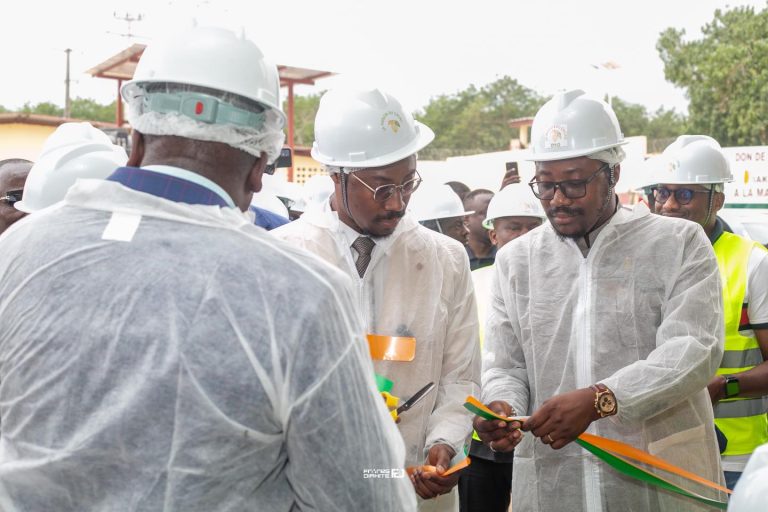
Recognising the critical need for value addition, the Ivorian government has positioned industrialisation as a key pillar of its National Development Plan (PND 2021-2025), with cocoa identified as a prime candidate for this transformation. A major strategic move was the inauguration of a US$233 million cocoa-processing plant, which fits the government's ambitious goal of processing at least 50% of its cocoa production locally. This initiative aims to reduce the country's vulnerability to volatile commodity prices, significantly increase export earnings and strengthen its bargaining power on international markets.
Moving up the value chain through domestic processing promises substantial benefits, including much-needed job creation and expansion of the country's manufacturing base. In addition, promoting the vertical integration of farmers into the value chain, for example by helping cooperatives set up small-scale processing facilities and offering profit-sharing models, can directly improve farmers' livelihoods and empower local communities.
These national efforts align perfectly with an emerging global trend: growing demand for ethical, high-end chocolate products. The global premium chocolate market, valued at about US$31.87 billion in 2024, is expected to reach US$40.60 billion by 2030, a compound annual growth rate (CAGR) of 4.3%. Other projections suggest even higher growth, reaching US$74.65 billion by 2032 at a CAGR of 9.4%. This growth is largely driven by changing consumer preferences for higher quality, ethical production, indulgence and "cleaner-label" options. Premium dark chocolate, in particular, is a significant and expanding segment, expected to grow at a CAGR of 4.8% and hold a majority share of 60%, with a CAGR of 9.56% because of its perceived health benefits. Europe remains the largest market for premium chocolate, while Asia-Pacific is emerging as the fastest-growing region. Rapid growth in online sales, projected at a CAGR of 7.4%, is also an important distribution channel for premium chocolate products.
Table 2 summarises the interplay of these factors, outlining the main challenges and strategic opportunities for value addition in Ivorian cocoa.
| Category | Challenges | Opportunities |
|---|---|---|
| Socio-economic | - Farmer poverty and low incomes (~US$0.78/day, <6% of final value) - Persistent child labour caused by poverty - Circumvention of the Living Income Differential (LID) by multinationals | - Direct farmer empowerment through vertical integration (producer-owned bean-to-bar) - Enforceable regulations for fairer value distribution |
| Environmental | - Extensive deforestation linked to cocoa expansion (45% forest loss in 20 years) - Climate change impacts (unpredictable weather, new diseases) - Ageing plantations, pests and diseases reducing yields | - Incentives for sustainable agroforestry and quality over quantity - Investment in farm rejuvenation and disease management - Aligning economic incentives with ecological preservation |
| Market & infrastructure | - World market volatility and quality problems (5-6% of mid-crop non-compliant) - High energy/input costs, inadequate infrastructure, logistical obstacles - Limited access to finance and technology for local processors | - Growing global demand for premium, traceable chocolate (CAGR 4.3%-9.4%) - EU Deforestation Regulation (EUDR) requiring traceability by 2025/2026 - Attractiveness to investment in infrastructure and technical expertise |
| Strategic | - Historical dependence on exporting raw beans (only 2.4% processed into finished products) - Limited national branding for finished chocolate products | - Government industrialisation programme (PND 2021-2025) - Major investment in a processing plant (US$233 million, target: 50% local processing) - Job creation, economic diversification and stronger bargaining power |
IV. Ivorian "Bean-to-Bar" Pioneers: Case Studies
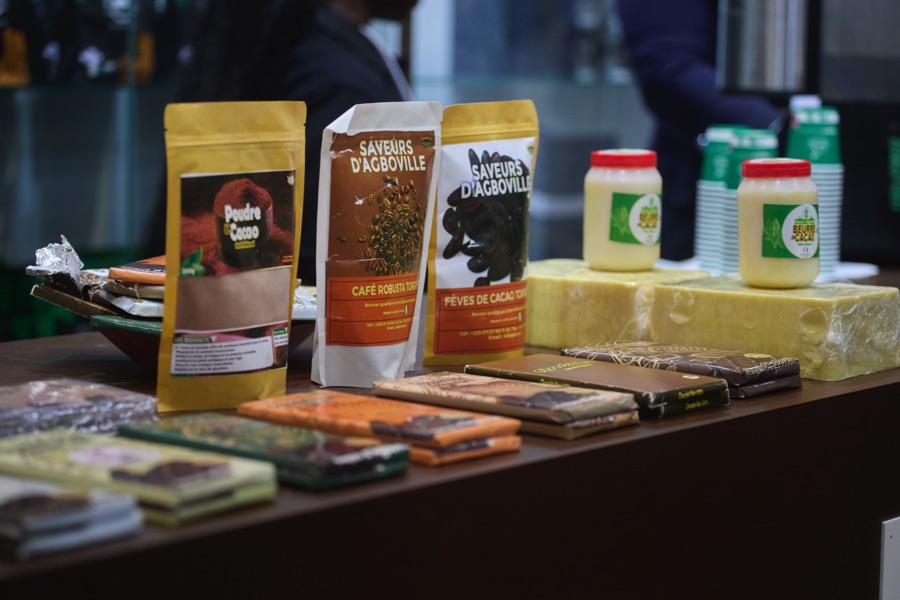
The "bean-to-bar" movement in Côte d'Ivoire is gathering momentum, driven by a new generation of local entrepreneurs committed to quality, ethics and sustainability. These pioneers demonstrate the viability of processing cocoa at origin and capturing more value at national level.
MonChoco, based in Abidjan, stands out as a craftsman of excellence, hand-making raw, organic, fair-trade "bean-to-bar" chocolate. The company is unique in West Africa for its raw confectionery approach, which uses unroasted beans to best preserve the taste and nutritional properties of cocoa, notably antioxidants, fibre, protein, minerals and trace elements. MonChoco products are naturally vegan, gluten-free and notably contain no added cocoa butter or lecithin, highlighting the pure, fruity, woody taste of Ivorian cocoa. Its production methods are also environmentally friendly, including sun-drying the beans, grinding by bicycle and hand-packing in recycled paper. MonChoco's distribution extends beyond Côte d'Ivoire, with counters in major local shopping centres and partnerships with various companies. Internationally, it offers delivery to Europe via DHL and has a physical presence in Senegal and France.
Luster Chocolate operates on a "tree-to-bar" model, signifying an even deeper level of vertical integration in which the company works directly with local farmers to produce quality Ivorian cocoa beans, ingredients and retail products. Based in Côte d'Ivoire, Luster Chocolate's mission is to provide high-quality chocolate while actively supporting the local community and environment through ethically sourced ingredients and traditional growing methods. It stresses meticulous attention to detail in its craft process, from ganache to tempered chocolate, and takes pride in relying on skilled workers rather than high-tech equipment. Its product range includes various chocolate bars (for example Roasted Coffee 70% Cocoa, Ginger 70% Cocoa), chocolate pouches, cocoa butter, cocoa nibs and cocoa powder. Luster Chocolate offers worldwide shipping, broadening its commercial reach.
aZannn's Chocolate, a small craft chocolate maker also based in Abidjan, shows a strong commitment to ethical sourcing and quality. It makes its "bean-to-bar" chocolate from beans coming from a direct-trade system, specifically from organic agroforestry systems. Crucially, aZannn's Chocolate pays significantly more than Fairtrade and Ivorian Coffee-Cocoa Council prices, ensuring fair pay for its growers and fostering a motivated workforce. The company keeps complete control over its chocolate-making process, from sourcing and roasting (adapted to the flavour profile of each cocoa origin) to cracking, winnowing, refining, conching (adding only sugar and a small amount of cocoa butter, avoiding additives or emulsifiers) and tempering. Its dedication to quality is matched by its environmental stewardship, actively fighting deforestation and avoiding pesticides.
These local Ivorian "bean-to-bar" producers, through operating models that favour direct trade, fair payment of farmers and sustainable practices (such as organic farming and agroforestry), demonstrate a viable, local way to tackle systemic problems like farmer poverty and deforestation directly at source. Their existence and stated practices provide concrete evidence that market-driven solutions can effectively address deeply rooted social and environmental challenges.
Beyond these craft producers, larger industry players are also making strategic investments in local processing and sustainability programmes. Puratos, a global ingredients supplier, began chocolate production in Côte d'Ivoire in July 2021 under its "Chocolanté" brand. This operation uses 100% Ivorian beans, which are fermented and processed in the San Pedro region, meaning full farmer-to-chocolate integration. Puratos's "Cacao-Trace" programme, created in 2014, aims to improve cocoa farmers' living conditions through quality premiums and "chocolate bonus" programmes that fund community projects, including scholarships, water stations and schools. Puratos is committed to sourcing cocoa sustainably, actively working to end deforestation linked to cocoa growing and striving to ensure a living income for growers, with a target of 100% sustainably sourced cocoa ingredients by 2030.
The combined emergence of these local craft producers and the strategic investments of major international players like Puratos points to a two-pronged, evolving approach to value addition. This model effectively combines craft quality and industrial efficiency, offering a robust blueprint for the future of Ivorian cocoa. The success of these pioneering companies provides concrete examples and proof of concept for other local entrepreneurs and acts as a magnet for new investment, illustrating that the "bean-to-bar" revolution is already under way at national level and gaining international recognition.
Table 3 gives an overview of these main Ivorian "bean-to-bar" chocolate producers:
Table 3: Overview of Leading Ivorian "Bean-to-Bar" Chocolate Producers
| Company name | Location | Key differentiators | Product range | Distribution channels |
| MonChoco | Abidjan | Raw, organic, fair-trade, "bean-to-bar"; only raw confectionery in West Africa; no added cocoa butter/lecithin; sun-dried, bicycle-ground, hand-packed. | Fondant, bars (various flavours) | Counters in major CI shopping centres, partnerships with businesses, online shop (delivery to Europe via DHL), physical presence in Senegal and France |
| Luster Chocolate | Côte d'Ivoire | "Tree-to-bar"; works directly with local farmers for quality beans; ethical sourcing; traditional growing methods; emphasis on skilled chocolate makers over high-tech equipment. | Chocolate bars (e.g. Roasted Coffee, Ginger, Cocoa Nibs), chocolate pouches (e.g. Roasted Cashews coated in Dark Chocolate), cocoa butter, cocoa nibs, cocoa powder, roasted cocoa beans. | Online shop (worldwide shipping) |
| aZannn's Chocolate | Abidjan | Small-scale craft; direct trade from organic agroforestry; pays above FairTrade/CCC prices; fights deforestation; full process control; no additives/emulsifiers. | Craft "bean-to-bar" chocolate (dark, milk), emphasis on terroir and quality. | Direct-trade system; specific distribution channels not detailed in the material provided. |
| Puratos (Chocolanté) | San Pedro region | Large-scale integration; 100% Ivorian beans, fermented and processed locally; Cacao-Trace programme for farmer quality premiums and community projects. | Chocolanté chocolate range | Côte d'Ivoire and export to other African countries |

V. Market Potential and Export Dynamics for Ivorian Chocolate Products
The market potential for Ivorian chocolate products, particularly those adhering to the "bean-to-bar" philosophy, is substantial, driven by changing global consumer preferences and new regulatory frameworks.
The global premium chocolate market is expanding robustly. Valued at US$31.87 billion in 2024, it is expected to reach US$40.60 billion by 2030, with a compound annual growth rate (CAGR) of 4.3%. More optimistic projections suggest even faster growth, reaching US$74.65 billion by 2032 at a CAGR of 9.4%. This growth is fuelled by consumer demand for higher quality, ethical production, indulgent experiences and "cleaner-label" options. Premium dark chocolate is a particularly strong segment, expected to grow at a CAGR of 4.8% and hold a majority share of 60% with a CAGR of 9.56%, largely because of its perceived health benefits. Europe remains the largest market for premium chocolate, while Asia-Pacific is identified as the fastest-growing market. Online sales are also a rapidly expanding distribution channel, with a projected CAGR of 7.4%.
Table 4 gives a comprehensive overview of these market dynamics:
Table 4: Global Premium Chocolate Market Projections and Key Segments
| Metric | Details |
| Market size (2024) | US$31.87 billion |
| Projected market size (2030/2032) | US$40.60 billion (by 2030) or US$74.65 billion (by 2032) |
| CAGR (2025-2030/2032) | 4.3% (2025-2030) or 9.4% (2025-2032) |
| Largest market (2024) | Europe (43.09%-45% market share in the dark chocolate/global premium market) |
| Fastest-growing market | Asia-Pacific |
| Key product segments | Dark chocolate (60% majority share, CAGR 9.56%), milk chocolate (46.7% revenue share) |
| Main distribution channels | Hypermarkets and supermarkets (35.9% revenue share), online (CAGR 7.4%) |
Although Côte d'Ivoire is the world leader in cocoa production, its domestic cocoa consumption is relatively modest. Projections for the 2024/2025 marketing year (MY) indicate domestic consumption of 35 to 36 thousand metric tonnes, a small fraction of projected production of 1.8 million metric tonnes. However, an emerging chocolate industry is developing in Africa, accompanied by a growing appetite for chocolate products across the continent. This suggests a nascent but potentially significant regional market for finished Ivorian chocolate products.
A critical factor influencing export strategies is the implementation of international regulations, in particular the European Union Deforestation Regulation (EUDR). The regulation, which will come into force on 30 December 2025 for large and medium-sized companies and 30 June 2026 for micro and small companies, requires companies to demonstrate that their products are deforestation-free. This requires greater traceability throughout the supply chain. The EUDR will oblige companies importing cocoa into the EU to engage with suppliers in ways that protect farmers' livelihoods and ensure compliance, creating a strong incentive for direct sourcing and transparent, sustainable practices that align with "bean-to-bar" ethics.
A comparative analysis with other cocoa-producing countries reveals both competitive advantages and lessons for Côte d'Ivoire. Ghana, the world's second-largest cocoa producer, is actively pursuing a national strategy to become a chocolate-manufacturing hub, with the aim of reducing its dependence on raw-material exports. The Ghanaian government explicitly supports this "chocolate revolution", which has led to the emergence of local craft producers like '57 Chocolates, which have succeeded in expanding internationally. This shows the power of a proactive national strategy to foster a finished-chocolate industry.
Peru, a long-established cocoa region, is renowned for its fine-flavour Criollo and Trinitario varieties and ranks second in the world among organic cocoa exporters, with more than 60 different cocoa varieties. Peruvian "bean-to-bar" companies emphasise unique flavour profiles (for example cinnamon, dried fruit, floral notes) and the concept of single-origin bars, with organic certification and fair-trade practices being common. Similarly, Ecuador is celebrated for its "fine-flavour", floral and fruity Nacional cocoa beans, which are naturally richer in cocoa butter, giving chocolate a smoother texture. Ecuadorian cocoa grown in agroforestry systems yields exceptional flavours, and "bean-to-bar" makers often pay significant premiums for these fine beans, supporting regenerative farming practices and bypassing traditional brokers.
Although Côte d'Ivoire has made commendable progress in local processing with new facilities, comparison with Ghana's proactive national strategy to become a finished-chocolate hub, and with Peru's and Ecuador's established reputation for fine-flavour, ethically sourced beans, suggests that Côte d'Ivoire needs to go beyond simply increasing processing capacity. A more aggressive national strategy of branding, marketing and export promotion for finished Ivorian chocolate products is needed to fully capitalise on the growing global premium chocolate market and the impetus of regulations like the EUDR. Positioning its unique "classic cocoa" flavour profile as a competitive advantage, combined with strong ethical-sourcing and sustainability narratives, will be crucial for Côte d'Ivoire to carve out a significant niche in the global market for high-quality, sustainably produced chocolate.
VI. Strategic Recommendations for Sustainable "Bean-to-Bar" Growth
To fully realise the transformative potential of the "bean-to-bar" movement, a multifaceted approach involving government, local producers and international partners is essential.
A. Policy Recommendations for Government and Regulators
The Ivorian government and regulators have an essential role to play in creating an enabling environment for sustainable "bean-to-bar" growth. First, it is imperative to strengthen regulatory frameworks that guarantee fair prices for farmers and rigorously fight child labour. Learning from the shortcomings of the Living Income Differential (LID) programme, this could involve implementing more direct payment mechanisms or establishing stricter oversight of multinationals' purchasing practices to prevent circumvention. Second, investment in infrastructure and logistics is essential. Prioritising the development of a reliable energy supply, better road networks and adequate storage facilities will considerably reduce processing costs for local manufacturers and improve their market access. Third, facilitating access to finance and technology for small and medium-sized local chocolate-processing businesses is crucial. This can be achieved through dedicated funds, grants and technical-assistance programmes that let them acquire modern equipment and expertise, improving efficiency and quality. Fourth, promoting sustainable land use must be a priority. This includes enforcing existing forest-protection laws, actively supporting agroforestry initiatives that integrate cocoa growing with other trees, and encouraging farmers to rejuvenate ageing plantations and adopt climate-smart farming practices. Finally, a dedicated effort in national branding and export promotion is needed. Côte d'Ivoire should launch an international "Made in Côte d'Ivoire" chocolate branding campaign, showcasing its unique "classic cocoa" flavour profile and the ethical-sourcing stories behind its products, drawing on Ghana's successful national branding efforts.
B. Recommendations for Local Producers
Ivorian "bean-to-bar" producers are at the forefront of this transformation and can adopt several strategies to improve their competitiveness and impact. They should prioritise quality and differentiation. This means focusing on producing fine-flavour cocoa beans through improved post-harvest practices, particularly fermentation and drying, and adopting agroforestry, which can command higher prices in the premium market. Second, adopting direct trade and traceability is paramount. Building strong, transparent relationships with farmers, guaranteeing fair pay and putting in place clear farm-to-bar traceability will meet growing consumer demand for ethical products and imminent international regulations. Third, investing in branding and storytelling is vital. Producers should highlight Côte d'Ivoire's unique terroir, their ethical sourcing practices and the positive social impact of their businesses to resonate with conscious consumers who are willing to pay a premium for such stories. Finally, exploring diverse distribution channels will maximise reach. This includes using online platforms for direct-to-consumer sales, forming partnerships with specialty stores and actively pursuing export opportunities through established networks to reach global markets.
C. Strategies for International Partners and Investors
International partners and investors have a crucial role to play in supporting Côte d'Ivoire's transition to a higher-value cocoa sector. They should consider direct investment in local processing facilities, particularly those committed to sustainable and ethical practices, complementing the government's efforts. Second, providing capacity building and technology transfer through training programmes for Ivorian chocolate makers in advanced processing techniques, quality control and business management will raise local expertise. Third, supporting farmer cooperatives through investment will let them engage in small-scale processing and gain greater control over the value chain, directly empowering farmers. Fourth, multinational companies must commit to fairer purchasing practices, honouring living income differentials and entering stable, long-term purchase agreements that offer farmers predictability and fair prices, thereby fostering trust and sustainability throughout the supply chain.
D. Approaches to Scaling Up Sustainable Farming Practices and Addressing Social Issues
Tackling the socio-economic and environmental challenges requires integrated approaches. Expanding agroforestry systems is essential to improve soil health, strengthen biodiversity and increase climate resilience, while maintaining cocoa yields. This reduces the pressure for deforestation and creates a more sustainable farming model. Second, implementing integrated pest and disease management strategies that are both effective and environmentally friendly will reduce yield losses and improve the overall health of cocoa plantations. Third, tackling child labour requires a shift towards community-based child labour reduction. This means focusing on the root causes of child labour, chiefly poverty, through income diversification, educational support and broader community development programmes, rather than purely punitive measures. Finally, robust traceability and transparency systems, possibly via digital platforms, are essential to track cocoa from farm to factory. This ensures compliance with international regulations like the EUDR and meets growing consumer expectations of ethical sourcing, strengthening trust and accountability throughout the value chain.
VII. Conclusion
The "bean-to-bar" movement offers Côte d'Ivoire an essential path to transcend its historical role as an exporter of raw materials. By embracing local processing, fostering direct trade relationships and committing to sustainable practices, the country can unlock significant economic value, create much-needed jobs and tackle deeply rooted social and environmental challenges in its cocoa sector. This transformation is not just an economic opportunity; it represents a moral imperative to ensure fair prosperity for its millions of cocoa farmers, who have historically received a disproportionately small share of the wealth generated by their labour.
Despite the inherent complexities and systemic obstacles, the convergence of growing global demand for premium, ethically sourced chocolate and mounting regulatory pressure for supply-chain transparency (such as the EU Deforestation Regulation) creates an unprecedented window of opportunity for Côte d'Ivoire. Through strategic multi-stakeholder collaboration – involving proactive government policies, innovative local producers and committed international partners – as well as sustained investment in local capacity and a clear national brand vision, Côte d'Ivoire can consolidate its position not only as the world's leading cocoa producer but also as a major player in the global market for high-quality, sustainably produced chocolate. The future of Ivorian chocolate is ripe for a sweet revolution, moving from a bitter past to a more prosperous and sustainable future.