Fairafric: Revolutionizing Chocolate, One "Made in Africa" Bar at a Time
Suhum, Ghana / Munich, Germany – Fairafric is not a chocolate company like any other. Founded on a radical vision of economic justice and local value creation, this social enterprise has made it its mission to…
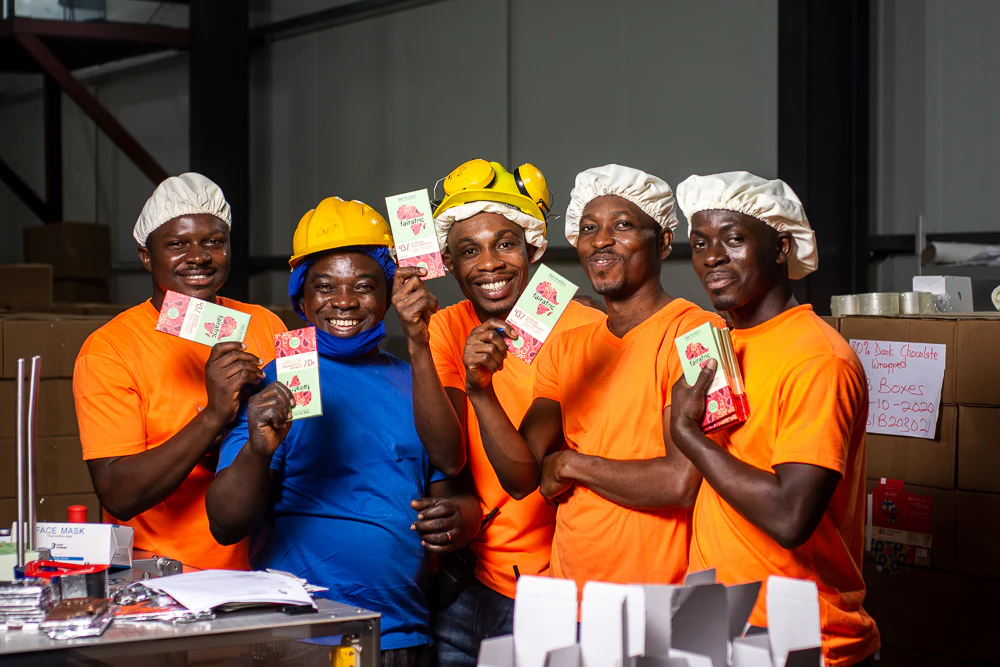
Suhum, Ghana / Munich, Germany – Fairafric is not a chocolate company like any other. Founded on a radical vision of economic justice and local value creation, this social enterprise has set itself the mission of producing high-quality organic chocolate, from bean to finished bar, entirely in Africa, specifically in Ghana. By relocating the whole manufacturing process to the cocoa's country of origin, Fairafric aims to multiply the economic impact for local communities, create skilled jobs and offer consumers a product that is not only delicious but also deeply ethical and transparent.
The Idea of Radical Change
Fairafric's story begins with the realisation of its founder, Hendrik Reimers. During his travels in Africa, he was struck by the paradox of a continent that produces most of the world's cocoa but captures only a tiny fraction of the value of the chocolate industry, estimated at several billion dollars. Since chocolate processing and manufacturing are mostly carried out in consuming countries, producing countries are often confined to the role of raw material suppliers.
Determined to change this paradigm, Hendrik Reimers launched Fairafric in Germany in 2016. The vision is clear: produce chocolate where cocoa grows, so that the economic benefits – jobs, incomes, skills development – go directly to African communities. The slogan "Made in Africa, from tree to bar" became the company's leitmotif.
After starting out with production partners, Fairafric reached a major milestone in 2020 by inaugurating its own ultra-modern, solar-powered chocolate factory in Suhum, Ghana. This factory is the heart of its commitment to maximising local impact.
An Impact-Centred Business Model
Fairafric's business model rests on several fundamental pillars:
- Production Entirely in Africa: Unlike most so-called "fair" chocolates whose beans are simply bought at a certified price before being processed in Europe or North America, Fairafric carries out every step – from fermentation (in collaboration with the cooperatives) to roasting, conching, moulding and packaging – in Ghana.
- Creation of Skilled Jobs: The Suhum factory employs Ghanaians in technical and management positions, offering above-average local wages and career development opportunities.
- Direct and Fair Partnerships with Farmers: Fairafric sources organic cocoa beans from Ghanaian producer cooperatives, paying prices above the market and the premiums linked to organic and fair certifications. The company stresses long-term relationships.
- Increased Local Value Added: By processing beans into finished products on site, Fairafric multiplies by five the value added that stays in Ghana compared with simply exporting raw beans.
- Radical Transparency: The company communicates openly about its costs, the prices paid to farmers, its social impact and its challenges, offering traceability and transparency that are rare in the industry.
A Range of Organic and Ethical Chocolates
Fairafric produces a range of high-quality organic chocolate bars showcasing Ghanaian cocoa:
- Dark Chocolate Bars: With different cocoa percentages (e.g. 70%, 80%), often single-origin or highlighting specific flavour profiles.
- Milk Chocolate Bars.
- Bars with Inclusions: Sometimes with local ingredients or innovative flavours (e.g. fleur de sel, roasted cocoa nibs).
- Tasting Chocolates and Limited Editions.
All products are certified organic and often fair trade (Fairtrade or via other recognised systems). The emphasis is on ingredient purity and taste quality.
Market Position and International Reach
Fairafric mainly targets conscious, ethically minded consumers in Europe (with a strong base in Germany, Switzerland and Austria) and North America. Its products are distributed through:
- Its own online shop.
- Specialist organic and fair trade stores.
- Supermarkets and committed retailers.
- Chocolate subscriptions.
The company has grown rapidly, financed partly by crowdfunding campaigns and impact investments, demonstrating the growing interest in its model. Although it is not a giant in volume terms compared with the multinationals, its impact in terms of alternative model and influence is significant. Its production capacity has increased with the new factory, aiming for several million bars a year.
Environmental and Social Sustainability at the Heart of Operations
Fairafric's commitment goes beyond fair trade:
- Eco-Friendly Factory: The Suhum factory is one of the first chocolate factories in West Africa powered largely by solar energy, reducing its carbon footprint.
- Organic Farming: Support for organic cocoa growing contributes to biodiversity preservation and soil health.
- Decent Wages and Good Working Conditions: Fairafric is committed to offering wages and working conditions above local standards in its factory.
- Supply Chain Transparency: The company strives to ensure full traceability of its beans.
Challenges and Strategy in a Changing Global Context
Fairafric, like any company, faces challenges:
- Logistics and Costs: Producing in Africa for export markets can present logistical challenges and extra costs.
- Scaling Up Production: Managing rapid growth while maintaining quality and social impact.
- Cocoa Price Volatility: The surge in cocoa prices in 2024-2025 is a major cost-management challenge, even though Fairafric's model aims to better protect farmers from this volatility. The company has communicated about the need to adjust its prices to reflect these costs and maintain fair payments to producers.
- Consumer Education: Explaining the value and impact of a truly "made in Africa" chocolate requires continuous communication effort.
Fairafric's strategy remains focused on:
- Deepening its impact in Ghana.
- Expanding its distribution in international markets.
- Product innovation while staying true to its values.
- Strengthening its transparency and proof-of-impact model.
Fairafric: A Model for the Future of Chocolate?
Fairafric is often cited as a pioneering example of a new generation of chocolate companies seeking to reverse the sector's historical imbalances. By proving that it is possible to make world-class chocolate entirely in Africa, profitably and with a positive social and environmental impact, Fairafric does not just sell chocolate: it offers a vision of fairer and more sustainable trade. Its success and continued growth inspire other initiatives and push the industry as a whole to think about more equitable models.