
Cocoa Botany: An In-Depth Study of Theobroma cacao
Theobroma cacao, commonly called the cacao tree, is a cornerstone of the global economy, supporting a multi-billion-dollar confectionery industry. Its seeds, the cocoa beans, are the raw material…
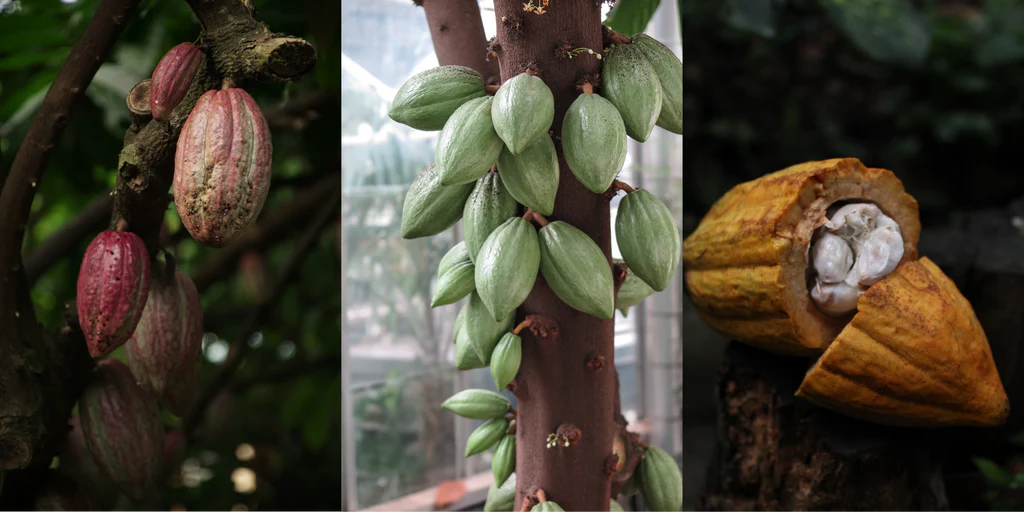
Theobroma cacao, commonly known as the cacao tree or cocoa tree, is a cornerstone of the global economy, supporting a multi-billion-dollar confectionery industry. Its seeds, the cocoa beans, are the fundamental raw material for chocolate liquor, cocoa solids and cocoa butter. The genus name Theobroma, given by Linnaeus, translates as "food of the gods", a designation that testifies to its deep historical and cultural reverence. The specific epithet cacao itself derives from the Aztec term xocolatl, meaning "bitter water", reflecting the traditional drink made from its seeds. This report explores the complex botanical aspects of Theobroma cacao, examining its classification, morphological characteristics, reproductive biology, growing requirements, genetic diversity and the critical challenges it faces in a changing global landscape.
Classification and Botanical Origin
Detailed Classification
Theobroma cacao is classified taxonomically in the Kingdom Plantae, Clade Tracheophytes, Clade Angiosperms, Clade Eudicots, Clade Rosids, Order Malvales, Family Malvaceae, Genus Theobroma, and Species Theobroma cacao L. Historically, the species was placed in the family Sterculiaceae; however, contemporary phylogenetic research has led to its reclassification under the subfamily Byttnerioideae within the broader family Malvaceae. This taxonomic adjustment, often noted with references to "Malvaceae/mallow family" or "Malvaceae sensu lato", is not just a change of nomenclature but reflects a more precise understanding of the plant's evolutionary relationships. Such basic botanical knowledge is crucial for plant breeders and geneticists, as it can inform breeding strategies with related species within the Malvaceae that may possess desirable traits, such as increased disease resistance or drought tolerance, which supports strategic agricultural development.
Theobroma cacao is one of some 26 recognised species in its genus.
Native Range and Historical Domestication
The cacao tree is native to the tropical regions of Central and South America, its main native range spreading across the upper Amazon basin, including parts of present-day Brazil, Colombia and Peru. Its natural habitat extends to the foothills of the Andes and the Orinoco basins. Archaeological evidence suggests that human use of cocoa goes back at least 2,000 years BCE in Honduras. The plant's initial domestication is attributed to the Mokaya and Olmec peoples of Central America and Mexico, whose knowledge was later passed on to the Maya civilisation. Pre-Columbian cultures valued cocoa beyond simple sustenance, incorporating it into spiritual ceremonies and using its seeds as a form of currency. The Aztecs' historical use of cocoa beans as currency underlines the plant's early perceived value. This practice means cocoa had an intrinsic, recognised value that facilitated trade and economic exchange, establishing a basic understanding of its global economic importance. The plant's unique properties, probably its stimulant compounds and calorie density, allowed it to transcend simple food and become deeply integrated into the complex socio-economic and political systems of pre-Columbian societies.
The introduction of cocoa beans to Europe by Christopher Columbus in 1502 did not immediately bring widespread popularity; it was only in the late 1500s that it gained significant traction, mainly in Spain. Growing European demand for cocoa then stimulated the establishment of vast plantations in Africa, a continent whose climate proved highly suitable for the crop. Today, West African nations such as Côte d'Ivoire and Ghana are the main contributors to world cocoa trade. This geographical shift of commercial cultivation, from its native Amazonian origins to its current dominance in Africa, illustrates how human agricultural expansion has succeeded in establishing the crop in new, climatically similar regions. However, this transition can lead to a narrowing of the genetic base in these new production areas and can expose the crop to different sets of region-specific pests and diseases for which it has not co-evolved resistance, presenting continuing challenges for sustainable production.
Morphological Characteristics of the Cocoa Tree
Tree Structure and Growth Habit
Theobroma cacao is an evergreen tree, generally small and broad-branched, usually reaching a height of 5 to 10 metres (15 to 30 feet), although some varieties can reach up to 12 metres (39 feet). The tree has a short main trunk from which the branches emerge in distinct whorls of five. It shows dimorphic branching: vertical shoots, called chupons, grow from the trunk with 5/8 phyllotaxy, while the lateral branches, or fans, have 1/2 phyllotaxy. Although evergreen, the cacao tree is semi-deciduous, going through periods of leaf drop followed by new flushes of growth, usually 2 to 4 times a year. Unusually for a rainforest understorey tree, cocoa has exceptionally deep roots, often thriving in riparian areas. This calls for a deep, slightly acidic, moist and well-drained soil profile for optimal growth.
Leaves
The leaves of Theobroma cacao are alternate, simple, entire and unlobed. They are oblong to ovate-elliptic in shape, with a glossy, drooping, bright green appearance. Leaf dimensions generally range from 10 to 50 cm (4 to 20 in) long and 5 to 10 cm (2 to 4 in) wide. A prominent midrib and distinct secondary veins characterise the leaf venation. A notable physiological adaptation is seen in young leaves, which have a distinctive reddish or pink-red colouring before gradually turning dark green as they mature. This reddish pigmentation, probably due to anthocyanins, acts as a natural photoprotectant, shielding the tender, newly emerging tissues from intense tropical UV radiation and photo-oxidative stress before chlorophyll is fully developed. In addition, the leaves have the remarkable ability to rotate up to 90 degrees from vertical to horizontal and back, made possible by a pulvinus (swelling) at the base of the petiole. This movement allows dynamic adjustment to optimise light capture while minimising sun damage throughout the day, highlighting the plant's evolutionary strategies for thriving in the variable light conditions of its rainforest understorey habitat. Understanding these adaptations is crucial for designing optimal growing environments, in particular providing appropriate shade for young plants.
Flowers
Cocoa flowers are small, generally 1 to 2 cm (3/8 to 13/16 in) in diameter, and can be pink, white, pale pink or yellowish-white. While some sources describe them as fragrant, others note them as odourless. A unique botanical feature is cauliflory, where flowers are produced in clusters directly on the trunk and older, woody branches. This adaptation is essential for the tree to physically support the substantial weight of its large, heavy cocoa pods, avoiding structural damage to thinner branches. Cauliflory also offers secondary advantages by making the flowers more accessible to small pollinators such as midges and by simplifying manual harvesting. The floral structure is complex, represented by the formula K5 C5 A(5°+5²) G(5). The flowers are bisexual and pentamerous, with a five-lobed calyx, five outward-curving stamens and five staminodes alternating with the anthers. The superior ovary is pentagonal with five locules. Cacao trees generally flower continuously throughout the year.
Fruit (Cocoa Pods and Beans)
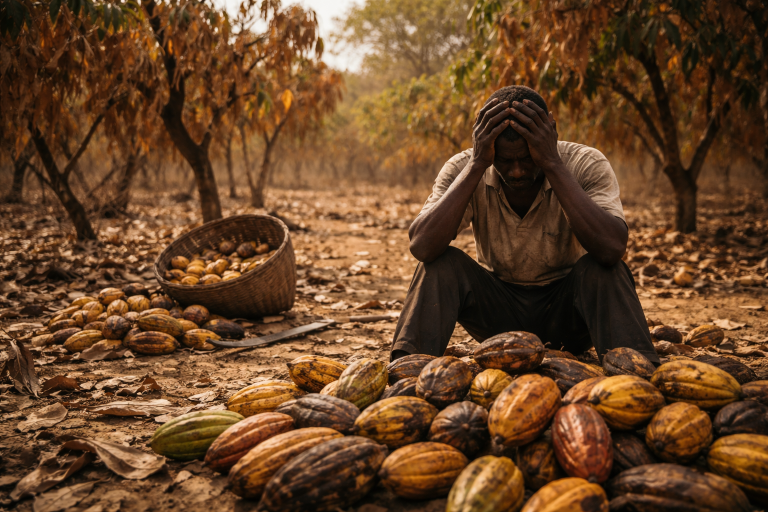
The fruit of the cacao tree, known as the cocoa pod, is ovoid and large, generally 15 to 30 cm (6 to 12 in) long and 8 to 10 cm (3 to 4 in) wide, although some can exceed 40 cm. These pods are characterised by 10 longitudinal ribs. As they ripen, the pods undergo a distinct colour change, going from green to yellow, red, yellow-brown, orange or purple, or a combination of these colours. The outer shell is thick and leathery, with textures ranging from smooth to warty or ribbed, depending on the variety. A ripe pod generally weighs about 500 grams.
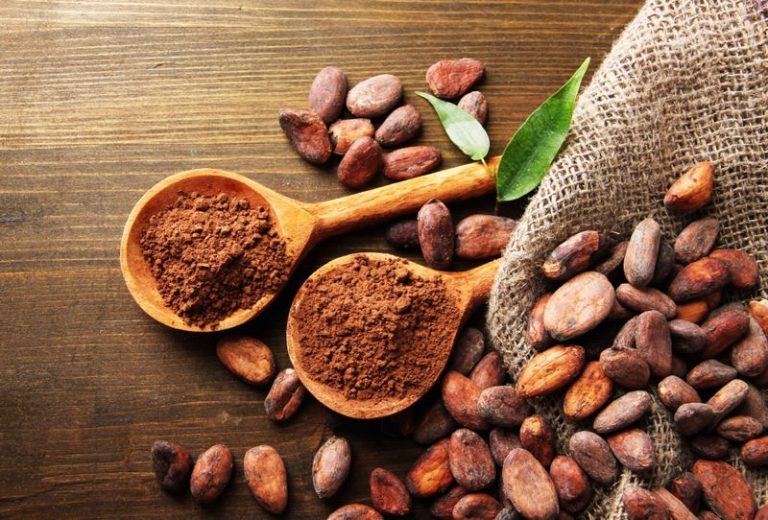
Each pod contains 20 to 60 flat seeds, commonly called "beans", which are embedded in a sweet, mucilaginous, creamy-white pulp. The beans are roughly the size of an almond. The pulp's flavour is often compared to lychee, tropical melon or a vague lemon/mango taste. While cocoa beans are the undisputed primary product for making chocolate, there has been a significant shift in the use of the surrounding pulp. Historically thrown away, this sweet, mucilaginous pulp is now increasingly processed into juice, smoothies, jellies and even alcoholic drinks. This evolving practice signals a move towards maximising the value of the whole fruit, thus cutting waste and increasing overall economic return for farmers. This wider use contributes directly to the sustainability of cocoa production by promoting a more circular-economy model. The seeds contain the alkaloid theobromine, a nerve stimulant chemically similar to caffeine, underlining their intrinsic biochemical value beyond their role as flavour precursors.
Reproductive Biology
Flowering Phenology
Cacao trees show a remarkable pattern of continuous flowering throughout the year once they reach maturity, which generally occurs between four and six years. The flowers appear in dense clusters, often called "flower cushions", directly on the trunk and older branches – a distinctive feature known as cauliflory. Despite the prolific production of flowers, with a single mature tree able to produce up to 6,000 flowers a year, only a very small percentage successfully develop into fruit.
Pollination Mechanisms
Unlike many other flowering plants, the flowers of Theobroma cacao are mainly pollinated by tiny flies of the genus Forcipomyia, commonly called biting midges. Other insects such as bees are considered less effective, often acting as "pollen thieves", while wasps and ants play only occasional roles. The small size (1-2 cm) and complex structure of cocoa flowers limit effective pollination to these tiny, specialised insects. Cocoa flowers are largely self-incompatible, meaning they generally need cross-pollination from a different tree to achieve fertilisation and fruit set. This self-incompatibility is a natural mechanism that promotes genetic diversity within wild populations. Pollination usually takes place in the morning, and unpollinated flowers generally fall within 24 hours.
A significant challenge in cocoa production is the extremely low fruit-set rate: only 1 flower in 100, 3 flowers in 1,000, or as few as 0.5 to 5% develop successfully into pods. This low rate is a major limiting factor in overall production. Theobroma cacao's obligate dependence on Forcipomyia midges for pollination represents a critical ecological bottleneck. The consistently low fruit-set rates underline the challenges this specialised relationship poses for yield in commercial cultivation. This dependence means any environmental factor affecting midge populations or their behaviour directly affects cocoa productivity. The reasons for low fruiting rates include an insufficient number of pollinated flowers, reduced efficiency of insect pollination and incompatibility reactions leading to flower abortion. Midges thrive in humid environments rich in decaying organic matter, such as rotting leaf litter or discarded cocoa pods. Farmers can increase midge populations by strategically placing banana stems around cacao trees to create ideal breeding sites.
Fruit Development
After successful pollination, the fertilised ovary develops into a small immature fruit called a "cherelle" during its initial growth phase, which then ripens into a "pod". The ripening period from a pollinated flower bud to a ripe fruit generally runs from 4 to 7 months, depending on variety and environmental conditions. A natural physiological process known as "cherelle wilt" causes a substantial number of young pods to blacken and wither. This is not necessarily a problem but rather an adaptive mechanism by which the tree self-regulates its fruit load, efficiently allocating energy to a manageable number of developing pods. This process is crucial for the tree's overall health and resource management. Cocoa pods on the same tree do not ripen synchronously, which calls for manual, selective harvesting. This continuous flowering and asynchronous ripening pattern contributes to the labour-intensive nature of cocoa growing, affecting overall efficiency and cost. About 40 mature pods, containing about 1,200 seeds, are needed to produce 1 kilogram of cocoa paste. For optimal flavour development, pods should be harvested at full maturity, although a ripe pod can stay on the tree for 2 to 3 weeks without spoiling.
Growing Requirements and Practices
Climatic and Environmental Conditions
Theobroma cacao thrives in a precise environmental niche, largely confined to the "cocoa belt", a region extending 20 degrees north and south of the equator. This restriction is due to the tree's specific climate requirements:
- Temperature: Optimal growth occurs between 21 and 32 °C (70 and 90 °F). Temperatures should ideally not fall below 15 °C (60 °F) and the plant is very intolerant of conditions below 10 °C (50 °F) or frost, which can seriously damage or kill it. Flowering is also temperature-dependent, requiring at least 20 °C (68 °F).
- Rainfall and humidity: Cocoa needs substantial annual rainfall, generally 1,000 to 3,000 mm (40 to 100 inches), evenly distributed through the year, with dry periods not exceeding three months. High humidity, at least 70%, is also essential. The plant is sensitive to drought, which can cause leaf and flower drop and poor fruit production, making regular irrigation crucial during dry periods.
- Shade: As an understorey plant in its natural rainforest habitat, cocoa needs partial shade, generally about 25 to 50% for seedlings and young plants, with mature trees tolerating more sun but still benefiting from some shade. Direct, intense sunlight can damage these sensitive plants, especially when young. Shade is not only sun protection but also plays a multifaceted role in regulating the microclimate, helping maintain humidity and stable temperatures, contributing to soil health through leaf litter and nutrient cycling, and potentially reducing pest and disease incidence.
- Wind: Cocoa does not tolerate windy conditions and should be planted in sheltered places.
- Geographic zone: Cultivation is mainly limited to lowland tropical forests, generally below 1,000 metres in altitude, and typically below 300 metres.
Soil Requirements
The soil requirements for Theobroma cacao are just as specific:
- Type: Cocoa thrives in fertile soils rich in organic matter, constantly moist but well drained. A minimum depth of 1.5 metres (5 feet) is required for optimal root penetration.
- pH: The preferred pH range is slightly acidic, between 5.0 and 6.5, although a wider range of 4.5 to 8.0 is tolerated, with an optimum of 6.5 to 7.0.
- Organic matter: A high humus content is beneficial, with at least 3.5% organic matter in the top 15 cm (6 inches) of soil. This contributes to soil fertility and nutrient cycling.
- Water retention: The soil must be able to retain moisture during dry periods while allowing air and moisture to pass freely to avoid waterlogging, which is harmful to cocoa roots. The importance of a deep, well-drained, humus-rich soil directly affects root health, moisture retention and nutrient availability, all essential for the tree's overall health and yield.
Cultivation Practices
- Propagation: Cacao trees can be grown from seed or propagated vegetatively by cuttings, grafting or air layering. Seedlings need significant shade for their initial growth, generally for 6 months to 3 years, before being gradually exposed to more light.
- Planting: Cocoa is often grown as an intercrop under the canopy of larger crop-producing trees such as banana, avocado, coconut or areca palm. These "cocoa mothers" provide essential shade and wind protection, while diversifying farmers' incomes. Planting distances vary, with common spacings ranging from 1.8 to 7.3 metres (6 to 24 feet).
- Watering/irrigation: Given its sensitivity to drought, regular watering is essential, particularly in dry seasons. In some regions, for example, weekly irrigation with large volumes of water is recommended.
- Fertilisation: Regular fertilisation, including NPK (nitrogen, phosphorus, potassium), is crucial during the growing season to support plant health and productivity.
- Pruning: Pruning is a vital practice for maintaining tree shape, promoting air circulation in the canopy, encouraging fruit production and managing disease spread.
Genetic Diversity and Major Varieties
Genetic Classification
The genetic diversity of Theobroma cacao is vast and complex. While historically recognised through three main cultivar groups – Criollo, Forastero and Trinitario – modern genomic research has provided a more nuanced classification. In 2008, researchers proposed a new classification based on morphological, geographical and genomic criteria, identifying 10 distinct genetic groups, including Amelonado, Criollo, Nacional, Contamana, Curaray, Guiana cacao, Iquitos, Marañon, Nanay and Purús. Later findings have suggested even more populations. The cocoa genome is diploid (2n=2x=20) with a size ranging from 345.99 to 430 Mbp. This evolution of classification, from traditional "types" to genomic "clusters", offers a more precise understanding of diversity, which is invaluable for targeted breeding efforts to improve traits such as disease resistance and flavour profiles.
Main Cultivar Groups
Historically, three main cultivar groups have been recognised by chocolate makers, each with distinct botanical characteristics and flavour profiles:
- Criollo:
- Rarity and quality: Criollo is the rarest and most prized cocoa variety, accounting for only 0.01% to 5% of world production. It is often called the "prince of cocoas".
- Origin: Native to Central and South America, particularly Venezuela and parts of the Caribbean.
- Botanical characteristics: Criollo pods are generally longer, more knobbly and have a thinner shell. They are often high-shouldered, long-tipped and warty, with a thin pod wall, and are often green. The beans are large and plump and often have a white interior, although they can be light purple if pollinated by Forastero trees. Criollo is less hardy than Forastero types, has lower yields and is more susceptible to disease. Young leaves may have a reddish bud colour.
- Flavour profile: Criollo is renowned for the absence of tannins, which usually give bitterness and astringency, resulting in a unique smoothness, sweetness and roundness. Its flavour profile includes floral, fruity, nutty, caramel, honey and vanilla notes, making it ideal for high-end chocolates.
- Forastero:
- Dominance: Forastero is the most common cocoa variety, accounting for 80 to 90% of world production. It is often called "bulk cocoa" or "ordinary cocoa" because of its widespread use in mass-produced chocolate.
- Origin: Native to the Amazon basin, it has spread widely in Africa and Asia.
- Botanical characteristics: Forastero trees are markedly hardier, show high yields and have greater disease resistance than Criollo. Its pods are generally round and smooth, often described as melon- or gourd-shaped, with thick pod walls. Pod colours can range from green to yellow or red, and the beans are generally purple and flat, usually smaller than Criollo beans. Forastero types tend to breed true from seed. Young leaves may appear reddish at first, with red veins, slowly turning green.
- Flavour profile: Forastero beans are known for their bold, strong, robust flavour, often associated with traditional dark chocolate. They have a deep, bitter taste, with earthy, nutty and sometimes fruity nuances, although generally less aromatic than Criollo.
- Trinitario:
- Hybrid nature: Trinitario is a natural hybrid resulting from a cross between the Criollo and Forastero varieties, first developed in Trinidad in the 18th century. It aims to combine the hardiness and yield of Forastero with the refined flavours of Criollo.
- Botanical characteristics: Trinitario pods can have varying roughness, with a thin to medium shell, and the seeds are generally pink to purple. Pods can be high-shouldered or bottle-shaped with long or short tips, and slightly warty. Some Trinitario varieties have broad, shiny, elongated leaves. The cylindrical pods turn from green to yellow at full maturity.
- Flavour profile: Trinitario offers a complex, balanced flavour profile, often showing fruity, floral, spicy and nutty notes, along with a slight bitterness. This versatility lets chocolate makers create a wide range of high-end chocolates with distinct flavours and aromas.
The trade-offs inherent between yield and hardiness (Forastero characteristics) and flavour quality (Criollo characteristics) are evident in these cultivar groups. Trinitario represents a deliberate intervention in genetic improvement, showing how human selection can combine desirable traits from different lineages. This broad genetic diversity, covering both the traditional varieties and the newly identified genetic clusters, is crucial for developing future cocoa varieties resilient to climate change, pests and diseases, ensuring the long-term viability of the global cocoa industry.
Pests and Diseases
Cocoa production faces significant biological threats from a range of pests and diseases, with estimates pointing to global yield losses of up to 30% to 40% a year. These biological challenges impose a substantial economic burden on farmers and contribute to instability in the global cocoa supply.
Major Diseases and Their Impact
- Black Pod Rot (Phytophthora spp.): One of the most common and widespread diseases in the cocoa world. It appears as brown circular lesions on pods that spread rapidly, causing the pods to blacken and mummify, ultimately destroying the beans inside. The disease is spread by rain splash and insects and is favoured by high humidity, rainfall and poor air circulation. Phytophthora palmivora alone can cause 20 to 30% of global yield losses and 10% of tree deaths a year. P. megakarya is considered the most aggressive pathogen in Central and West Africa, while P. capsici is widespread in Central and South America.
- Witches' Broom (Moniliophthora perniciosa): This devastating fungal disease is widespread in South America, Panama and the Caribbean. It infects meristematic tissues, leading to abnormal shoot proliferation (called "green brooms"), abnormal flower development, and eventually necrosis and death of the infected tissues, forming "dry brooms". Witches' broom can cause catastrophic yield reductions of 50% to 90%. For example, its introduction in Bahia, Brazil, led to a drop of nearly 70% in production over a decade.
- Frosty Pod Rot (Moniliophthora roreri): Also known as frosty pod rot or moniliasis of cocoa, this disease is a major plant-health problem in Central and South America. Symptoms include white, powdery fungal growth on the pod surface, progressing to browning and necrosis, making the beans unusable. This pathogen spreads by wind and rain and can cause up to 100% crop losses in severe cases.
- Vascular-Streak Dieback (Oncobasidium theobromae): This fungal disease mainly affects cocoa production in South-East Asia and Melanesia. Symptoms include chlorosis and necrosis of the leaves along the veins, defoliation and branch dieback, which can lead to the death of young trees.
- Cacao Swollen Shoot Virus (CSSV): An important viral disease in West Africa, CSSV is transmitted by mealybug vectors. Within a year of infection, yields fall by 25%, and by 50% within two years, generally killing the tree in 3 to 4 years. Symptoms include leaf discolouration, stem/root swelling and dieback. CSSV is responsible for about 15% of total cocoa crop loss worldwide.
Main Insect Pests and Their Impact
Insect pests contribute significantly to yield losses, often by directly damaging the plant or by facilitating the entry of fungal and viral pathogens.
- Mirids (Capsids): The main insect pests in West Africa (Sahlbergella singularis, Distantiella theobroma) and South-East Asia (Helopeltis spp.). Mirids feed on young pods and mature shoots, injecting saliva that causes lesions and wounds. These wounds serve as entry points for opportunistic fungi, such as Lasiodiplodia theobromae, leading to dieback and a significant decline in yield. Severe mirid attacks can lead to high mortality rates, particularly in young cacao trees.
- Mealybugs: These small, soft-bodied insects are sap-suckers that weaken the tree over time. They excrete a sticky substance called honeydew, which promotes the growth of sooty mould on leaves and pods. Critically, some mealybug species act as vectors of plant viruses, including cacao swollen shoot virus (CSSV), underlining the interconnected nature of pest and disease management. Mealybugs often attract ants, which protect them from natural predators, further complicating control efforts.
- Cocoa Pod Borer (Conopomorpha cramerella): This pest is particularly problematic in South-East Asia, where its larvae bore into cocoa pods, causing damage.
- Other pests: Other insect pests include thrips and scale insects, while vertebrate pests such as rats and squirrels can also damage crops.
The complex interaction between insect pests and diseases is a critical aspect of cocoa pathology. Insect pests often act as vectors or create entry points for fungal and viral diseases, worsening crop losses. This calls for an integrated pest management approach for effective control. In addition, the geographic specificity of many major threats, with some highly damaging diseases (for example witches' broom and frosty pod rot) mainly confined to the Western Hemisphere, and others (CSSV, vascular-streak dieback) prevalent in Africa and Asia, underlines the importance of strict quarantine measures to prevent their global spread. The high yield losses caused by these pests and diseases translate directly into economic hardship for smallholders and contribute to volatility in the global cocoa supply, underlining the urgent need for research on resistant varieties and sustainable management practices.
Conservation and Sustainability
Ecological Role in Native Ecosystems
Theobroma cacao evolved as an understorey tree in Amazonian rainforests, a habitat that has profoundly shaped its ecological interactions and survival strategies. Its survival and reproduction are deeply tied to the specific conditions and organisms of this ecosystem.
- Understorey plant: Cocoa naturally thrives in partial shade under the canopy of tall forest trees.
- Seed dispersal: Cocoa seeds are notably bitter, a defence mechanism that ensures their dispersal. The sweet, tangy pulp surrounding the seeds attracts animals such as monkeys, rodents and birds, which eat the pulp but generally spit out the bitter seeds, effectively dispersing them across the rainforest floor and enabling new trees to grow.
- Nutrient cycling: Cacao trees need soil rich in nitrogen and other nutrients, which are naturally supplied by decaying organic matter from fallen pods, leaves and other forest debris. This nutrient-cycling process is vital for the tree's health and productivity.
- Symbiotic relationships: The tree's unique cauliflorous flowering habit is crucial for attracting its main pollinators, tiny Forcipomyia midges, which are attracted to and breed in the humid environment of decaying leaf litter and discarded cocoa pods at the base of the tree. The wider rainforest biodiversity, including ants and various bird species, also plays a role in the cocoa agroecosystem.
Threats to Genetic Diversity
The long-term sustainability of cocoa production is considerably threatened by several factors affecting its genetic diversity:
- Deforestation and habitat loss: The conversion of rainforests, particularly in West Africa, into monoculture cocoa plantations has led to significant deforestation and habitat loss, destroying the natural environments where wild cocoa populations thrive. This practice reduces biodiversity and disrupts critical ecosystem services.
- Climate change: Cocoa's narrow climate requirements make it highly vulnerable to the impacts of climate change, including longer dry seasons and extreme weather events, which stress the trees and reduce yields.
- Loss of traditional varieties: There is growing pressure on local cocoa diversity in farmers' fields to be replaced by non-native commercial varieties, which can lead to the loss of valuable genetic traits.
- Gene bank challenges: Traditional gene banks face challenges such as insufficient funding, redundancy of accessions, misidentification and a lack of samples from wild cocoa populations. In addition, cocoa seeds are recalcitrant, meaning they cannot be stored conventionally for long periods, which requires costly field gene banks for ex situ conservation. This makes in situ conservation in natural habitats even more critical.
Conservation Efforts
Recognising these threats, significant efforts are under way to conserve cocoa's genetic resources and promote sustainable growing practices:
- Global strategies: Organisations such as CacaoNet have drawn up a "Global Strategy for the Conservation and Use of Cacao Genetic Resources". The overall aim is to optimise conservation and facilitate the use of cocoa genetic resources as the basis of a sustainable cocoa economy. This involves assessing global diversity, identifying gaps in existing collections, prioritising collecting missions and strengthening ex situ (gene banks) and in situ (natural habitats and on-farm) conservation efforts.
- Gene banks: Field gene banks, such as the International Cocoa Genebank in Trinidad, play a crucial role in conserving a wide range of cocoa genetic material. These collections are vital for breeders to access diverse germplasm to develop new varieties resistant to current and emerging threats.
- Breeding programmes: Genetic diversity is the key to future sustainability. Breeding programmes draw on this diversity to create new varieties with improved productivity, better quality and greater resistance to biotic (pests and diseases) and abiotic (climate change) stresses.
- Agroforestry systems: Agroforestry systems offer many advantages over conventional full-sun monoculture practices.
- Benefits: Environmentally, agroforestry contributes to carbon sequestration, improves soil quality and fertility (through leaf litter and nutrient cycling), strengthens resilience to climate change and regulates the microclimate by reducing temperature fluctuations and retaining moisture. It also supports biodiversity conservation for flora and fauna, helps with pest control and can reduce vulnerability to disease outbreaks. For farmers, it supports diversified incomes through complementary crops, improves food security, reduces the need for synthetic fertilisers and pesticides and improves long-term economic resilience and land use.
- Contrast with monoculture: The shift to monoculture, while aiming at short-term productivity, has harmful long-term consequences. It is associated with soil erosion and degradation, significant biodiversity loss, greater susceptibility to climate change impacts and a higher incidence of pests and diseases, often requiring heavy reliance on harmful chemicals. This practice can lead to a destructive cycle in which depleted soils force farmers to clear more forest land.
- Dynamic agroforestry (DAF): DAF systems mimic natural ecological succession, integrating diverse species with varying lifespans in stratified layers. This approach promotes high planting density and diversity, reduces reliance on external inputs and, through active management such as pruning, optimises the productivity of the whole system while fostering self-sustaining ecological processes. Agroforestry thus represents a holistic solution that addresses both ecological degradation and socio-economic challenges, promoting biodiversity, soil health and farmer resilience, in stark contrast to the harmful effects of monoculture.
Conclusion
The botanical study of Theobroma cacao reveals a complex and fascinating plant whose intrinsic properties have shaped its historical importance and its present global economic impact. From its precise taxonomic placement within the Malvaceae family to its unique cauliflorous morphology and specialised pollination mechanisms, every botanical feature plays a critical role in its life cycle and productivity. Continuous flowering, combined with an extremely low fruit-set rate and asynchronous pod ripening, underlines the inherent biological limitations and the labour-intensive nature of cocoa growing.
Cocoa's journey from its Amazonian origins to its current dominance in West Africa underlines the profound influence of human agricultural expansion, but this shift also introduces vulnerabilities linked to genetic homogeneity and exposure to new biological threats. The constant struggle against a wide range of pests and diseases, which cause significant yield losses and economic hardship for farmers, underlines the fragility of the cocoa supply chain.
Ultimately, the future sustainability of Theobroma cacao and the global chocolate industry depends on a comprehensive botanical understanding and the strategic implementation of conservation efforts. Preserving cocoa's vast genetic diversity, in both wild populations and cultivated varieties, is paramount for breeding new resilient strains able to withstand climate change and emerging pathogens. Adopting agroforestry systems, which mimic the plant's natural ecological interactions, offers a promising path. By integrating diverse trees and crops, these systems not only improve biodiversity and soil health but also provide a more stable and sustainable livelihood for the millions of farmers who depend on this "food of the gods".