
Cocoa in Papua New Guinea: The Pacific's Exotic Gold Facing World Market Challenges
Port Moresby, Papua New Guinea – Nestled in the heart of the Pacific, Papua New Guinea (PNG) is a unique cocoa producer, renowned for its beans with distinctive flavours, often grown in a near-organic way by…
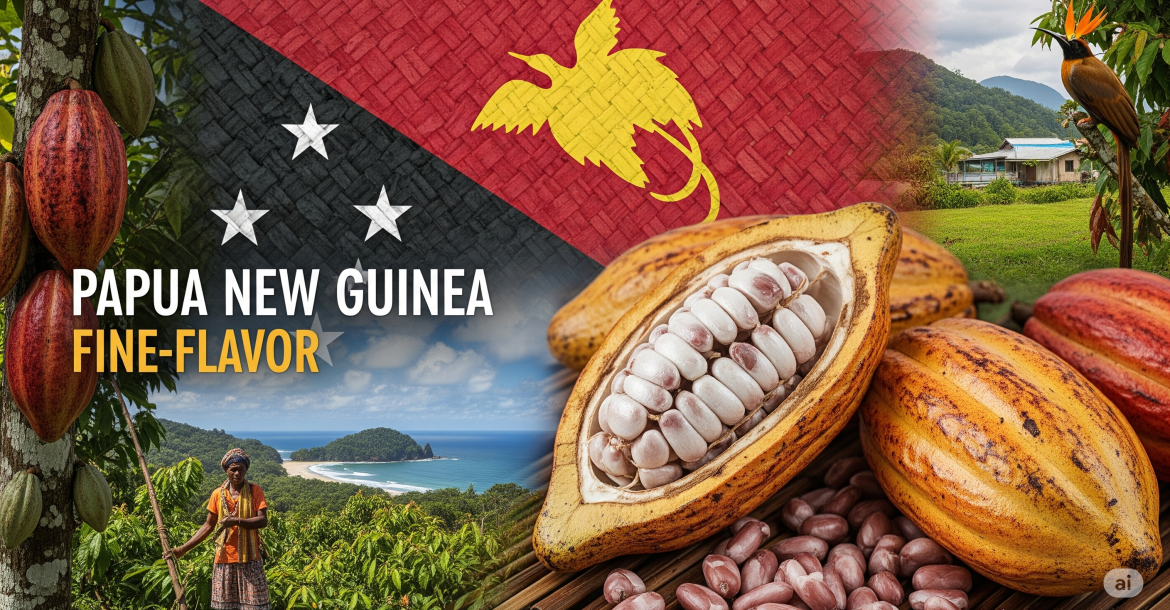
Port Moresby, Papua New Guinea – Nestled in the heart of the Pacific, Papua New Guinea (PNG) is a unique cocoa producer, renowned for its beans with distinctive flavours, often grown in a near-organic way by a multitude of smallholders. Although its production is modest on a world scale, PNG cocoa plays a crucial role in the rural economy and attracts the attention of chocolatiers looking for complex flavour profiles and traceable origins. Against the backdrop of a historic surge in world prices, the PNG cocoa sector sees opportunities while having to navigate significant structural and environmental challenges.
Quality- and Niche-Focused Production, and Soaring Prices
Cocoa production in Papua New Guinea is generally between 30,000 and 40,000 metric tonnes a year. Most of this production comes from smallholders growing cocoa alongside other food or export crops, often in traditional agroforestry systems. The main producing provinces include East New Britain, the Autonomous Region of Bougainville, East Sepik and Morobe. A significant share of PNG cocoa is recognised for its "fine flavour" characteristics.
The spectacular surge in world cocoa prices in 2024 and early 2025 has a direct and significant impact on producers' incomes in PNG. Local prices have risen substantially, offering an economic breath of fresh air to rural communities that depend heavily on this crop. This situation could stimulate interest in growing cocoa and rehabilitating plantations.
The Challenges of an Island and Fragmented Sector
Despite the quality of its cocoa and the current price context, the sector in PNG faces considerable challenges:
- Logistics and Infrastructure: The country's island and mountainous character, combined with often limited transport infrastructure (roads, bridges, inter-island shipping services), makes collecting, transporting and exporting cocoa costly and complex.
- Pests and Diseases: The Cocoa Pod Borer (CPB) has been a major scourge, devastating part of production in the past. Although management efforts have been made, the threat persists, alongside other fungal diseases.
- Impact of Climate Change: PNG is very vulnerable to the effects of climate change, including sea-level rise for coastal plantations, increasing intensity of cyclones and rain, and periods of drought, affecting yields and quality.
- Uneven Post-Harvest Quality: Fermentation and drying, crucial stages for bean quality, are often carried out by smallholders with rudimentary means, which can lead to uneven quality if good practices are not rigorously followed.
- Access to Services and Financing: Smallholders' access to agricultural extension services, quality inputs (where needed), market information and financing to invest in their plantations is limited.
- Producer Organisation: Although cooperatives exist, strengthening them and better organising producers are necessary to improve their bargaining power and ease access to niche markets.
- Land Issues: The customary land tenure system can sometimes complicate long-term investment in plantations.
- Long-Term Price Volatility: Despite the current rise, dependence on world price volatility remains a concern for the stability of farmers' incomes.
The Strengths of a Unique Cocoa and Development Opportunities
Papua New Guinea has distinctive strengths for its cocoa sector:
- Unique Flavour Profiles: PNG cocoa is sought after for its complex flavours, often fruity, spicy or earthy, which attract artisan chocolatiers and specialty markets.
- Naturally Organic Production: Many plantations are grown without intensive use of chemicals, offering significant potential for organic certification and access to niche markets.
- Growing Demand for Traceable, Ethical Cocoas: Consumers and chocolatiers increasingly demand cocoas whose origin is clearly identified and whose production meets social and environmental criteria.
- Key Socio-Economic Role: Cocoa is an essential source of income for hundreds of thousands of rural families, contributing to economic and social stability in many regions.
- Institutional Support and Development Projects: The Cocoa Board of Papua New Guinea, as well as various international partners and NGOs, run programmes aimed at improving the sector's productivity, quality, disease management and sustainability.
- Potential for Local Added Value: Although limited, there is an opportunity to develop local processing, including "bean-to-bar" chocolate production, to capture a larger share of the value.
A Promising Future Anchored in Quality and Resilience
The cocoa sector in Papua New Guinea is at a turning point. The current price rise offers an opportunity for investment and revitalisation, but long-term sustainability will depend on the country's ability to overcome its logistical and agronomic challenges, constantly improve quality and strengthen the resilience of its smallholders to climate change. By capitalising on the uniqueness of its cocoa and committing to sustainability, PNG can consolidate its reputation as a supplier of exceptional beans and ensure a better future for its cocoa communities.