
Cocoa in Guinea: Quiet Potential Seeking Development in a Booming World Market
Conakry, Guinea – Guinea, a West African country rich in natural resources, also has agricultural potential for cash crops like cocoa, although its sector remains discreet compared to its neighbours…
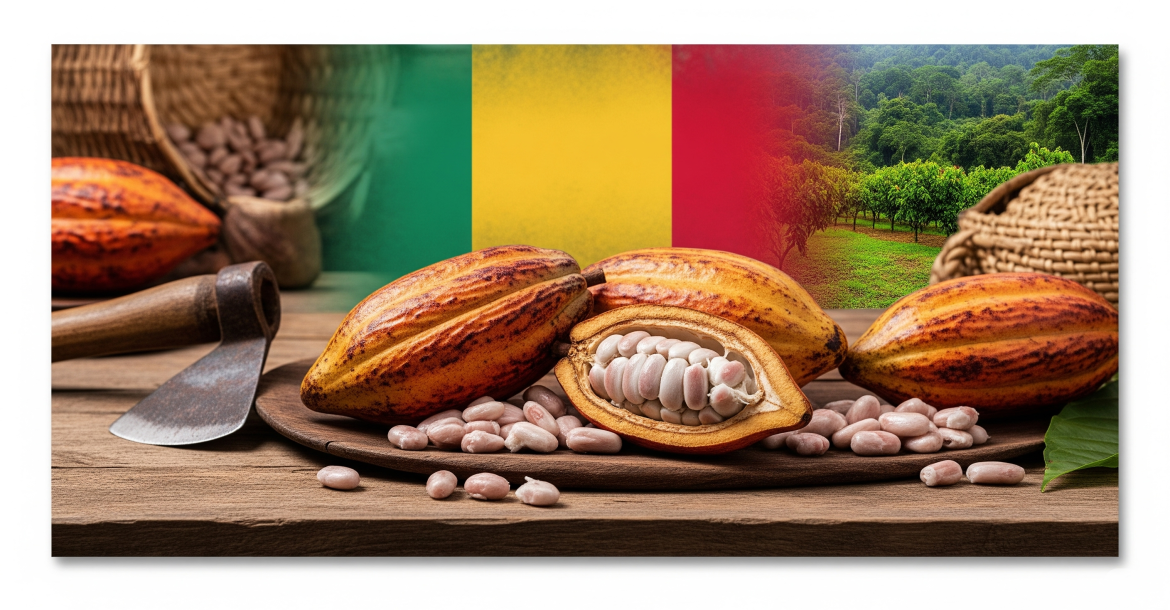
Conakry, Guinea – Guinea, a West African country rich in natural resources, also has agricultural potential for cash crops such as cocoa, although its sector remains discreet compared with its regional neighbours. Grown mainly in the forest regions of the south-east, Guinean cocoa is a source of income for thousands of smallholders and represents an opportunity for economic diversification. Against the backdrop of a historic surge in world prices, interest in developing this sector could intensify, offering prospects for improving production, quality and cocoa farmers' living conditions.
Limited Production with Growth Potential
Cocoa production in Guinea is modest, estimated at a few thousand metric tonnes a year (generally between 5,000 and 10,000 tonnes, although precise and recent figures are sometimes hard to consolidate). Cultivation is essentially concentrated in Forest Guinea, in prefectures such as Nzérékoré, Macenta, Yomou and Guéckédou, where agro-ecological conditions are favourable. Cocoa there is often grown in traditional agroforestry systems, alongside other food or fruit crops.
The surge in cocoa prices on the international market in 2024 and early 2025 is a potential incentive for Guinean producers. A significant rise in local prices could stimulate the upkeep of existing plantations and encourage new plantings, provided that producers can actually benefit from the increase.
The Challenges of an Embryonic Sector
The development of the cocoa sector in Guinea is held back by many structural and operational challenges:
- Low Production Volume and Productivity: Yields per hectare are generally low, owing to ageing orchards, low planting density, limited use of improved planting material and farming practices that could be improved.
- Management of Diseases and Pests: As across the region, plantations are prone to attacks by fungal diseases (black pod rot in particular) and insect pests, and smallholders' means of control are often limited.
- Uneven Post-Harvest Quality: Mastery of fermentation and drying techniques is uneven, which can affect bean quality and market value. The lack of adequate drying and storage infrastructure is a handicap.
- Rural Infrastructure and Logistics: The state of roads and tracks in production areas makes collecting and moving cocoa out difficult and costly, especially in the rainy season.
- Limited Access to Financing and Inputs: Smallholders have little access to agricultural credit to invest in their plantations or to acquire quality inputs (fertiliser, suitable plant protection products).
- Weak Structuring of the Sector and Producer Organisation: The lack of strong, well-structured farmer organisations limits producers' bargaining power and their access to training, market information and support services.
- Competition from Other Activities: In some regions, the appeal of other cash crops or of activities such as artisanal mining can draw labour and land away from cocoa growing.
- Deforestation and Sustainability: Agricultural expansion, potentially including that of cocoa if not well planned, can put pressure on forest resources. Promoting sustainable agroforestry systems is therefore crucial.
Opportunities for a Sector in the Making
Despite these obstacles, opportunities exist to energise the cocoa sector in Guinea:
- Potential for Quality Improvement and Differentiation: By focusing on good post-harvest practices, Guinea could build a reputation for quality cocoa, and eventually even explore niches such as organic or fair trade cocoa.
- World and Regional Demand: Demand for cocoa remains sustained. The proximity of processing countries or large export ports in the sub-region could offer outlets.
- Political Will and Partner Support: The Guinean government shows a will to develop its agricultural sector. Support programmes, backed by international technical and financial partners, could be stepped up for the cocoa sector.
- Contribution to Agricultural Diversification and Rural Incomes: Cocoa can play a larger role in diversifying rural households' sources of income and reducing poverty in Forest Guinea.
- Valorising Agroforestry Systems: Existing agroforestry practices can be optimised to improve sustainability, biodiversity and producers' incomes (for example, by combining cocoa with fruit or timber trees).
A Future to Build with Rigour and Investment
The cocoa sector in Guinea is still at a relatively early stage of development, but it has undeniable potential. The current surge in world prices could act as a catalyst if accompanied by a clear vision and strategic investment. For this potential to materialise, sustained efforts are needed to improve productivity and quality, strengthen the capacities of producers and their organisations, develop infrastructure, and create an environment favourable to investment. With a rigorous approach focused on quality and sustainability, Guinean cocoa could gradually earn a more visible place in the market and contribute more significantly to the country's socio-economic development.