Cocoa in Ethiopia: Potential in the Shadow of Coffee, in a Booming World Market
Addis Ababa, Ethiopia – Ethiopia, cradle of Arabica coffee and a country with diversified agriculture, is not traditionally a major player in the world cocoa market. However, with growing interest in diversifying…
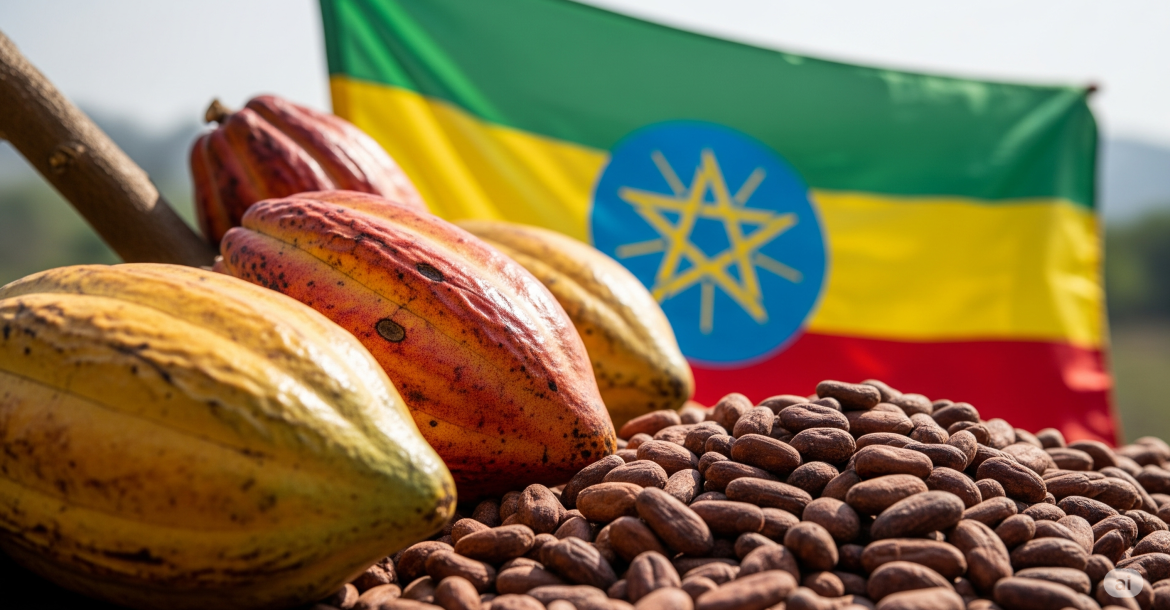
Addis Ababa, Ethiopia – Ethiopia, the birthplace of Arabica coffee and a country with diversified agriculture, is not traditionally a major player in the world cocoa market. However, with growing interest in diversifying cash crops and identifying potentially favourable agro-ecological zones, cocoa growing is beginning to be tentatively considered in certain regions. Could the historic surge in world prices give an impetus to the emergence of a new sector in Ethiopia, in the shadow of its emblematic coffee?
Almost Non-Existent Production, Emerging Interest
Currently, commercial cocoa production in Ethiopia is extremely limited, even non-existent on the scale of international statistics. Although occasional initiatives or research projects may have explored the feasibility of the crop in certain humid tropical areas (notably in the south and west of the country), there is no structured sector or significant production volumes intended for export or even for the domestic market.
The direct impact of the surge in world cocoa prices in 2024 and early 2025 on Ethiopia is therefore nil to date in terms of export revenue. However, this situation could prompt greater reflection within government, agricultural development agencies and investors on the potential for diversification towards high-value crops such as cocoa, alongside coffee's hegemony.
The Major Challenges to the Emergence of a Cocoa Sector
Establishing a viable cocoa sector in Ethiopia would run into numerous obstacles:
- Agro-Ecological Conditions to Be Defined and Studied: Although some areas may potentially suit cocoa growing, in-depth studies would be needed to identify the optimal regions in terms of climate, soil and altitude, and to determine the most suitable varieties.
- Lack of Know-How and Experience: Growing cocoa requires specific knowledge of planting, upkeep, disease and pest management, harvesting and above all post-harvest treatment (fermentation, drying) to guarantee quality. This expertise is currently very limited in Ethiopia.
- Lack of Suitable Planting Material: The introduction and adaptation of high-performing cocoa varieties for the Ethiopian context would be necessary.
- Infrastructure and Logistics: Transport infrastructure to potentially producing rural areas and supply chains for a new export crop would have to be developed.
- Competition with Coffee and Other Crops: Arabica coffee is an emblematic and economically crucial crop for Ethiopia. Introducing cocoa would have to be done without creating negative competition for the resources (land, labour, investment) already devoted to coffee. Other important crops such as cereals, pulses and oilseeds also hold a prominent place.
- Access to Financing and Markets: Financing new agricultural initiatives, particularly for a non-traditional crop, could be a challenge. Access to international markets for a new producer would require significant efforts in prospecting and developing commercial relationships.
- Structuring a New Sector: Creating producer organisations, certification systems (if aiming at organic or fair trade) and quality control mechanisms would take time and resources.
Potential Long-Term Opportunities
Despite these considerable challenges, exploring cocoa potential in Ethiopia could offer some long-term benefits:
- Agricultural Diversification: Reducing economic dependence on a single export crop (coffee) could strengthen the resilience of the agricultural sector to world market fluctuations and the impacts of climate change.
- Making Use of Areas Marginal for Coffee: Some regions not optimally suited to high-quality coffee production could potentially be suited to cocoa growing.
- Creating New Rural Economic Opportunities: Introducing a new cash crop could generate jobs and improve incomes for rural communities in specific areas.
- Potential for "Natural" Organic Cocoa: If the crop were introduced with agro-ecological practices from the outset, Ethiopia could potentially position itself in the organic cocoa market.
- Learning and Knowledge Transfer: Collaborations with African countries with established cocoa-growing experience could facilitate the development of the necessary skills and techniques.
An Uncertain Future, Conditional on In-Depth Studies and Strategic Commitment
At present, the cocoa sector in Ethiopia is at the stage of a distant possibility rather than an economic reality. The surge in world cocoa prices could prompt more thorough feasibility studies, but establishing a viable sector would require a significant strategic commitment, substantial investment in research and development, training and infrastructure, and a careful assessment of cocoa's competitiveness against already well-established crops. For now, Ethiopia remains focused on its exceptional coffee, but the idea of a future in which cocoa could also contribute to its agricultural landscape may not be entirely ruled out in the very long term.