Cocoa in Gabon: Quiet Potential in the Shadow of the Forest, in a Booming World Market
Libreville, Gabon – Gabon, a Central African country renowned for its immense forest cover and its biodiversity conservation efforts, is quietly exploring the potential of its cocoa sector. Historically…
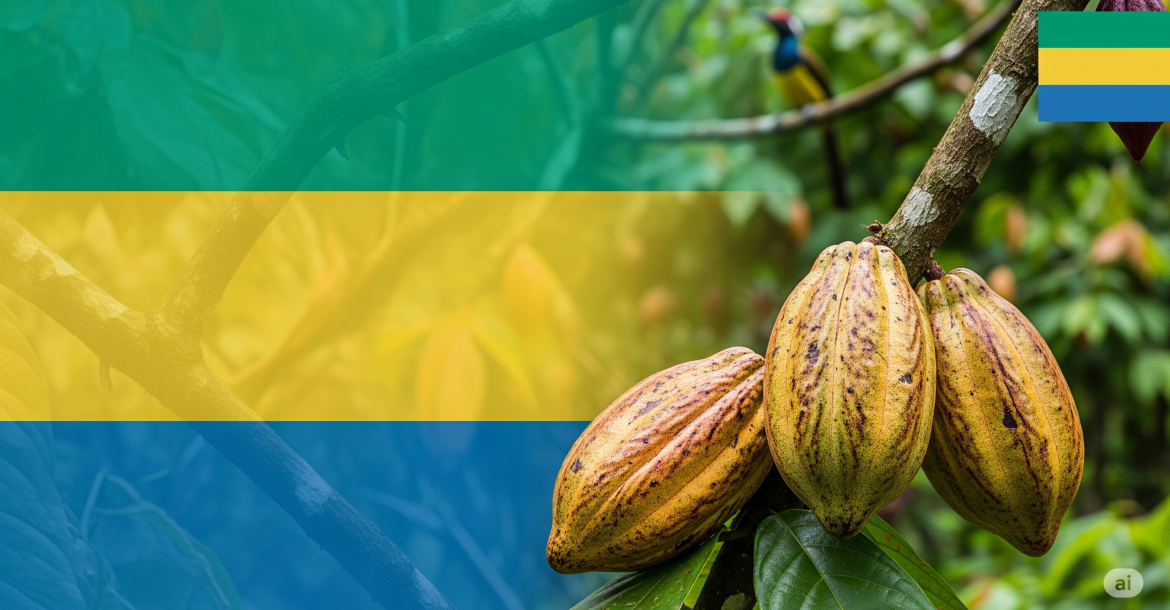
Libreville, Gabon – Gabon, a Central African country renowned for its immense forest cover and its biodiversity conservation efforts, is quietly exploring the potential of its cocoa sector. Historically present but sidelined in favour of other sectors such as oil and logging, cocoa growing is enjoying renewed interest as part of economic diversification and sustainable rural development policies. Faced with the historic surge in world cocoa prices, Gabon could find an opportunity to develop a niche of high-quality cocoa, in harmony with its environmental commitments.
Confidential Production, a "Green" Potential to Cultivate
Cocoa production in Gabon is currently very limited and poorly documented in world statistics, probably amounting to a few hundred tonnes at most, or even less on formal markets. The plantations, often old and small, are found mainly in certain provinces such as Woleu-Ntem, where agro-ecological conditions are more favourable. There is a heritage of cocoa growing, but the sector never reached a scale comparable to that of neighbouring countries.
The impact of the surge in world cocoa prices in 2024 and early 2025 on Gabon is above all a source of reflection and a potential incentive. For the few active producers, it could mean improved incomes. More broadly, this situation could encourage the government and investors to consider "made in Gabon" cocoa as a sector of the future, provided they bet on sustainable, high-value-added production models.
The Challenges of a (Re)birth in a Demanding Context
Developing or reviving a significant cocoa sector in Gabon must overcome important obstacles:
- Small Production Base and Limited Know-How: The number of active producers is small, and the technical know-how specific to modern, quality cocoa growing (plantation management, post-harvest techniques) needs to be strengthened or reintroduced.
- Competition from Other Economic Sectors: The Gabonese economy has long been dominated by oil and logging, which attract labour and investment at the expense of agriculture.
- Lack of Agricultural and Logistics Infrastructure: Transport infrastructure to potentially producing rural areas, as well as cocoa collection, drying and storage facilities, is underdeveloped.
- Access to Quality Planting Material: To develop a quality-focused sector, access to high-performing cocoa varieties adapted to the Gabonese terroir and recognised for their fine flavours is a prerequisite.
- Weak Structuring of the Sector: There is not yet a genuinely organised value chain for cocoa, nor producer organisations strong enough to carry collective initiatives.
- Environmental Protection and Sustainable Models: Any expansion of cocoa growing will have to fit within Gabon's strict conservation policies, favouring agroforestry and avoiding any deforestation. This represents an additional cost and complexity but also an opportunity for differentiation.
- Access to Financing: Financing for new plantations or the rehabilitation of old plots, especially with agro-ecological models, can be hard for small operators to obtain.
Opportunities for a High-Value "Forest Cocoa"
Despite these challenges, Gabon has unique assets to develop a niche cocoa sector:
- Alignment with Environmental Policies ("Green Gabon"): Cocoa growing developed in agroforestry systems, contributing to biodiversity preservation and carbon sequestration, would be a perfect match for the vision of a "Green Gabon" and could receive institutional support.
- Potential for a Unique Origin and Terroir Cocoa: Gabon's specific soils and climate could give its cocoa particular organoleptic characteristics, attracting specialty chocolatiers.
- Growing Demand for "Conservation" and Ethical Cocoa: Consumers are increasingly sensitive to the origin of products and their environmental and social impact. A sustainably produced Gabonese "forest cocoa" could find a place in this market.
- Economic Diversification and Rural Development: Cocoa growing could offer new sources of income to rural communities, contributing to the fight against poverty and to keeping populations settled in forest areas.
- Learning and Regional Cooperation: Gabon can draw on the experience of neighbouring Central African countries (Cameroon, São Tomé and Príncipe) that have developed quality cocoa sectors.
- Possibility of Direct Partnerships: For small volumes of exceptional cocoa, direct partnerships with "bean-to-bar" chocolatiers or companies committed to sustainability are conceivable.
A Future to Be Written, Between Conservation and Valorisation
The cocoa sector in Gabon is at an embryonic stage today, but it holds interesting potential, especially if it turns resolutely towards a very high-value-added production model that respects its exceptional environment. The current surge in world prices could be the spark. However, the road will be long and will require a clear vision, targeted investment in research, training and infrastructure, and an incentive framework for producers who commit to this path. Gabon has the unique opportunity to develop not a volume sector but a "grand cru" of cocoa, a symbol of its commitment to an economy that is both prosperous and green.