
Cocoa in the Comoros: Confidential Potential in the Shadow of Cash Crops, in a Feverish World Market
Moroni, Comoros – The Comoros archipelago, famous for cash crops like vanilla, cloves and ylang-ylang, is quietly watching the historic surge in cocoa prices on the world market. Although production…
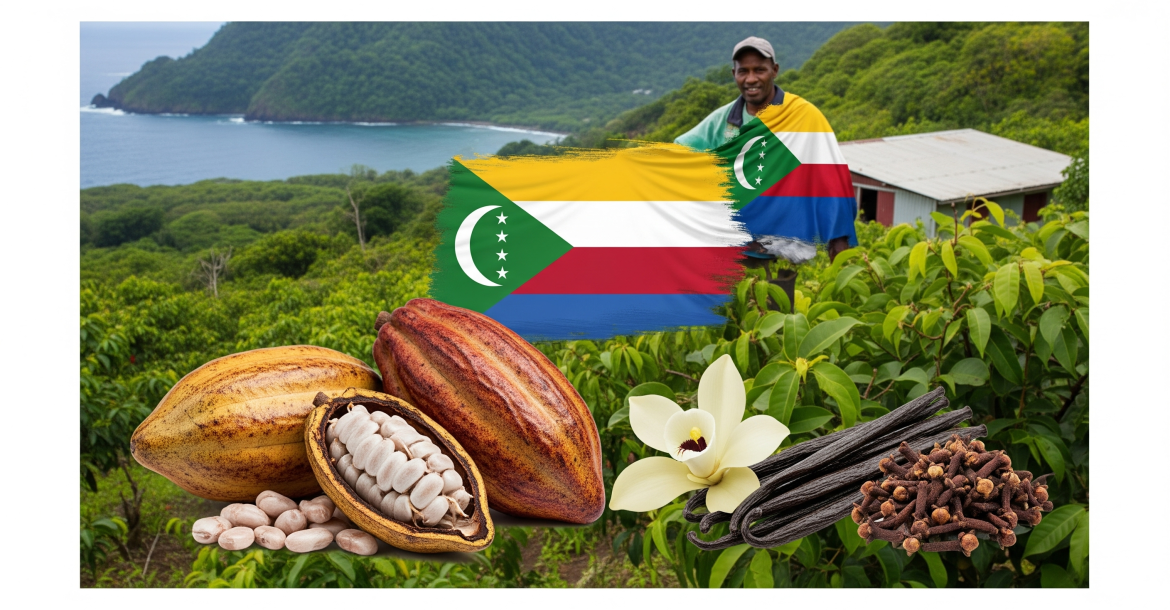
Moroni, Comoros – The Comoros archipelago, famous for cash crops such as vanilla, cloves and ylang-ylang, is quietly watching the historic surge in cocoa prices on the world market. Although cocoa production there is currently very confidential, even anecdotal on a commercial scale, this exceptional situation could spark interest in exploring or reviving the crop. In an island context where agricultural diversification is a major issue, could brown gold find a small place alongside the archipelago's fragrant treasures?
Marginal Production, a Heritage to Rediscover?
It is hard to find consolidated, recent data on structured cocoa production in the Comoros. Historically, cocoa may have been introduced to the islands (Grande Comore, Anjouan, Mohéli) during the colonial period, as in many other tropical regions, but it never reached the importance of other export crops. Today, production is extremely limited, probably coming from a few scattered plots, often grown alongside other crops in traditional agroforestry systems, and intended mainly for local consumption or very restricted niche markets.
The impact of the surge in world cocoa prices in 2024 and early 2025 on the Comoros is therefore above all indirect. It could nonetheless stimulate curiosity and encourage initiatives to assess the potential for quality cocoa growing, able to stand out through its island origin and agro-ecological practices.
The Many Challenges to the Emergence of a Cocoa Sector
Developing even a modest cocoa sector in the Comoros would run into considerable challenges, inherent in its context as a small island developing state:
- Limited Land Availability and Agricultural Competition: Cultivable land is scarce and already largely used for food crops and established cash crops (vanilla, cloves, ylang-ylang), which have high added value and a well-rooted tradition.
- Specific Agro-Ecological Conditions: Although some areas may be suitable, the microclimates and soils best suited to quality cocoa growing would need to be precisely identified.
- Lack of Planting Material and Know-How: Access to high-performing cocoa varieties suited to the Comorian terroir and potentially fine in flavour, along with the technical know-how for cultivation, harvesting and above all post-harvest treatment (fermentation, drying), are prerequisites that are currently scarcely present.
- Basic Infrastructure and Logistics: Inter-island and internal transport infrastructure, as well as storage and packaging capacity for an export product like cocoa, are limited.
- Vulnerability to Climate Shocks: The archipelago is exposed to climate hazards (cyclones, heavy rains, coastal erosion, potential freshwater scarcity) that can affect agriculture.
- Access to Financing and Markets: Financing for cocoa initiatives would be hard to obtain without proof of viability, and access to export markets for small cocoa volumes would require significant efforts in prospecting and building value chains.
- Weak Structuring of the Farming World for New Sectors: Although farmer organisations exist for the dominant crops, setting up a cocoa-dedicated structure would take time and resources.
Opportunities to Explore with Caution and Vision
Despite these obstacles, a few avenues could justify exploring cocoa potential in the Comoros:
- Agricultural Diversification and Resilience: In a context of economic and climate vulnerability, diversifying sources of farm income is a relevant strategy. Cocoa, if well adapted, could contribute modestly.
- Valorisation in Agroforestry Systems: Cocoa lends itself well to growing alongside other species (shade trees, fruit trees, even certain perfume plants), which could fit into existing farming systems and help preserve biodiversity.
- Potential for an Ultra-Confidential Niche Cocoa: If varieties with unique organoleptic characteristics were identified or developed, they could interest a very small market of "bean-hunting" chocolatiers or lovers of rarities.
- Learning and Regional Cooperation: The Comoros could benefit from the expertise of other Indian Ocean islands (such as Madagascar or Mauritius, though the latter's production is even more symbolic) or African countries that have developed quality cocoa sectors.
- Interest in "Island Origin" and Organic Products: Careful production, respectful of the environment and with clear traceability, could resonate with consumers sensitive to these values.
An Uncertain Future, Dependent on Targeted Initiatives
The cocoa sector in the Comoros is practically non-existent commercially today. The current surge in world prices may raise questions and, potentially, encourage very targeted feasibility studies or pilot projects. However, it is unrealistic to imagine a large-scale sector emerging in the short or medium term. If cocoa were to find a place in Comorian agriculture, it would most likely be on a modest scale, focusing on very high quality, exemplary agro-ecological practices, and clever insertion into very specific market niches. For now, the Comoros' treasures remain above all its spices and perfume plants, but the door to cocoa exploration may not be completely closed for the future.