Cocoa in Benin: Quiet Potential Seeking Emergence in a Feverish World Market
Porto-Novo, Benin – Benin, a West African country better known for cotton, cashew or pineapple, is watching with interest the dynamics of a world cocoa market in turmoil. Although its production…
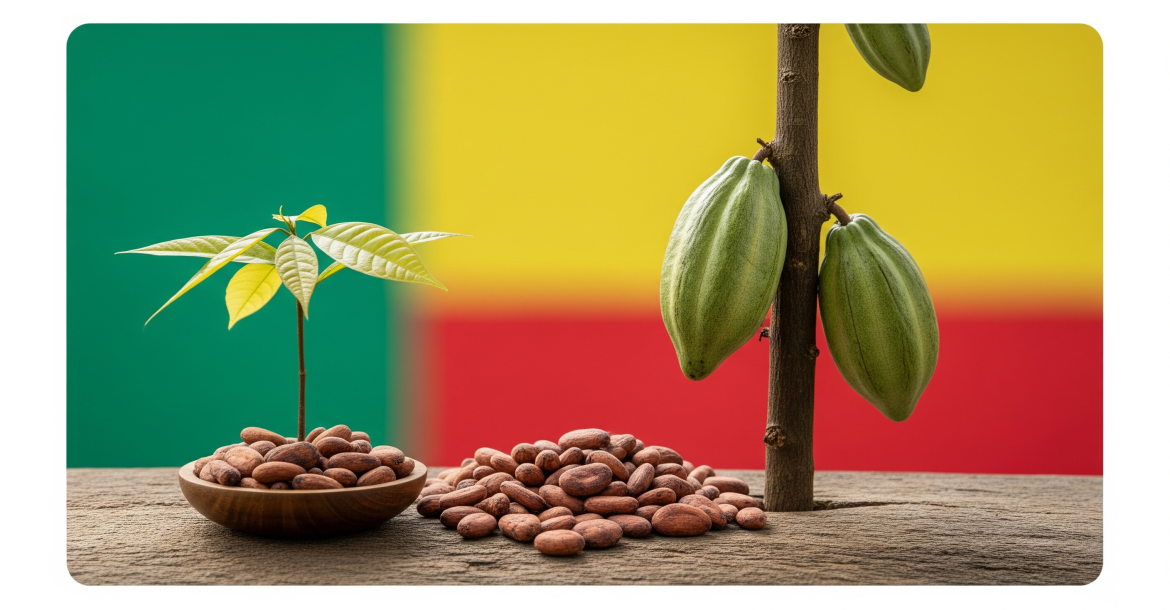
Porto-Novo, Benin – Benin, a West African country better known for its cotton, cashew and pineapple crops, is watching with interest the dynamics of a world cocoa market in turmoil. Although Beninese cocoa production is currently very marginal, even embryonic on a commercial scale, the historic surge in brown gold prices could spark renewed interest in the crop and encourage agricultural diversification initiatives. The road is long, but the current context offers a window to explore the country's cocoa potential.
Confidential Production, Potential to Explore
Historically, cocoa has been grown in Benin, but never on a scale comparable to that of its neighbours such as Ghana, Côte d'Ivoire or even Togo. Currently, formal cocoa production in Benin is extremely limited, even negligible in world statistics. The few existing plantations are often small, scattered, and sometimes the result of individual initiatives or localised pilot projects, mainly in the country's southern areas with more favourable rainfall (such as parts of the Couffo, Zou or Plateau departments).
The impact of the surge in world cocoa prices in 2024 and early 2025 on Benin is above all a source of inspiration and reflection. If local producers manage to market small quantities, they could benefit from attractive prices. More broadly, this situation could prompt the government and agricultural development players to reassess cocoa's potential as a profitable diversification crop.
Major Challenges to the Emergence of a Cocoa Sector
Developing a significant cocoa sector in Benin runs into numerous obstacles:
- Limited Agro-Ecological Conditions: Only certain areas in the south of the country have climatic and soil conditions genuinely suited to productive cocoa growing. Competition for this land with other already well-established food and cash crops is strong.
- Lack of Suitable, High-Performing Planting Material: Access to quality cocoa seedlings that are productive and resistant to local diseases is a prerequisite that does not exist on a large scale.
- Absence of Specific Know-How: Growing cocoa requires particular technical skills in plantation management, pruning, disease and pest control, and above all post-harvest treatment (fermentation, drying) to guarantee quality. This know-how is not widespread.
- Non-Existent Infrastructure for Cocoa: Benin has no structured value chain for cocoa: no dedicated collection centres, processing units or established export channels for this product.
- Weak Organisation of Players: For a sector that is almost non-existent, there are not yet any cocoa producer organisations that could carry collective initiatives.
- Strong Competition from Other Agricultural Sectors: Benin has successfully developed other export sectors (cotton, cashew, pineapple, shea) that already absorb the resources, land and attention of public authorities and farmers.
- Access to Financing: Financing a new agricultural sector, perceived as risky and without a solid track record, would be a major challenge.
Tentative Opportunities and Prospects
Despite this picture, a few avenues could be explored if political will and investment emerged:
- Agricultural Diversification: In the face of weather shocks and the price volatility of other commodities, diversifying cash crops is a relevant strategy. Cocoa could contribute to this in specific ecological niches.
- Learning from Neighbouring Countries: Benin can benefit from the experience and expertise of neighbouring countries (Togo, Ghana, Nigeria) in agronomic research, growing techniques and sector structuring.
- Niche Markets and Specialty Cocoa: If a small, high-quality production, potentially organic or from particular agroforestry systems, could be developed, it could target very specific niche markets.
- Research and Development: In-depth agronomic studies would be needed to identify the most suitable areas, select adapted varieties and define high-performing, sustainable technical routes for the Beninese context.
- Pilot Projects and Partnerships: Pilot projects, supported by technical and financial partners, could test the technical and economic viability of cocoa growing under controlled conditions.
Potential to Be Confirmed, a Long Road Ahead
The cocoa sector in Benin is today anecdotal. While the current surge in world prices can legitimately open up discussion of its potential (re)introduction as a diversification crop, it is crucial to gauge the scale of the challenges. Developing a viable cocoa sector would require a long-term vision, significant investment in research, training and infrastructure, and strong political will. For now, Benin watches the brown gold fever from afar, while concentrating on the agricultural sectors that are its strength today. The future will tell whether cocoa will one day find a place, even a modest one, in the Beninese agricultural landscape.