Cocoa in Togo: Quiet Brown Gold Seeking Added Value in a Feverish World Market
Lomé, Togo – Less publicised than its giant neighbours in brown gold, Togo remains a cocoa producer with a long tradition and notable development potential. Focused on improving quality…
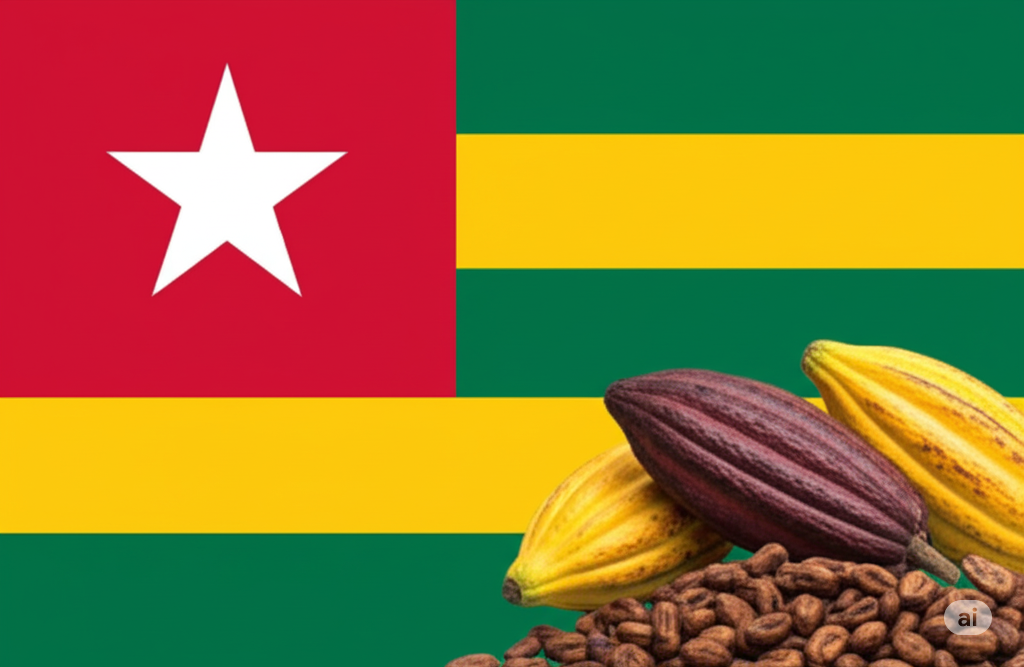
Lomé, Togo – Less in the spotlight than its giant neighbours in brown gold, Togo remains a cocoa producer with a long tradition and notable development potential. Focused on improving quality, exploring organic potential and strengthening its contribution to rural incomes, the Togolese cocoa sector navigates ambitiously in a world market currently marked by an unprecedented price surge. This situation offers opportunities for this West African country to showcase its efforts and better value its production.
Modest but Strategic Production, Sensitive to World Prices
Cocoa production in Togo is relatively modest, generally ranging between 10,000 and 15,000 metric tonnes a year, although efforts are under way to increase it. Cultivation is mainly concentrated in the Plateaux regions (notably around Kpalimé, Badou and Atakpamé) and Kara. It is the work of smallholders for whom cocoa is a crucial source of income.
The historic surge in world cocoa prices in 2024 and early 2025 has a direct impact on the Togolese sector. The prices offered to local producers have risen significantly, stimulating enthusiasm and attention for this crop. This situation could encourage investment in the upkeep and rehabilitation of plantations, and potentially curb smuggling to neighbouring countries when price differentials were unfavourable.
The Challenges of a Sector Seeking Modernisation
Despite the current favourable context and the efforts made, the Togolese cocoa sector must overcome several structural challenges:
- Low Productivity and Ageing Orchards: A significant share of Togolese cocoa farms is ageing, with trees past their peak productivity and planting density that is often insufficient. Access to improved, high-performing planting material remains an issue.
- Management of Diseases and Pests: Black pod rot, mirids (capsids) and other diseases and pests affect yields and bean quality. Building producers' capacities for integrated and sustainable management of these problems is necessary.
- Impact of Climate Change: Climate disruption, including unpredictable rainy seasons, periods of drought or violent winds, can negatively affect cocoa production.
- Post-Harvest Quality and Infrastructure: Improving and harmonising fermentation and drying practices is crucial to guarantee consistent quality and meet the requirements of international markets. A lack of adequate drying and storage infrastructure can also be a brake.
- Limited Access to Financing and Inputs: Smallholders often struggle to access credit to finance plantation upkeep, the purchase of inputs (fertiliser, sustainable plant protection products) or labour.
- Producer Organisation and Structuring of the Sector: Strengthening cooperatives and farmer organisations is essential to improve producers' bargaining power, ease access to support services, and ensure better coordination within the sector.
- Traceability and Sustainability: Like all producing countries, Togo must adapt to markets' growing requirements for traceability and sustainable production, notably in view of regulations such as the European Union's deforestation regulation (EUDR).
Strengths and Opportunities of an Ambitious "Little Tom Thumb"
Togo nonetheless has strengths and opportunities to develop its cocoa sector:
- Potential for Quality and Organic Cocoa: Agro-ecological conditions are favourable to producing quality cocoa. Interest in organic and fair trade certification is growing, offering prospects for added value in niche markets.
- Proximity to Large Markets and Regional Integration: Its geographical position in West Africa allows it to benefit from regional dynamics and relative access to ports for export.
- Government Commitment and Partner Support: The Togolese government, through structures such as the Ministry of Agriculture, Livestock and Rural Development, and initiatives such as the Agricultural Financing Incentive Mechanism (MIFA), as well as international technical and financial partners, support the sector's development. The Togolese Institute of Agronomic Research (ITRA) also plays a role in improving cultivation techniques.
- Sustained World Demand: World demand for cocoa remains strong, and West African origins, if they guarantee quality and sustainability, have every place in this market.
- Contribution to Fighting Rural Poverty: Improving the productivity and profitability of cocoa growing has a direct impact on rural households' living conditions.
A Promising Future Conditional on Quality and Structuring
The cocoa sector in Togo, although modest in size, has real potential for growth and value addition. The current surge in world prices is an opportunity to inject new momentum, encourage good practices and attract the necessary investment. For this momentum to last, continued efforts will be indispensable to improve productivity and quality, strengthen producer organisations, promote sustainable farming practices and structure marketing. The Togolese "little Tom Thumb" has the means to carve out a prime place among the cocoa origins recognised for their quality.