Cocoa in the Democratic Republic of the Congo: A Sleeping Giant with Immense Potential in a Booming World Market
Kinshasa, Democratic Republic of the Congo – The Democratic Republic of the Congo (DRC), a vast Central African country rich in natural resources, also has considerable agricultural potential, including for growing cocoa…
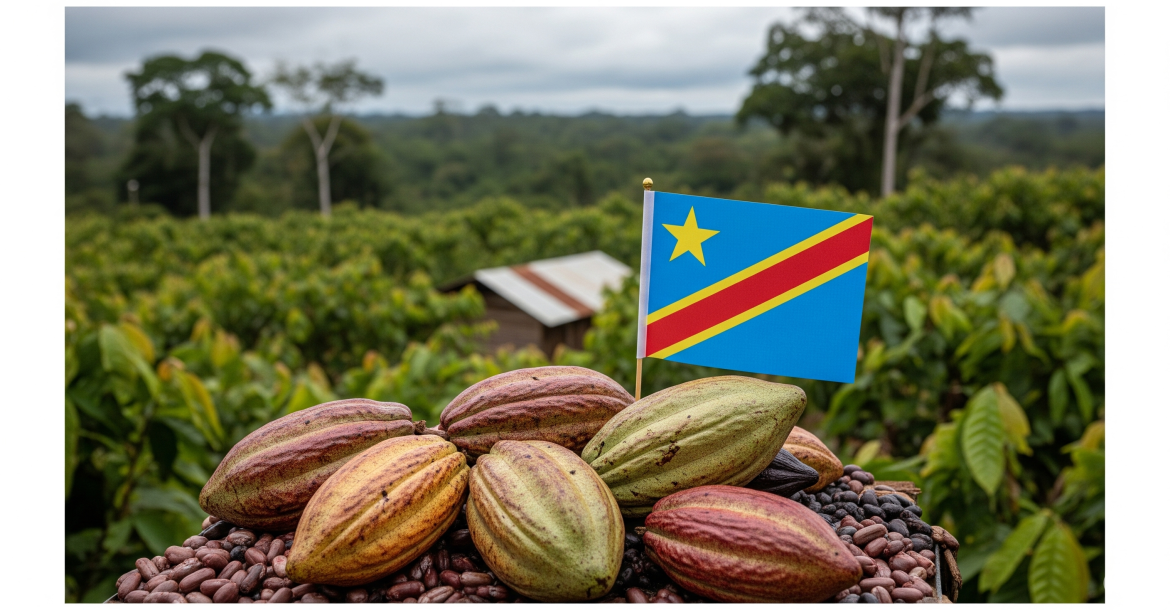
Kinshasa, Democratic Republic of the Congo – The Democratic Republic of the Congo (DRC), a vast Central African country rich in natural resources, also has considerable agricultural potential, including for cocoa growing. Although its current production is modest and often overshadowed by other socio-economic challenges, the DRC has favourable agro-ecological conditions in several of its provinces. The historic surge in world cocoa prices in 2024 and early 2025 could revive interest in developing this sector, offering a prospect of economic diversification and improved incomes for rural communities.
Scattered Production, Enormous Geographic Potential
Cocoa production in the DRC is currently limited, estimated at a few thousand metric tonnes a year (estimates vary, but are generally between 5,000 and 15,000 tonnes). Cultivation is scattered across several provinces, notably North Kivu, South Kivu, Ituri, Équateur and the former Orientale province. Cocoa there is mainly grown by smallholders using traditional methods, often in remote areas that are hard to reach. The expansion potential is immense, given the country's vast area and the presence of climatically suitable zones.
The spectacular rise in world cocoa prices could act as a catalyst for the sector in the DRC. More attractive local prices could encourage existing farmers to maintain their plantations better and prompt new players to take up cocoa growing, provided logistical and structural challenges can be overcome.
The Major Obstacles to Developing a Structured Cocoa Sector
Developing the cocoa sector in the DRC faces considerable challenges, often linked to the country's complex socio-economic context:
- Isolation and Lack of Infrastructure: The immensity of the territory and the lack of transport (roads, bridges, navigable waterways), storage and communication infrastructure make access to production areas and delivery of products to markets extremely difficult and costly.
- Insecurity and Conflict: Persistent instability and armed conflict in some producing regions (notably in the east of the country) hinder farming activity, producers' safety and long-term investment.
- Low Productivity and Ageing Orchards: Plantations are often old, poorly maintained and made up of low-yielding varieties. Access to improved planting material adapted to local conditions is limited.
- Disease and Pest Management: Cocoa trees are vulnerable to various fungal diseases (such as black pod rot) and pest attacks, and smallholders' knowledge and means of control are often insufficient.
- Uneven Post-Harvest Quality: Fermentation and drying practices are rarely optimal, which affects bean quality and potential in international markets. The lack of adequate equipment and training is a problem.
- Limited Access to Financing and Inputs: Farmers have very little access to agricultural credit and quality inputs (improved seeds, fertiliser, tools).
- Weak Producer Organisation and Sector Structuring: The sector is poorly structured, lacking strong farmer organisations able to defend producers' interests, ease access to services and markets, and promote sustainable practices.
- Deforestation and Illegal Exploitation of Natural Resources: Unplanned agricultural expansion can put pressure on forests, and illegal activities can disrupt supply chains and harm the reputation of Congolese cocoa.
- Governance and Regulatory Framework: Administrative complexity, corruption and an unclear regulatory framework can discourage investment in the agricultural sector.
Opportunities for an Awakening of the Cocoa Sector
Despite the scale of the challenges, the DRC has significant assets and opportunities:
- Vast Agro-Ecological Potential: Large expanses of Congolese territory offer ideal climate and soil conditions for quality cocoa growing.
- Resilience of Farming Communities: Rural populations have a long farming tradition and a strong capacity for adaptation.
- Growing World Demand: Global demand for cocoa remains strong, and the emergence of new African origins can be well received on the market.
- Potential for "De Facto" Organic Cocoa: Because of the limited use of chemical inputs, part of Congolese cocoa could potentially be certified organic with appropriate support.
- Interest from International Players: International organisations and companies are increasingly interested in developing sustainable agricultural sectors in countries like the DRC, recognising the potential contribution to food security and economic development.
- Contribution to Economic Diversification: Developing cocoa could help diversify the DRC's economy, currently heavily dependent on mining resources.
A Future to Build with Concerted Efforts and Long-Term Commitment
The cocoa sector in the Democratic Republic of the Congo is a sleeping giant that has the potential to awaken and play a more significant role in the world market. However, this will require concerted efforts and long-term commitment from the Congolese government, international organisations, the private sector and local communities. Priorities will have to include improving infrastructure, strengthening security, supporting productivity and quality, structuring the sector, promoting sustainable practices and creating an environment conducive to investment. The current price surge offers a window of opportunity, but the road to a flourishing Congolese cocoa sector will be long and will require a holistic and persevering approach.