
Countries and Regions Buying the Most Raw Cocoa Beans
Main Countries and Regions Importing Raw Cocoa Beans (mainly by volume):
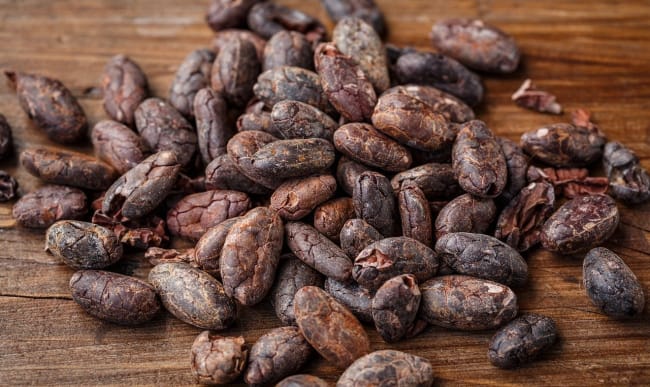
Main Countries and Regions Importing Raw Cocoa Beans (mainly by volume):
-
European Union (as a bloc):
- The EU is by far the world's leading importer of raw cocoa beans, accounting for about 55% to 60% of total world imports.
- Within the EU, several countries stand out for their massive import volumes, as they host large processing (grinding) plants and powerful chocolate industries.
-
Netherlands:
- It is the world's leading cocoa bean importing country individually.
- Reason: The port of Amsterdam is the largest cocoa port in the world. The Netherlands has enormous grinding capacity, turning beans into cocoa mass, cocoa butter and cocoa powder, which are then used by the Dutch chocolate industry or re-exported to other European countries and the world.
- Approximate volume (2023): Around 770,000 to 880,000 tonnes.
-
Malaysia:
- Malaysia has established itself as a major player in cocoa processing in Asia and is one of the world's largest bean importers.
- Reason: Large grinding capacity to produce cocoa butter, powder and other ingredients for Asian and world markets.
- Approximate volume (2023): Around 530,000 tonnes.
-
United States:
- The United States is a very large chocolate consumer and has a significant chocolate processing and manufacturing industry.
- Reason: Importing beans for its own grinding plants and for the large domestic chocolate makers.
- Approximate volume (2023): Around 270,000 to 470,000 tonnes (figures may vary depending on source and methodology; the lowest figure of 269,000 t for 2023 from WITS seems more in line with an overall production decline, while older figures or those including stocks may be higher).
-
Germany:
- Germany is a large chocolate consumer and producer in Europe.
- Reason: Large chocolate industry and processing capacity.
- Approximate volume (2023): Around 280,000 to 300,000 tonnes.
-
Indonesia:
- Although a major producer, Indonesia also imports cocoa beans to meet the needs of its growing local processing industry.
- Reason: Supplementing local production for its grinding and chocolate product factories.
- Approximate volume (2023): Around 270,000 tonnes.
-
Belgium:
- Renowned worldwide for the quality of its chocolate, Belgium imports significant volumes of beans.
- Reason: Supplying its prestigious chocolate industry. The port of Antwerp-Bruges is also an important cocoa hub.
- Approximate volume (2023): Around 115,000 to 300,000 tonnes (the range is wide, the lowest figure coming from WITS 2023, while CBI mentions 312,000 t for Belgium in 2023 as the second-largest European importer after the Netherlands). This may depend on what is counted as direct import versus re-export.
-
France:
- France has a significant chocolate industry and a strong consumption tradition.
- Reason: Supplying its chocolatiers and processors.
- Approximate volume (2023): Around 100,000 to 160,000 tonnes.
-
Canada:
- A notable importer in North America.
- Reason: For its processing and confectionery industry.
- Approximate volume (2023): Around 125,000 tonnes.
-
Türkiye:
- The Turkish confectionery industry is growing, increasing its need for cocoa beans.
- Reason: Supplying its biscuit and chocolate sector.
- Approximate volume (2023): Around 120,000 tonnes.
Other significant importing countries:
- Spain
- Italy
- United Kingdom
- Switzerland (although a significant part of its activity is trading, it also imports for its own production)
- Singapore (trading and processing hub in Asia)
- Japan
Why do these countries/regions import so much?
- Large Processing (Grinding) Industry: Countries such as the Netherlands, Malaysia, Germany and the United States have enormous grinding capacity to turn beans into semi-finished products (mass, butter, powder) that are then used worldwide.
- Developed Chocolate Industry: These countries host the headquarters and main factories of the world's large chocolate groups as well as a dense network of mid-sized chocolate makers and artisans.
- High Domestic Consumption: Many of these countries have some of the highest per-capita chocolate consumption in the world.
- Port and Logistics Infrastructure: Ports such as Amsterdam, Antwerp and Hamburg are major hubs for the cocoa trade.
Note from Cacao.ci: it is interesting to note that while Côte d'Ivoire is the leading producer and exporter of beans, most large-scale initial processing into semi-finished products and the manufacture of finished chocolate for world markets still take place mostly in these importing countries, although processing at origin is increasing.