Mars, Incorporated: A Family Giant with Iconic Chocolate Brands
McLean, Virginia, United States – Mars, Incorporated is much more than a confectionery company; it is a diversified global giant, owned by the Mars family since its creation, with a significant presence in food…
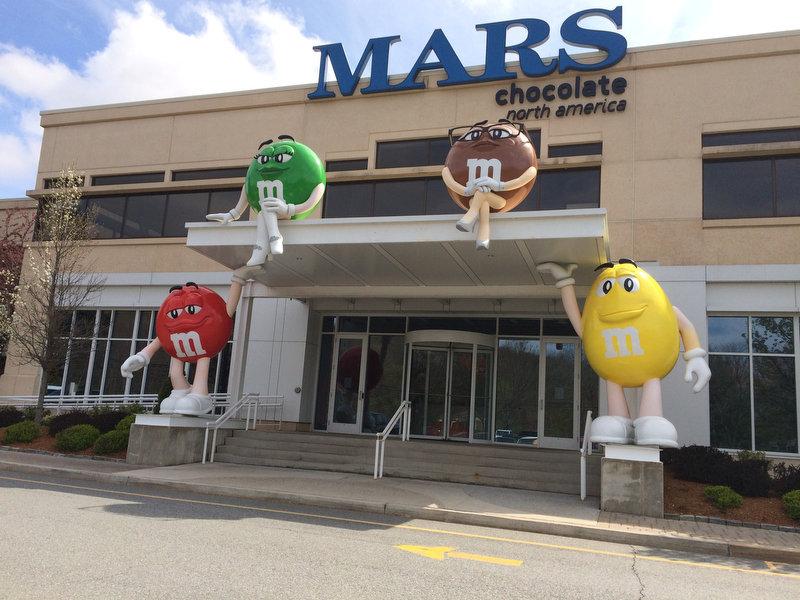
McLean, Virginia, United States – Mars, Incorporated is much more than a confectionery company; it is a diversified global giant, owned by the Mars family since its creation, with a significant presence in pet care, food and, of course, chocolate. Its Mars Wrigley Confectionery division is one of the world's largest chocolate makers, responsible for some of the most recognised and best-loved brands around the globe. The company puts forward its "Five Principles" (Quality, Responsibility, Mutuality, Efficiency, Freedom) as the foundation of its culture and operations.
A Century of History and Innovation in Confectionery
The history of Mars begins with Frank C. Mars, who learned the art of hand-dipping chocolates from his mother. In 1911, he founded the Mars Candy Factory in Tacoma, Washington, with his second wife, Ethel V. Mars. After modest beginnings, the company reached a decisive turning point in 1923 (or 1920 according to other Mars chronologies) with the launch of the MILKY WAY® bar. The idea, inspired by a conversation with his son Forrest E. Mars Sr., was to offer a "malted milk in a candy bar". Success was immediate and led to the hiring of full-time sales staff.
In the 1930s, the company, now based in Chicago for a more central location and better rail access, continued to grow. The SNICKERS® bar was created in 1930. It was also during this decade, in 1932, that Forrest E. Mars, Sr. moved to the United Kingdom. There he developed the business with a vision based on "mutuality of benefits for all stakeholders", a principle that remains central to Mars today. It was in Slough, England, that he launched the original MARS® bar in 1932.
Another major innovation came during the Second World War: M&M'S® candies. Legend has it that Forrest E. Mars Sr. got the idea while watching Spanish soldiers eat chocolate pellets coated in a sugar shell to stop them melting. M&M'S® Plain Chocolate Candies were launched in the United States in 1941. The famous "M" has been printed on each candy since 1950 to guarantee the product's authenticity, along with the slogan "Look for the M on every piece".
International expansion continued actively in the 1960s, notably with the construction of a major confectionery factory in Veghel, the Netherlands, in 1963, which would become one of the largest chocolate factories in the world.
In 2016, Mars Inc. announced the merger of its chocolate and Wrigley segments (Wrigley acquired in 2008 with the help of Berkshire Hathaway) to form Mars Wrigley Confectionery, thus consolidating its position as the global confectionery leader.
Portfolio of Iconic Chocolate Brands
Mars Incorporated owns a portfolio of some of the most powerful and popular chocolate brands in the world. Many of them are household names in numerous countries:
- M&M'S®: The famous chocolate pieces coated in coloured sugar shells.
- SNICKERS®: A chocolate bar containing nougat, caramel and peanuts, coated in milk chocolate.
- MARS® / MILKY WAY® (depending on the market): A nougat and caramel bar coated in chocolate. (The composition of Milky Way varies significantly between the United States and Europe/the rest of the world, where it is closer to the American 3 Musketeers bar).
- TWIX®: Shortbread biscuit topped with caramel and milk chocolate.
- DOVE® / GALAXY® (depending on the market): Milk chocolate known for its silky texture.
- BOUNTY®: A coconut bar coated in milk or dark chocolate.
- MALTESERS®: Puffed malt balls coated in milk chocolate.
- CELEBRATIONS®: An assortment of miniature versions of Mars's most popular chocolate bars.
- Balisto®: A wholegrain cereal biscuit and chocolate bar.
More recently, Mars has extended its portfolio in the premium chocolate segment with the acquisition of Hotel Chocolat (completed in January 2024), a British premium chocolate brand. This acquisition fits Mars's strategy of growing in complementary market segments.
Commitment to Sustainable Cocoa: "Cocoa for Generations"
Faced with the social and environmental challenges of the cocoa supply chain, Mars launched its "Cocoa for Generations" strategy in 2018, with an investment of one billion dollars over 10 years (to 2028). This strategy rests on two main pillars:
- Sustainable Cocoa: The aim is to source 100% responsible and traceable cocoa by 2025. This includes working with certification bodies such as Rainforest Alliance and Fairtrade, as well as efforts to improve cocoa farmers' productivity and incomes. Mars aims for 100% of its cocoa to be responsibly sourced, traceable from the farm to the first point of purchase.
- Open Supply Chain: Mars is committed to greater transparency in its supply chain, notably by publishing the list of its tier-one suppliers and mapping farms to fight deforestation.
The company also opened the Mars Center for Cocoa Science in Bahia, Brazil, in 1982, a research centre dedicated to developing sustainable cocoa varieties and improving farming practices.
Mars also supports the Cocoa & Forests Initiative and has made commitments to end deforestation in its supply chain. The company is working on models to ensure a living income for cocoa farmers, in collaboration with partners such as Fairtrade and USAID.
Scale and Economic Impact
Mars is a private company, which means it is not publicly listed and its detailed financial information is not always public. However, its global annual revenue (all divisions combined) is estimated at around US$45 to 50 billion in recent years. The Mars Wrigley Confectionery division accounts for a substantial share of this revenue.
The company employs more than 140,000 "Associates" (the term Mars uses for its employees) in over 80 countries. It has numerous production plants around the world. In France, for example, Mars has been established for more than 50 years and has announced continuing investments, notably more than €100 million in 2025.
Strategy and Outlook (2024-2025 and Beyond)
Mars's strategy for its chocolate division appears to focus on several key points:
- Growth of Iconic Brands: Continuing to innovate and support its flagship brands to maintain their popularity.
- Expansion in the Premium Segment: The Hotel Chocolat acquisition shows this will to diversify towards higher value-added offerings.
- Sustainability and Responsibility: Pursuing and intensifying the efforts of the "Cocoa for Generations" plan to meet consumer expectations and secure long-term supply of sustainable cocoa.
- Product Innovation: Launching new flavours and formats, and potentially products that respond to consumption trends (e.g. wellness, healthy snacking).
- Digital Transformation and Efficiency: Optimising operations and the supply chain.
- Strategic Investments: Continuing investment in production capacity and key markets. Recently, Mars also announced the acquisition of Kellanova (formerly Kellogg's snack division) in August 2024 for US$35.9 billion, which will significantly strengthen its position in global snacking, even though it goes beyond the strict scope of chocolate.
In conclusion, Mars, Incorporated is a titan of the chocolate industry, whose longevity and success rest on powerful brands, a distinctive family business culture, and a growing commitment to the sustainability of its essential raw material: cocoa. Its actions and strategies will continue to have a significant impact on the entire global cocoa sector.