The Old Cocoa Loop in Côte d'Ivoire: At the Roots of Ivorian Brown Gold, Between Heritage and Current Challenges
Abidjan, Côte d'Ivoire – Before the West and South-West regions became the current epicentre of Ivorian cocoa farming, another geographic area saw the first glory days of brown gold in Côte d'Ivoire: the…
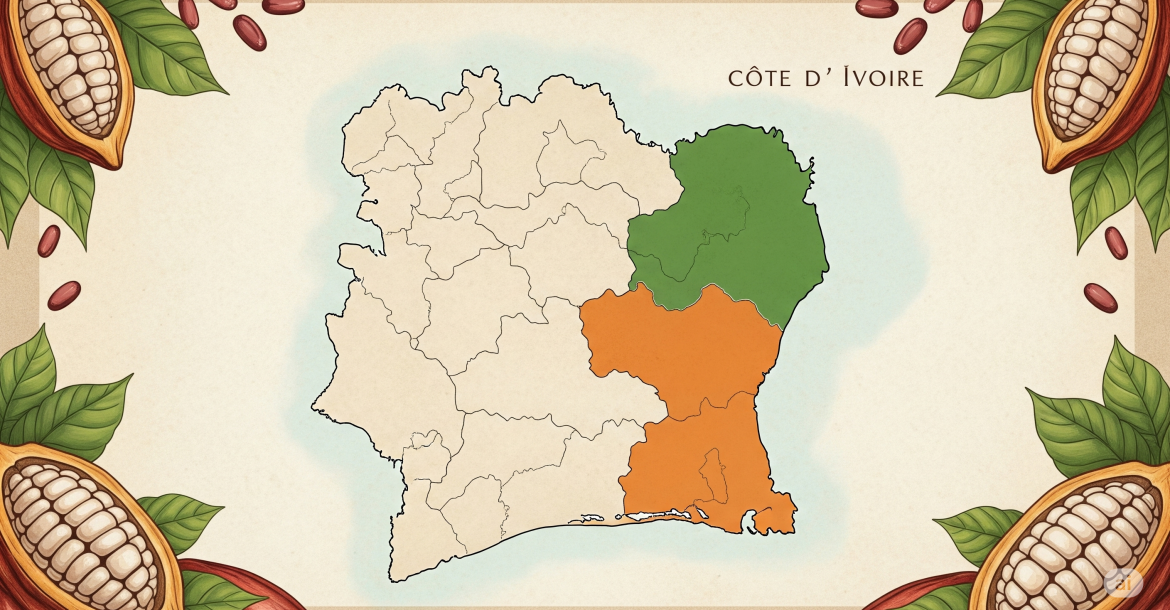
Abidjan, Côte d'Ivoire – Before the West and South-West regions became the current epicentre of Ivorian cocoa growing, another geographical zone saw the first glory days of brown gold in Côte d'Ivoire: the "Old Cocoa Belt". This vast territory, located mainly in the East and Centre-East of the country, was the cradle of the cocoa production that laid the foundations of the world power Côte d'Ivoire has become. Understanding its history, its heyday and its evolution is essential to grasp the whole dynamic of the national cocoa sector.
At the Origins: Where It All Began
The introduction and first significant developments of cocoa growing in Côte d'Ivoire, from the late 19th century and especially the early 20th century, were concentrated in the eastern regions, close to the first communication routes and colonial administrative centres. This "Old Belt" mainly encompassed:
- Indénié-Djuablin (around Abengourou): One of the very first areas of adoption and expansion of the crop by indigenous planters.
- Sud-Comoé (around Aboisso).
- La Mé (around Adzopé and Akoupé).
- Agnéby-Tiassa (around Agboville).
- Parts of the N'Zi (around Dimbokro, Daoukro and Bongouanou) and Moronou regions.
These regions enjoyed favourable forest and climate conditions, as well as local labour which, after an initial period of mistrust, quickly saw the economic benefits of this new cash crop. The French colonial administration also played an incentivising role, encouraging production for export.
The Heyday and Economic Engine (from the 1920s to the 1960s-1970s)
For several decades, and particularly after the Second World War until the first years following independence (1960), the Old Cocoa Belt was the main engine of national production and export earnings.
- Expansion of Plantations: Planted areas expanded rapidly, often at the expense of primary forest. The dominant model was the small family farm.
- Development of Infrastructure: Cocoa revenue contributed to the development of the first infrastructure in these regions (roads, partial railways, schools, clinics). Towns like Abengourou and Agboville prospered thanks to the cocoa economy.
- Social Transformation: The plantation economy changed social structures, created new forms of wealth and attracted internal migration flows.
- Foundation of the "Ivorian Miracle": The foreign currency generated by cocoa from this "Old Belt" largely financed the first stages of economic development of independent Côte d'Ivoire.
The Relative Decline and the Shift of the "Pioneer Front"
From the 1970s and especially the 1980s, the Old Cocoa Belt began to experience a relative decline as the main production area. Several factors explain this phenomenon:
- Ageing Orchards: The first cocoa trees planted reached the end of their optimal productive cycle, and yields began to fall.
- Soil Depletion: Decades of cocoa monoculture, with farming practices often little concerned with soil sustainability, led to a drop in fertility.
- Disease and Pest Pressure: The concentration of ageing plantations encouraged the spread of diseases such as swollen shoot and mirid attacks, difficult to control with the means of the time.
- Deforestation and Microclimatic Changes: Massive deforestation in these regions altered local microclimates, making some areas less suited to intensive cocoa growing.
- The Call of the "Pioneer Front": At the same time, new forest lands, virgin and fertile, were available further west and south-west of the country. Attracted by the promise of better yields and backed by expansion policies, many planters (often the children of those from the Old Belt or new migrants) moved, creating a new cocoa "pioneer front". This migration gradually shifted the centre of gravity of national production.
The Legacy and Current Situation of the Old Belt
Today, the Old Cocoa Belt is no longer the beating heart of Ivorian production, but it retains an important legacy and continues to produce cocoa, albeit in smaller quantities:
- A Changed Agricultural Landscape: The former cocoa areas are now often characterised by wooded savanna landscapes or more diversified farming systems (food crops, rubber, oil palm).
- Orchards to Rehabilitate: Many old plantations remain, with rehabilitation potential through the introduction of improved, more productive and disease-resistant planting material and the adoption of agroforestry practices.
- Entrenched Cocoa Know-How: The populations of these regions have historic cocoa-growing know-how.
- Sustainability Challenges: Problems of soil degradation and pressure on remaining natural resources are sometimes more acute there because of the age of exploitation.
- Development Initiatives: Government programmes and projects by NGOs or private companies sometimes specifically target these former areas for orchard rehabilitation, the promotion of agroforestry and diversification of producers' incomes. The aim is to make cocoa growing attractive and sustainable again in these pioneer regions.
Future Issues:
The future of cocoa in the Old Belt will depend on the ability to:
- Regenerate soils and ecosystems.
- Promote resilient and productive agroforestry models.
- Support producers in the transition to more sustainable practices.
- Diversify income sources to reduce exclusive dependence on cocoa where it is no longer as competitive.
In conclusion, the Old Cocoa Belt is a fundamental witness to the economic and social history of Côte d'Ivoire. Although the "pioneer front" moved on long ago, these historic regions retain a symbolic importance and potential for renewal. The lessons drawn from the heyday and relative decline of this first major production zone are valuable for thinking about the sustainability of the entire Ivorian cocoa sector today and for tomorrow.