
Top 10 Cocoa-Producing Countries
Cocoa originated in Central America more than 5,000 years ago, but its popularity and production have spread around the world. We look at the nations that dominate the world in cocoa production.

Cocoa originated in Central America more than 5,000 years ago, but its popularity and production have spread around the world. We look at the nations that dominate the world in cocoa production.
Chocolate means many things to different people: it can be a special treat, a guilty pleasure or a delicacy to be savoured and rated in the same way as wine. But for many people around the world, it is also a serious industry. In 2016, the global chocolate market will reach US$98.3 billion.
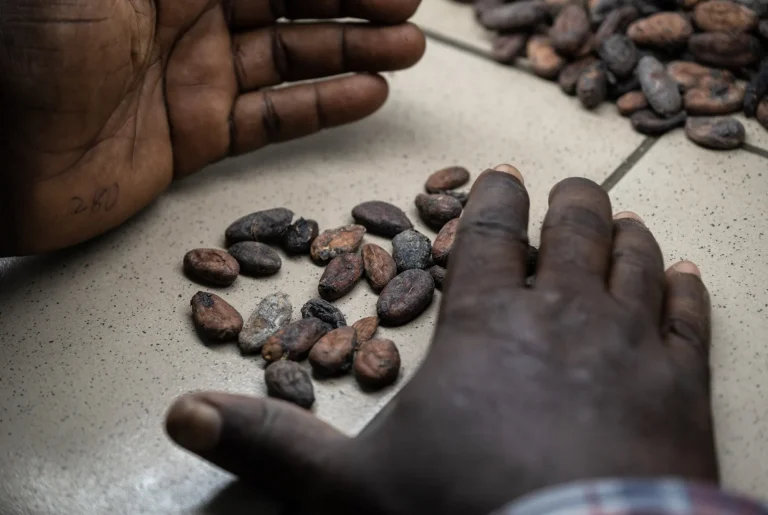
Chocolate is made from cocoa beans, which naturally grow on cocoa trees. Historians believe that chocolate consumption has its origins in the pre-Columbian societies of Central America at least five millennia ago. Today, however, the production and consumption of this treat form a complex global trade network.
Unsurprisingly, most of the top 10 cocoa-producing countries come from hot, humid climates similar to the bean's origin. However, nations from four continents rank in the top 10, and the largest contingent does not come from the Americas, with four of the five biggest nations in Africa.
So who runs the global choco-industrial complex? In other words, which countries harvest and produce the biggest cocoa bean crops to satisfy the planet's biggest sweet tooths? According to the Food and Agriculture Organization of the United Nations, these countries are the world's main cocoa producers:
10 - Dominican Republic
When it comes to ethically made chocolate, the Dominican Republic has taken a global lead in two ways. First, the government ensures that its cocoa production is carried out in an environmentally sustainable way. In addition, until 2009, the Dominican Republic dominated the world in "Fairtrade certified" cocoa production and it still remains a world leader in this area. Fairtrade products are those that have been examined by international trade organisations to ensure that farmers receive adequate compensation for their crops.
The Dominican Republic is historically known for two different types of cocoa: a cheaper bean called Sanchez and a drier, better-fermented bean called Hispaniola. Together, the country produced a total of 68,021 tonnes of beans in 2013.
9 - Peru
In Peru, growing cocoa production capacity has been limited by fierce competition for farmland. Another similar plant, coca, from which cocaine is produced, grows well in similar climates and sells for a much higher price, forcing cocoa producers out of business.
In fact, in recent years Peru has become the world's largest producer of cocaine. More than 60,000 hectares of land are used for coca, which has produced about 340 tonnes of cocaine. By comparison, the cocoa tree occupies only 48,000 hectares of Peruvian land, with a total cocoa production of 71,175 tonnes of cocoa beans.
8 - Mexico
Chocolate giants Hershey and Ferrero have recently invested heavily in cocoa production facilities in Mexico. Despite significant investment, cocoa production in Mexico has actually fallen by about 50% since the early 2000s. In fact, Mexico has to import more cocoa than it exports.
Disease is one of the main causes of the decline of cocoa in Mexico. Frosty pod rot has devastated Mexico's cocoa crop in the past. There are, however, signs of hope: new hybrid plants resist the disease and, last year, Mexico produced more than 82,000 tonnes of cocoa beans, according to the FAO.
7 - Ecuador
Ecuador's cocoa industry is one of the oldest in the world: in the Ecuadorian Amazon, archaeologists recently discovered traces of cocoa in pottery more than 5,000 years old. This long history is honoured today, with the nation's total production at 128,446 tonnes.
Ecuador's cocoa production cannot compete with the world cocoa superpowers of West Africa, but many chocolate connoisseurs believe Ecuador is the best in terms of quality. While many multinationals turn to Africa for the base of their processed chocolate treats, smaller artisan chocolate makers turn to Ecuadorian cocoa to provide the complex tastes they are looking for.
6 - Brazil
The world really wants more cocoa than it can produce. This is nowhere more evident than in Brazil, a country whose cocoa production has steadily declined in recent years. In fact, Brazil has been a net importer of cocoa – meaning Brazilians consume more cocoa than they sell – since 1998.
And this is not set to change any time soon: the Brazilian government forecasts that Brazilian cocoa production will fall by a further 15.7% by 2024. Brazil remains the biggest cocoa producer in the Americas, harvesting 256,186 tonnes of cocoa beans in 2013.
5 - Cameroon
From the home of chocolate in South America, the list crosses the Atlantic Ocean to Africa, where all of the world's five biggest cocoa producers are found. In terms of total mass, West Africa produces more cocoa than any other region in the world.
Cameroon has long been one of the world's leading cocoa producers, with output of 275,000 metric tonnes in 2013. Despite this, the cocoa business in Cameroon is under threat. Poor management of cocoa cultivation has led to a disastrous situation: many Cameroonian cocoa trees are past their prime production age. Without new trees or enough space to plant, Cameroonian cocoa producers expect a hard struggle.
4 - Nigeria
Nigeria, on the other hand, planned to increase cocoa production from 367,000 to 421,300 tonnes in 2013-2014. Rising world prices, demand and the increased availability of cutting-edge agricultural technology have fuelled the significant growth of Nigeria's cocoa industry.
These positive indicators do not mean that Nigeria's cocoa industry is free of problems. Oxfam has identified a serious lack of gender equality on cocoa farms in Nigeria. They say that women and men who play the same roles in the cocoa harvesting process are often paid unequally.
3 - Indonesia
Indonesia grew almost no cocoa before the early 1980s, when production took off like a rocket. It is now the world's third-largest producer of cocoa beans, with output of 777,500 tonnes in 2013, according to the FAO.
The pod borer insect, which has recently harmed the industry's growth, is one of the main concerns for Indonesian cocoa. Until the early 2000s, the Indonesian cocoa industry was booming, but it has levelled off since. Like Ghana and Côte d'Ivoire, most Indonesian cocoa production comes from smallholdings, which, according to the Overseas Development Institute, is a much more efficient method than large estates.
2 - Ghana
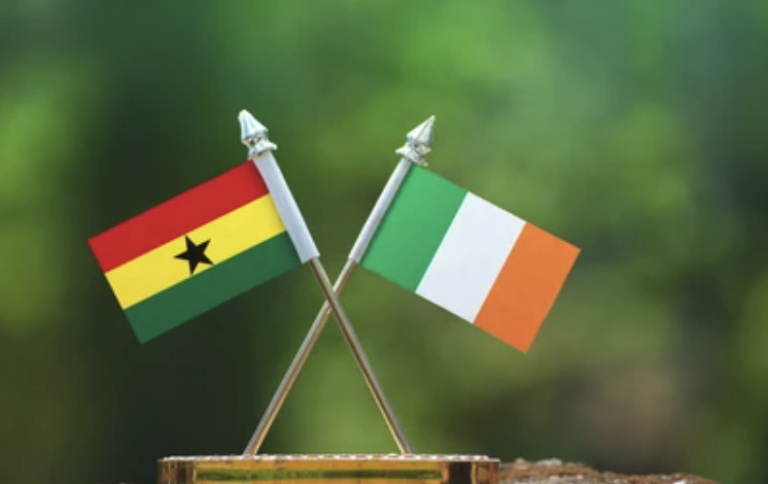
In Ghana, cocoa is king, with production accounting for just under a sixth of the country's GDP. More than three-quarters of the country's farmers describe themselves as smallholders, meaning the cocoa farm is owned and maintained by farmers who live on the property. Despite the lack of corporate control – or perhaps because of it, as elsewhere – high operating costs weigh heavily on the Ghanaian cocoa industry.
Some Ghanaian cocoa producers have begun smuggling their cocoa into Côte d'Ivoire, where cocoa sells for almost 50% more. With 835,466 tonnes grown in this West African country, the smuggling is huge.
1 - Côte d'Ivoire
Côte d'Ivoire supplies 30% of the world's cocoa production, more than half a million metric tonnes ahead of the rest of the world, for a total harvest of 1,448,992 tonnes. Companies such as Nestlé and Cadbury receive a large share of their cocoa from Côte d'Ivoire, and cocoa alone is responsible for nearly two-thirds of the country's trade revenue.
Recently, cocoa production has raised serious concerns. Child workers, some subjected to a 100-hour working week and physical abuse, have been discovered on many of the farms responsible for the nation's gigantic output. Besides the harsh working conditions, working children in Côte d'Ivoire often receive no education.
An Ivorian cocoa farmer made headlines last year when he was selected to try a chocolate bar in a video that went viral. Despite having grown cocoa all his life, he had never tasted chocolate.
| Pays | Continent | Production (milliers de tonnes) |
|---|---|---|
| Côte d'Ivoire | Afrique | 1 964 |
| Cameroun | Afrique | 250 |
| Ghana | Afrique | 905 |
| Nigéria | Afrique | 255 |
| Autres (Afrique) | Afrique | 130 |
| Brésil | Amériques | 204 |
| Equateur | Amériques | 285 |
| Autres (Amériques) | Amériques | 330 |
| Indonésie | Asie & Océanie | 240 |
| Papouasie-Nouvelle Guinée | Asie & Océanie | 40 |
| Autres (Asie & Océanie) | Asie & Océanie | 46 |