Cocoa in Sierra Leone: The Brown Gold of Resilience in a Booming World Market
Freetown, Sierra Leone – For Sierra Leone, a West African country still marked by the scars of civil war and the Ebola epidemic, cocoa represents far more than a mere export crop. It is an engine…
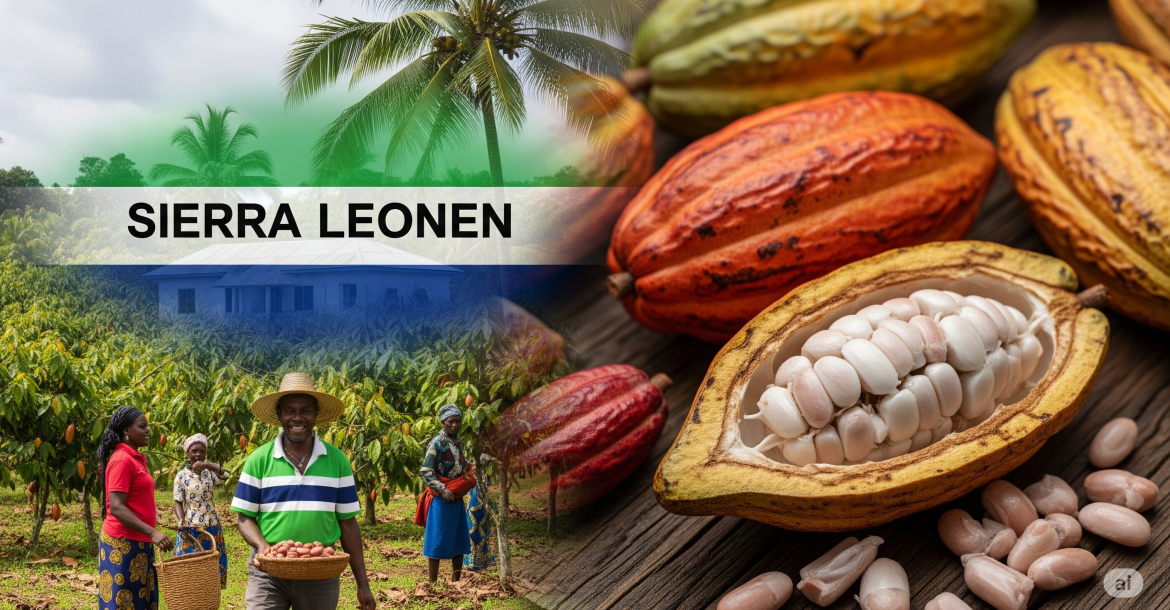
Freetown, Sierra Leone – For Sierra Leone, a West African country still bearing the scars of civil war and the Ebola epidemic, cocoa represents much more than a simple export crop. It is an essential engine of subsistence for hundreds of thousands of rural families, a vector of economic development and a symbol of national resilience. As world cocoa prices reach historic highs, the Sierra Leonean sector, characterised by production that is often organic by default and growing quality potential, glimpses major opportunities to strengthen its position and lastingly improve the lot of its producers.
Modest but Crucial Production, Driven by Smallholders
Cocoa production in Sierra Leone, though modest compared with the West African giants, is generally around 15,000 to 25,000 metric tonnes a year. Cultivation is dominated by smallholders, concentrated mainly in the eastern and southern districts of the country, such as Kenema, Kailahun and Kono. A large share of Sierra Leonean cocoa is grown traditionally, with little use of chemical inputs, which gives it significant potential for organic and specialty markets.
The unprecedented surge in cocoa prices on the international market in 2024 and early 2025 has a direct and significant impact on Sierra Leone's cocoa economy. Prices offered to local producers have risen substantially, injecting welcome income into rural communities and potentially stimulating interest in rehabilitating and maintaining plantations.
The Persistent Challenges of a Sector in Reconstruction
Despite the favourable price context and quality potential, the cocoa sector in Sierra Leone remains confronted with many structural challenges:
- Low Productivity and Ageing Orchards: Many plantations are old, with trees past their peak productivity and planting density that is often sub-optimal. Access to improved, disease-resistant planting material is limited.
- Pest and Disease Management: Black pod rot (Phytophthora) and other fungal diseases, as well as insect attacks, affect yields. Smallholders' capacity to manage these problems is often limited.
- Deficient Infrastructure: The poor state of rural roads, the lack of adequate storage facilities and logistical difficulties hinder the collection, transport and quality preservation of beans, and raise costs.
- Uneven Post-Harvest Quality: Fermentation and drying practices, crucial for flavour development and final quality, vary considerably from one producer to another and need continuous improvement.
- Limited Access to Financing and Inputs: Smallholders find it hard to access credit to invest in their plantations, buy tools or quality inputs (where needed and compatible with sustainable farming).
- Weak Producer Organisation: Although cooperatives and producer associations exist, strengthening them is necessary to improve farmers' bargaining power, ease access to services and markets, and promote the adoption of good practices.
- Impact of Climate Change: Increasing rainfall intensity, flood risks and temperature variations are threats to cocoa growing, calling for adaptation strategies.
- Land Issues: Uncertainties linked to land tenure can sometimes hold back long-term investment in plantations.
Strengths and Opportunities of a Cocoa with Growing Potential
Sierra Leone has important assets to add value to its cocoa sector:
- Potential for Organic and Specialty Cocoa: Traditional growing methods, with low use of chemical inputs, make it easier to transition to organic certification, meeting growing demand in international markets. Sierra Leonean cocoa is also beginning to be recognised for its unique flavour profiles.
- Growing Demand for Ethical, Traceable Cocoa: Consumers and chocolate companies are increasingly attentive to the origin of beans and the social and environmental conditions of their production, a trend favourable to Sierra Leone, which can highlight its smallholder-produced cocoa.
- Key Role in Rural Livelihoods: Cocoa is a vital source of income for hundreds of thousands of people, contributing to food security and poverty reduction in rural areas.
- Support from Development Partners: The Sierra Leonean government, backed by international organisations, NGOs and private companies, is implementing programmes to improve productivity, quality, sustainability and market access for cocoa producers.
- Contribution to Export Diversification: Cocoa is one of the country's main agricultural export products, contributing to diversifying national income sources.
A Promising Future Focused on Quality and Sustainable Development
The cocoa sector in Sierra Leone, though facing significant challenges, holds immense hope. The current world price situation offers a unique opportunity to inject resources and motivation into the sector. By focusing on improving quality, promoting sustainable farming practices, strengthening producer organisations and improving infrastructure, Sierra Leone can gradually increase its production, improve the reputation of its cocoa and, above all, offer better economic and social prospects to its valiant cocoa farmers. Sierra Leone's brown gold has the potential to shine brighter on the international stage.