Cocoa in Vietnam: The Rise of a New Terroir on the Road to Quality in a Booming World Market
Hanoi, Vietnam – Although Vietnam is world-famous for its coffee and rice, its cocoa sector is growing fast, driven by a commitment to quality and favourable agro-ecological conditions in certain…
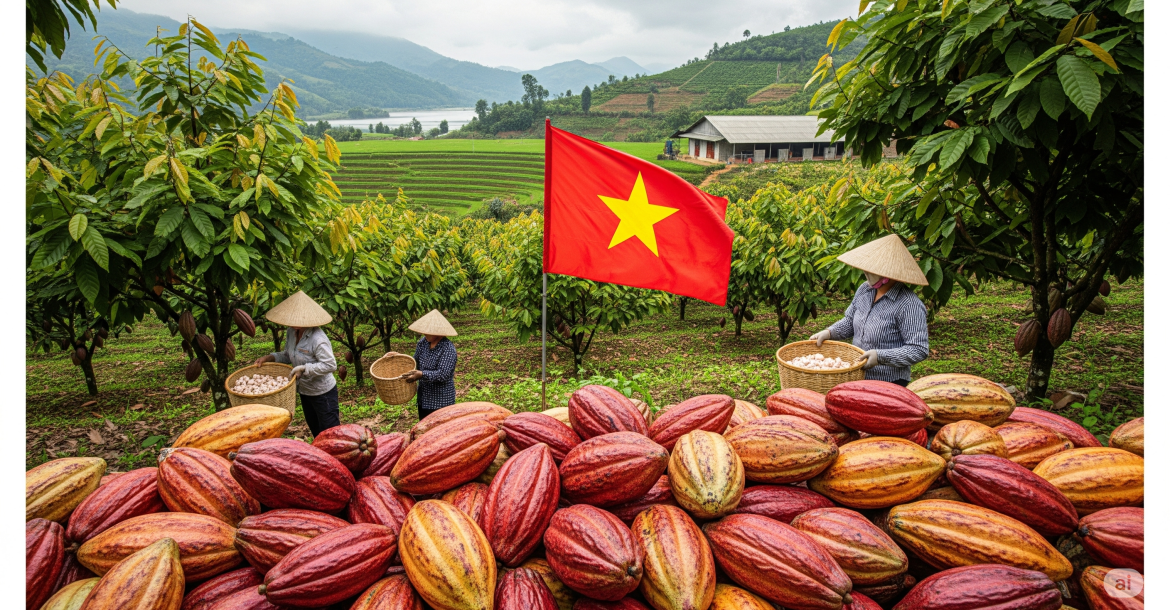
Hanoi, Vietnam – Although Vietnam is globally known for its coffee and rice, its cocoa sector is growing, driven by a commitment to quality and favourable agro-ecological conditions in certain regions. With production still modest but steadily rising, Vietnam is seeking to position itself as a supplier of fine, single-origin cocoa, taking advantage of the current surge in world prices to accelerate its development and showcase its unique terroir.
Expanding Production Focused on Quality and Sustainability
Cocoa production in Vietnam has increased significantly in recent decades, currently estimated at 5,000 to 10,000 metric tonnes a year. Growing is mainly concentrated in the Mekong Delta provinces (Ben Tre, Tien Giang, Dong Thap), as well as in the central highlands (Dak Lak, Lam Dong). The emphasis is strongly on producing premium-quality cocoa, with initiatives encouraging proper fermentation and drying, and growing interest in organic and sustainable certifications.
The spectacular surge in cocoa prices on the international market in 2024 and early 2025 offers a very positive outlook for Vietnamese producers. Although export volumes are still limited, local prices have risen, boosting farmers' enthusiasm and potentially encouraging the expansion of plantations and the improvement of growing practices. Vietnam has the potential to carve out a place in the fine cocoa market thanks to its distinct organoleptic characteristics.
The Challenges of a Developing Sector
Despite its potential and the favourable price environment, the Vietnamese cocoa sector must overcome several challenges to ensure sustainable growth:
- Production Scale and Productivity: Overall production remains low, and productivity per hectare can be improved through the adoption of higher-performing varieties and better farming practices.
- Uneven Post-Harvest Quality: Ensuring consistent quality across the different producing regions is an issue. Improving fermentation and drying techniques at smallholder level is crucial.
- Market Access and Marketing: Developing effective marketing channels, both for the (growing) domestic market and for export, is essential to guarantee stable incomes for producers.
- Knowledge and Adoption of Good Agricultural Practices: Extension of modern growing techniques, disease and pest management, and agro-ecological practices is needed to improve yields and sustainability.
- Impact of Climate Change: The Mekong Delta is particularly vulnerable to sea-level rise and extreme weather events, which could affect cocoa-growing areas. Adapting growing systems is important.
- Producer Organisation: Strengthening cooperatives and producer associations can improve their bargaining power and ease access to information, training and markets.
- Competition from Other Crops: Cocoa must remain an attractive economic option for farmers compared with other important crops such as rice, fruit or coffee.
The Strengths and Opportunities of a New Player
Vietnam has significant assets for developing its cocoa sector:
- Favourable Agro-Ecological Conditions: Some regions of the country offer a climate and soils suited to growing quality cocoa.
- Local Taste for Dark Chocolate: The domestic market for chocolate, particularly dark chocolate, is growing, offering an outlet for local production.
- Commitment to Quality and Sustainability: Players in the Vietnamese sector emphasise the production of fine cocoa and the adoption of sustainable practices, an advantage on international markets.
- Support from International Organisations and Companies: Development projects and partnerships with international chocolate companies contribute to improved practices and market access.
- Potential for Cocoa Tourism: Cocoa plantations in picturesque regions such as the Mekong Delta could attract tourists.
A Promising Future on the Path to Specialisation
The cocoa sector in Vietnam is at a promising stage of its development. By continuing to invest in improving quality, strengthening producers' capacities, developing effective marketing channels and highlighting the specificities of its terroir, Vietnam has the potential to position itself as a supplier of fine cocoa on the world market. The current price surge provides additional incentive for farmers and sector players to continue their efforts towards Vietnamese cocoa recognised for its excellence.