Cocoa Pulp: A Sweet, Fermentable Treasure
Mucilage is the white, sweet, gelatinous substance that surrounds the cocoa beans inside the pod. Made up mainly of water and natural sugars, it accounts for about 10 to 15% of the fresh weight of the seeds.
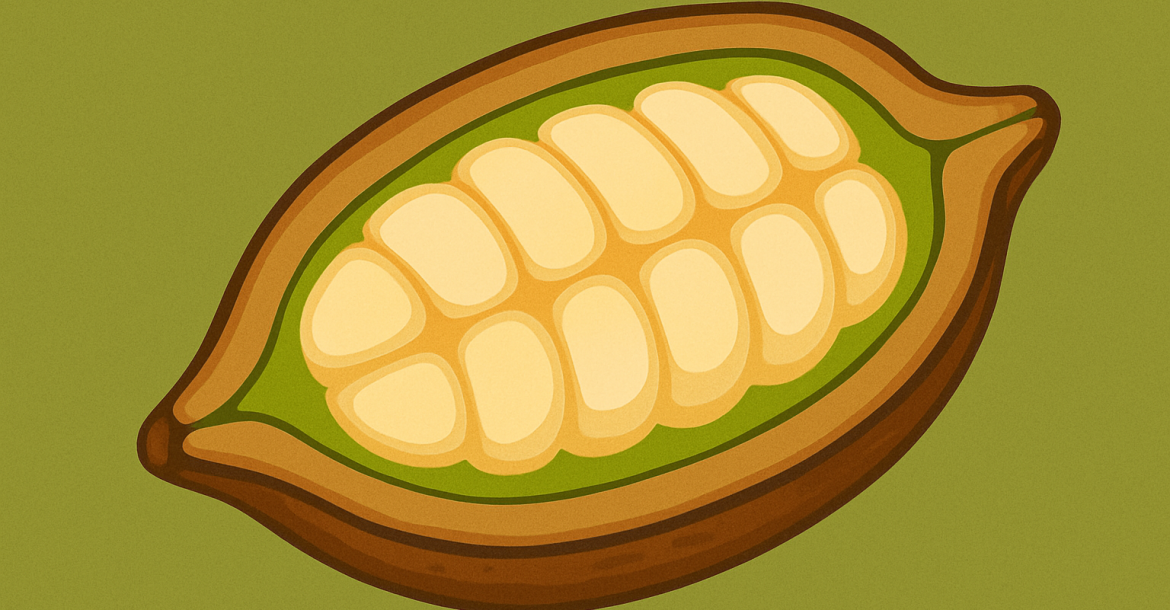
What Is Mucilage?
Mucilage is the white, sweet, gelatinous substance that surrounds the cocoa beans inside the pod. Made up mainly of water and natural sugars, it represents about 10 to 15% of the fresh weight of the seeds.
Biochemical Composition
Mucilage contains:
- Water: 80 to 90%
- Sugars: glucose, fructose, sucrose (10–15%)
- Organic acids: citric, acetic
- Pectins and polysaccharides
- Minerals and proteins in small quantities
Reference: Afoakwa, E. O. (2014). Chocolate Science and Technology. Wiley-Blackwell.

Its Essential Role in Fermentation
After harvest, the beans are extracted with their mucilage, then left to ferment in boxes, baskets or on banana leaves.
The mucilage:
Feeds the micro-organisms (yeasts, lactic acid bacteria, acetic acid bacteria)
Triggers fermentation, which generates heat and aromas
Helps kill the seeds, which is necessary for turning them into chocolate
Contributes to the formation of aroma precursors
Reference: Schwan, R. F. & Wheals, A. E. (2004). The microbiology of cocoa fermentation and its role in chocolate quality. Crit. Rev. Food Sci. Nutr. 44(4), 205–221.
Valorisation and Innovation
Today, several projects make use of mucilage beyond fermentation:
- Cocoa juice: a refreshing nectar with plenty of flavour
- Craft spirits: distillation of the fermented juice
- Biogas and compost: sustainable treatment of residues
- Cosmetics: moisturising and antioxidant properties under study
Mucilage is far more than a simple coating: it is a key element in cocoa quality and a promising resource for the circular economy in producing regions such as Côte d'Ivoire.