Ghana: The Cocoa Giant Shaken by a Production Crisis Despite Record World Prices
Accra, Ghana – Ghana, the world's second-largest cocoa producer and a benchmark for quality, is going through a period of unprecedented turbulence. While world prices for the brown bean reach historic highs, the country…
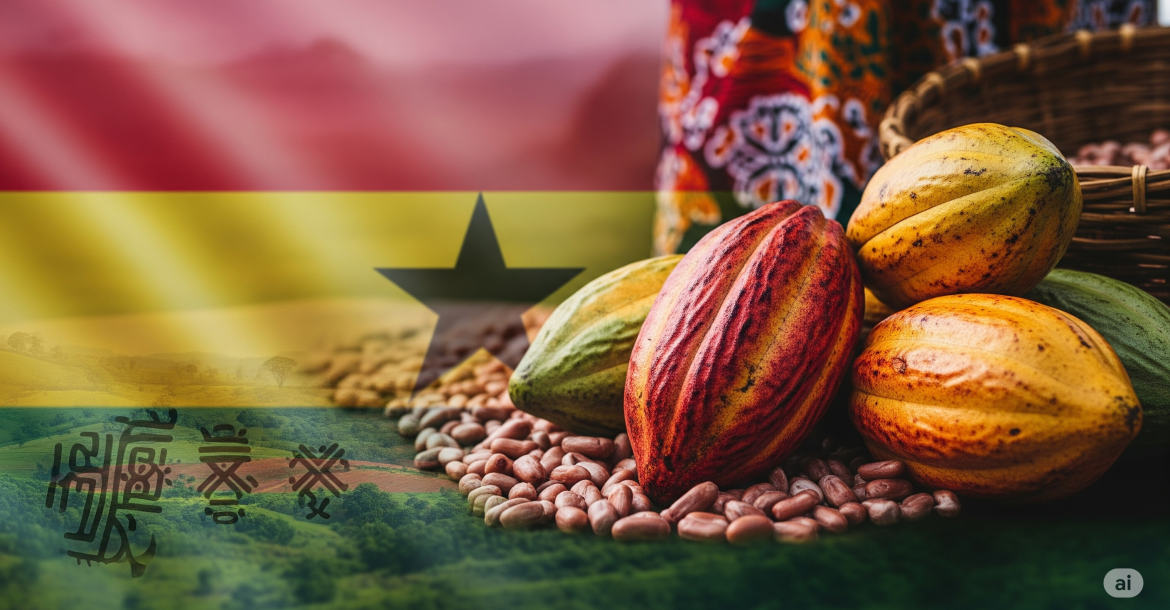
Accra, Ghana – Ghana, the world's second-largest cocoa producer and a benchmark for quality, is going through an unprecedented period of turbulence. While world prices for the brown bean reach historic highs, the country faces a drastic fall in production, threatening the livelihoods of millions of farmers and national economic stability. Between structural challenges, climate hazards and environmental threats, Ghana's cocoa sector is at a crossroads.
Historic Fall in Production
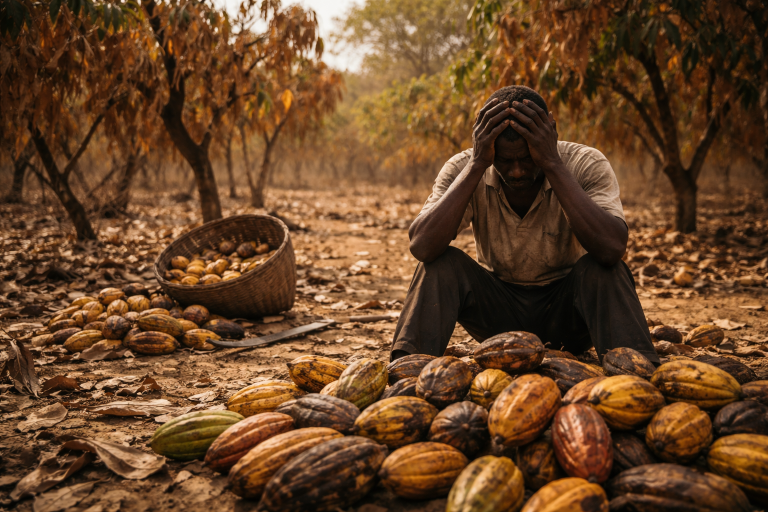
The figures are alarming. For the 2023-2024 season, Ghana's cocoa production is expected to fall to its lowest level in 22 years, with estimates ranging between 422,500 and 425,000 metric tonnes. This is a considerable drop from the 683,000 tonnes of the previous season and far from the initial target of 850,000 tonnes, or the record of more than a million tonnes reached in 2020-2021.
Several factors explain this crisis: particularly severe Harmattan winds, the persistence of Cocoa Swollen Shoot Virus Disease (CSSVD), which is devastating plantations, the destructive impact of illegal mining ("galamsey"), ageing orchards and, more recently, the smuggling of beans to neighbouring countries offering more attractive prices.
The Paradoxical Impact of the World Price Surge
While the surge in world cocoa prices – exceeding US$10,000 a tonne in New York and London in early 2024 – should have translated into a financial windfall for producers, the Ghanaian reality is more complex. The forward-selling system of the Ghana Cocoa Board (COCOBOD) initially limited the direct benefits for farmers.
However, faced with the production crisis and to curb smuggling, COCOBOD reacted by significantly increasing the guaranteed producer price for the rest of the 2023-2024 season. The price was raised by 58.26%, to 33,120 Ghanaian cedis (about US$2,270) a tonne, or 2,070 cedis per 64 kg bag. Further increases are being considered for the 2024-2025 season, in the hope of sharing the exceptional gains of the world market more fairly and encouraging local production.
Structural and Environmental Challenges
Beyond the current situation, Ghana's cocoa sector faces major, interconnected challenges:
- Cocoa Swollen Shoot Virus Disease (CSSVD): This viral disease continues to ravage cocoa trees, reducing yields and cultivable area. COCOBOD's eradication and rehabilitation programmes struggle to contain its rapid spread.
- Illegal Mining ("Galamsey"): Illegal gold mining destroys thousands of hectares of fertile cocoa land, pollutes soils and waterways, and threatens the safety of rural communities.
- Climate Change: Increasingly erratic weather, including prolonged droughts and irregular rains, negatively affects flowering and pod development.
- Ageing Orchards and Low Yields: Many orchards are old and need renewing with more productive, disease-resistant varieties. Limited access to quality inputs (fertiliser, pesticides) worsens the situation.
- Smuggling: The attraction of higher prices in neighbouring countries, notably before Ghana's recent producer price rise, has encouraged the illegal flight of a significant share of the harvest.
- COCOBOD Debt and Access to Finance: The regulator itself faces financial challenges, seeking funds for its operations and bean purchases, which can affect its ability to fully support the sector.
- Compliance with International Standards (EUDR): Ghana is actively working to set up a national cocoa traceability system (Ghana Cocoa Traceability System – GCTS) to comply with the European Union's new anti-deforestation regulations.
Opportunities and Ongoing Initiatives
Despite this bleak picture, efforts are being made to turn the situation around:
- Producer Price Increase: The recent substantial rise in the guaranteed price is a key measure to improve farmers' incomes and fight smuggling.
- COCOBOD Rehabilitation Programmes: Programmes to fight CSSVD, distribute improved seedlings and promote good agricultural practices continue, although their effectiveness and reach are sometimes limited by financial and logistical challenges.
- Developing Traceability: Implementing the GCTS is crucial to maintain access to the European market and reassure consumers about the sustainable origin of Ghanaian cocoa.
- Promoting Local Processing: The government maintains the goal of increasing the share of cocoa processed locally in order to capture more value added, although concrete progress in increasing capacity remains to be confirmed.
- Sustainability Programmes: Various initiatives in partnership with international players and the private sector aim to promote sustainable cocoa farming, including agroforestry practices and the fight against child labour.
An Uncertain Future, a Call to Action
Ghana's cocoa sector is at a critical point. The current production crisis, exacerbated by deep structural and environmental challenges, requires urgent and concerted action from the government, COCOBOD, producers, civil society and international partners. While high world prices offer a window of opportunity, only massive investment in orchard rehabilitation, the fight against "galamsey" and CSSVD, adaptation to climate change and improving planters' incomes will allow the West African giant to regain its vigour and ensure the longevity of its "brown gold".
Ghana's Cocoa Sector: Between the Price Surge and Deep Structural Challenges
Accra, Ghana – An unavoidable player in the world cocoa market, Ghana is going through a period of turbulence and opportunity. While the country, traditionally the world's second-largest producer, faces a significant fall in production, the historic surge in world prices offers a breath of fresh air and a potential lever to tackle the persistent challenges undermining the sector. Ghanaian brown gold is at a crossroads, between the promise of higher incomes and the urgent need for structural reform.
Falling Production, but Prospects for a Rebound and Soaring Prices
Ghana's 2023-2024 cocoa season was marked by historically low production, estimated at about 531,000 metric tonnes by the USDA, with official COCOBOD figures putting it at around 530,873 tonnes, the lowest in about fifteen years. Several factors explain this fall: unfavourable weather conditions, the spread of Swollen Shoot disease (CSSVD), and the impact of illegal mining activities ("galamsey").
However, the outlook for the 2024-2025 season is more optimistic, with production expected to rise, potentially to around 617,500 to 700,000 metric tonnes, thanks notably to rehabilitation measures and potentially better weather.
At the same time, Ghana, like other producers, has seen cocoa prices reach unprecedented highs on the international market. This surge has allowed a significant increase in the producer price. COCOBOD raised the guaranteed producer price several times, reaching GHS 3,000 per 64 kg bag (that is, GHS 48,000 per tonne) for the 2024-2025 season. Cocoa export revenues for the first months of 2025 thus tripled compared with the same period in 2024, partly thanks to a potentially better selling strategy on the spot market.
Structural Challenges That Persist
Despite the improvement in prices, Ghana's cocoa sector still faces major challenges:
- Swollen Shoot Disease (CSSVD): This viral disease continues to devastate plantations, considerably reducing yields. Eradication and rehabilitation programmes are under way but need time and considerable investment. In 2024 it was reported that about 81% of the country's cocoa-growing areas were affected to varying degrees.
- Illegal Mining Activities ("Galamsey"): The spread of illegal gold mining destroys thousands of hectares of cocoa farms, pollutes soils and waterways, and diverts farm labour. The Eastern, Western and Ashanti regions are particularly affected.
- Ageing Orchards and Low Productivity: Many plantations are old and need renewing with more productive, disease-resistant varieties. Access to quality inputs remains a challenge for many smallholders.
- Climate Change: Irregular rainfall, prolonged dry periods and rising temperatures negatively affect yields and bean quality.
- Smuggling: Price differentials with neighbouring countries, notably Côte d'Ivoire when its price is more attractive, can encourage bean smuggling, reducing official Ghanaian volumes. Ghana's price rises also aim to limit this phenomenon.
- Producer Incomes and Poverty: Despite recent increases, poverty remains a reality for many producers, often dependent on small farms and exposed to market volatility and high input costs.
- Labour and Social Issues: The ageing farm workforce and the difficulty of attracting young people to cocoa farming are concerns. The country is also under scrutiny on human rights issues, including child labour, although efforts are being made to address them.
- Compliance with International Regulations (EUDR): Ghana must ensure its sector complies with new regulations, such as the European Union's deforestation regulation (EUDR), which requires robust traceability systems and "zero deforestation" production. Training and plot-mapping systems are being rolled out.
- Limited Local Processing: Although the government's goal is to reach 50% local processing by 2030 and local consumption has increased, a large share of cocoa is still exported as raw beans. Local processing capacity has even at times been underused for lack of sufficient bean supply at competitive prices.
Opportunities and Ongoing Initiatives
Faced with these challenges, Ghana is deploying several strategies:
- Rehabilitation and Productivity Programmes: COCOBOD continues its programmes to fight CSSVD, including cutting down diseased trees and replanting with tolerant varieties, as well as productivity improvement programmes (Productivity Enhancement Programmes – PEPs). A US$200 million World Bank loan was secured in 2024 to support these efforts.
- Producer Price Increase: Significant rises in the guaranteed price aim to improve farmers' incomes, encourage them to invest in their plantations and discourage smuggling.
- Fighting "Galamsey": Government efforts are under way to curb illegal mining, although results are still mixed. A task force has been set up by COCOBOD to protect cocoa farms.
- Promoting Sustainability and Traceability: Ghana is actively committed to meeting EUDR requirements, notably by setting up a national cocoa traceability system and mapping plantations. Training is provided to farmers on the new regulations and sustainability standards.
- Developing Local Processing and Consumption: Initiatives aim to increase local processing capacity and promote the consumption of chocolate products made in Ghana. Per capita consumption has recently grown.
- Research and Development: The Cocoa Research Institute of Ghana (CRIG) plays a key role in developing improved varieties and more efficient farming techniques.
- Farmer Support: Support programmes, including subsidised supply of inputs and training in good agricultural practices, are regularly implemented. COCOBOD also rewards the best producers at national events.
A Future Between Recovery and Modernisation
Ghana's cocoa sector is at a critical turning point. The current production crisis, exacerbated by structural challenges, underlines the urgency of reform. However, the surge in world prices offers an unexpected financial opportunity to accelerate the modernisation of the sector, durably improve producers' incomes and strengthen the sector's resilience to climate and economic shocks. Ghana's ability to overcome its challenges will determine its future place on the world cocoa chessboard.