
History of Chocolate: Chocolate in the American Colonies
In 2009, Mars Incorporated celebrated the publication of Chocolate: History, Culture and Heritage. The book was the culmination of ten years of collaborative research with UC Davis, which investigated the early days of chocolate in the…
In 2009, Mars Incorporated celebrated the publication of Chocolate: History, Culture, and Heritage. The book was the culmination of ten years of collaborative research with UC Davis, which investigated the early days of chocolate in the Americas. More than 200 archives, libraries, museums and private collections were visited by 115 researchers from around the world to produce 56 chapters written by 46 authors, illustrating the fact that chocolate was surprisingly involved in every aspect of society. Chocolate is American history. It is more than just a food or confection. Chocolate reflects different groups of people, cultures and historical events, from antiquity to the present, and allows us to share a common bond across time. Chocolate is inextricably woven into the fabric of North American history.
Chocolate in Mesoamerica
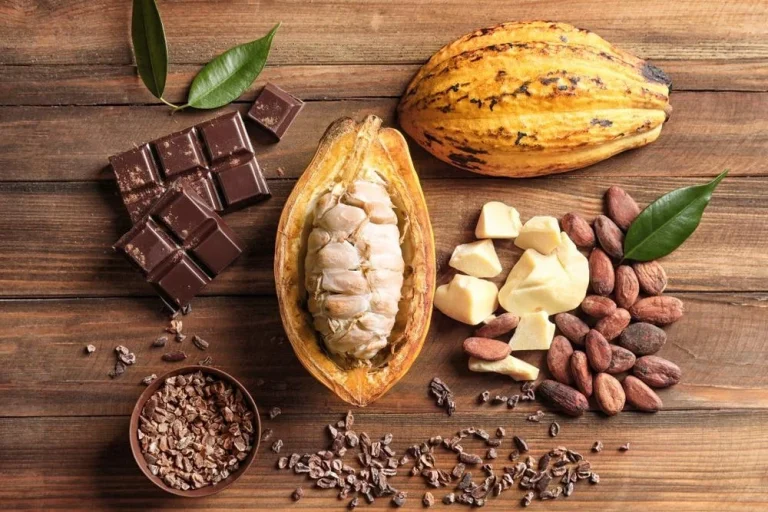
Humans have domesticated fewer than 500 plants over history, and none has captured the imagination and love of humans like the cacao tree, the source of chocolate. The cacao tree was first domesticated (that is, its behaviour, life cycle or appearance were significantly modified) at least 3,500 years ago in the tropical rainforests of Central and South America. Although chocolate is often associated with European culture, its roots are firmly planted in the Americas. Since the only apple trees native to the Americas are crabapples, chocolate is more American than apple pie!
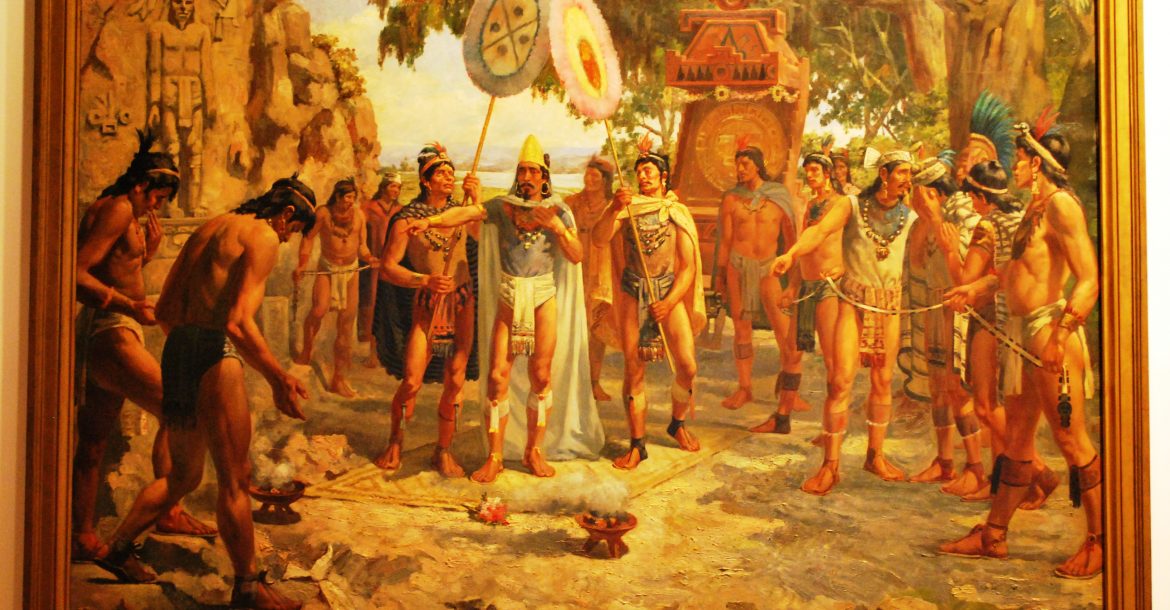
The presence of cacao residues in pottery shards dates back at least 1500 BCE and the Olmec civilisation. Throughout its Mesoamerican history, chocolate was consumed as a drink. The story of the origin of chocolate was included in religious beliefs and cacao pods were part of religious ceremonies. Chocolate was reserved for adult men and consumed by priests, high government officials, army officers, distinguished warriors and sometimes sacrificial victims for ritual purposes. Because the chocolate drink was perceived as intoxicating and stimulating, it was considered unsuitable for women and children. The stimulating properties of chocolate were probably due to the presence of theobromine, an alkaloid related to caffeine.
Chocolate Recipes and Making
The first European interaction with cacao occurred on Columbus's fourth voyage to the New World in 1502. Columbus encountered cacao beans but did not experience chocolate. In 1519, Hernando Cortés arrived at Tenochtitlan, the Aztec capital (today Mexico City), and witnessed the consumption of chocolate at Montezuma's royal court. The method of making Aztec chocolate was described as follows:
"The Indians, from whom we borrow it, do not make it very well; they roast the kernels in earthen pots, then free them from their skins, then crush and grind them between two stones, and thus form cakes with their hands."
A typical Aztec chocolate recipe included ingredients such as red chilli and vanilla as flavourings and bee honey as a sweetener. A first-hand account of Aztec chocolate making was written in 1556 by an anonymous European explorer:
"These seeds, which they call cacao, are ground and made into a powder and placed in certain vessels with a spout. Then they add water and mix it with a spoon. After mixing, they pour it from one vessel to another until it is frothy. The froth is collected and put in a cup, and when they are ready to drink the beverage they beat it with some small spoons made of gold. To drink it one must open one's mouth wide, since it has a froth which one must leave room for to dissolve and gradually go in. This drink is the most wholesome and substantial of all the foods or drinks in the world, for whoever drinks a cup of it can go the whole day without taking anything else, even if on a journey, and it does better in hot weather than in cold, for it is a cold drink."
Once the Spanish became aware of chocolate, they modified the Aztec procedure to better suit their tastes. They added vanilla, which was native to Mexico, as well as sugar from recently established plantations in the Caribbean. When Cortés returned to Spain in 1528 with cacao and the chocolate recipe, Charles I and the Spanish court readily accepted the cacao drink. Cacao import into Spain began only after 1570 and chocolate eventually spread to Italy, Austria and the rest of Europe. By the mid-1600s, the first chocolate houses were opening in England.
As Europeans became familiar with chocolate, they removed the chilli, added flavourings such as aniseed, cinnamon, nutmeg and orange peel, and replaced bee honey with cane sugar. American Heritage Chocolate, produced by the historic division of Mars, Incorporated, uses these spices along with aniseed, annatto and red pepper to reproduce an authentic eighteenth-century chocolate recipe.
A method of preparing a chocolate drink was written down in 1769 in The Experienced English Housekeeper:
"Scrape four ounces of chocolate and pour a quart of boiling water on it; mill it well and sweeten it to your taste; boil it and let it stand all night; mill it again very well; boil it in two minutes, then mill it until it leaves the froth on top of your cups."
By 1850, the chocolate-making process was relatively standardised, with manufacturers proceeding in the same way. Starting from liquor and sugar, the process began with the melangeur, made of two heavy round millstones pressed on a granite floor. The sugar and liquor were mixed until they reached the consistency of a paste, which was fed into granite or cast-iron roller refiners. The paste was turned into a dry powder that returned to the melangeur, where the powder was again turned into paste. The grinding between the roller refiner and the melangeur was repeated until the chocolate had the desired fineness. The paste was pressed into moulds to remove air bubbles and the moulds were moved to a cooling chamber. The chocolate was then removed from the moulds, wrapped in foil and covered with a paper bearing the manufacturer's name and trademark.
Chocolate in the American Colonies
The earliest reference to chocolate discovered in North America to date comes from the Spanish ship Nuestra Señora del Rosario del Carmen, which arrived in St Augustine, Florida, with chests of chocolate in 1641. In 1670, Dorothy Jones and Jane Barnard opened a pub in Boston to sell chocolate, probably imported from Europe. In 1682, a British report detailed cacao exports from Jamaica to Boston. By inference, it can be assumed that cacao exports to the colonies were used for local chocolate production, marking the beginning of chocolate production in the American colonies.
Chocolate was mentioned in a North American newspaper as early as 1705, when cocoa and chocolate were advertised in Boston at Mr James Leblond's warehouse on Long Wharf near the draw bridge. In 1716, the French suggested planting cacao trees in the southern Mississippi region to trade for sugar from Cuba. Unfortunately, the climate in southern North America was not suited to growing cacao.
As the demand for chocolate increased, manufacturing methods had to be stepped up to increase production capacity. In 1737, a Boston newspaper published an advertisement for a hand-powered chocolate-making machine. In the same year, a Massachusetts inventor developed an inexpensive cacao-grinding engine capable of producing 100 grams of chocolate in six hours.
In 1773, the demand for chocolate in the colonies led to the import of more than 320 tonnes of cacao beans. Drinking chocolate was affordable to all classes of people and was available in most coffeehouses, where colonists gathered to talk about politics and the news of the day.
Because chocolate could be transported in solid blocks without spoiling, it was used as a military ration. In 1755, Benjamin Franklin managed to obtain six pounds of chocolate per officer, forming a special supply for the soldiers marching with General Braddock's army at the start of the French and Indian War. The British army also ate chocolate, however: it was supplied to British troops during the construction of His Majesty's fort at Crown Point, New York, in 1768. To provide an affordable supply of chocolate to the military and to combat war profiteers, the Continental Congress of 1777 imposed price controls on chocolate and cocoa during the War of Independence. Exporting chocolate from Massachusetts was also prohibited because it was needed "for the supply of the army". When the British launched an unexpected attack on Fort Ticonderoga in 1777, the defenders abandoned the fort, along with huge quantities of ammunition and supplies including twelve boxes of chocolate. Captain Moses Greenleaf ate chocolate for breakfast and dinner to keep up his energy during his desperate retreat from the British.
From Chocolate Drink to Chocolate Confection
Drinking chocolate was credited with a variety of medical benefits. It was believed to promote weight gain in order to put flesh back on emaciated patients, particularly those with tuberculosis. It was used to stimulate the nervous system of weak patients, as well as to calm overexcited patients, such as soldiers fresh from combat. It could improve digestion and was used to mix with medicines to make them more pleasant for patients.
Chocolate remained exclusively a drink until the mid-nineteenth century, when advertisements for solid eating chocolate began to appear. The public did not receive these chocolates well because of their coarse, gritty texture, which matters when eating chocolate but goes unnoticed when it is made into a drink. In 1879, Rodolphe Lindt developed in Switzerland a machine resembling a conch shell to process his chocolate. This chocolate melted on the tongue and had a very appealing chocolate aroma. It was the beginning of modern solid chocolate consumption and the transformation of chocolate from a drink into a confection. By the 1920s, eating chocolate had overtaken drinking chocolate in popularity.
The first milk chocolate designed for eating was developed by Daniel Peter in Switzerland in 1876. Peter devised a recipe based on condensed milk, cocoa powder, sugar and cocoa butter. Peter's milk chocolate was an immediate success and other companies soon developed their own versions of milk chocolate. By the 1930s, milk chocolate had become the most popular type of chocolate.
North American Chocolate References
Henri Joutel was a historian who witnessed La Salle's 1684 expedition, which sought to reach the mouth of the Mississippi by sea. He mentioned in his journal the chocolate drunk on his travels.
Samuel Sewall, a Massachusetts judge known for his involvement in the Salem witch trials, wrote about a breakfast of game and chocolate in 1697.
Benjamin Franklin sold locally made chocolate at his print shop in Philadelphia. In 1739, he was selling Bibles and other books, pencils, ink, writing paper and "very good chocolate".
John and Abigail Adams were very fond of chocolate. In 1779, John Adams, then in Spain, wrote: "The ladies drink chocolate in the Spanish fashion. Each lady took a cup of hot chocolate and drank it, then cakes and bread and butter were served; each lady took another cup of cold water, and here the meal ended." Abigail Adams, writing to John Quincy Adams in 1785, described drinking chocolate for breakfast in London.
In 1785, Thomas Jefferson predicted that chocolate would become the favourite drink in North America, instead of coffee and tea. This prediction came after the Boston Tea Party and the colonists' rejection of tea, and before the widespread consumption of coffee in North America.
George and Martha Washington asked for more cocoa shells in 1794 to make "cocoa tea".
Chocolate in Modern Times
Today, when we drink hot chocolate, it is a drink made from cocoa powder (cocoa without cocoa butter), powdered milk, sugar and water. Although it is a pleasant drink, especially in winter, this hot chocolate is hardly related to the chocolate drink enjoyed in colonial America. The colonial American chocolate drink was prepared with liquid or scraped chocolate instead of cocoa powder, and produced a much more intense chocolate flavour and aroma. It also had a thicker mouthfeel, similar to the difference between skimmed milk and whole milk. This combination of flavour and texture explains why drinking chocolate has been enjoyed as a nutritious and delicious food for thousands of years.
By the early twenty-first century, manufacturers had refined all the processing techniques originally used by the Olmecs into highly controlled mass-production processes. After almost four hundred years of innovation in chocolate making, the captivating aroma and alluring flavour of chocolate still prompt scientists to discover new advances in technology and product development.
Today, the health benefits of dark chocolate are well known, and a trip through the grocery store proves that chocolate has infiltrated a wide variety of edible products. Chocolate has evolved over its history from a drink to a confection, but whatever its form, it has drawn a multitude of responses from its consumers. Chocolate is a part of our past that will continue far into our future.